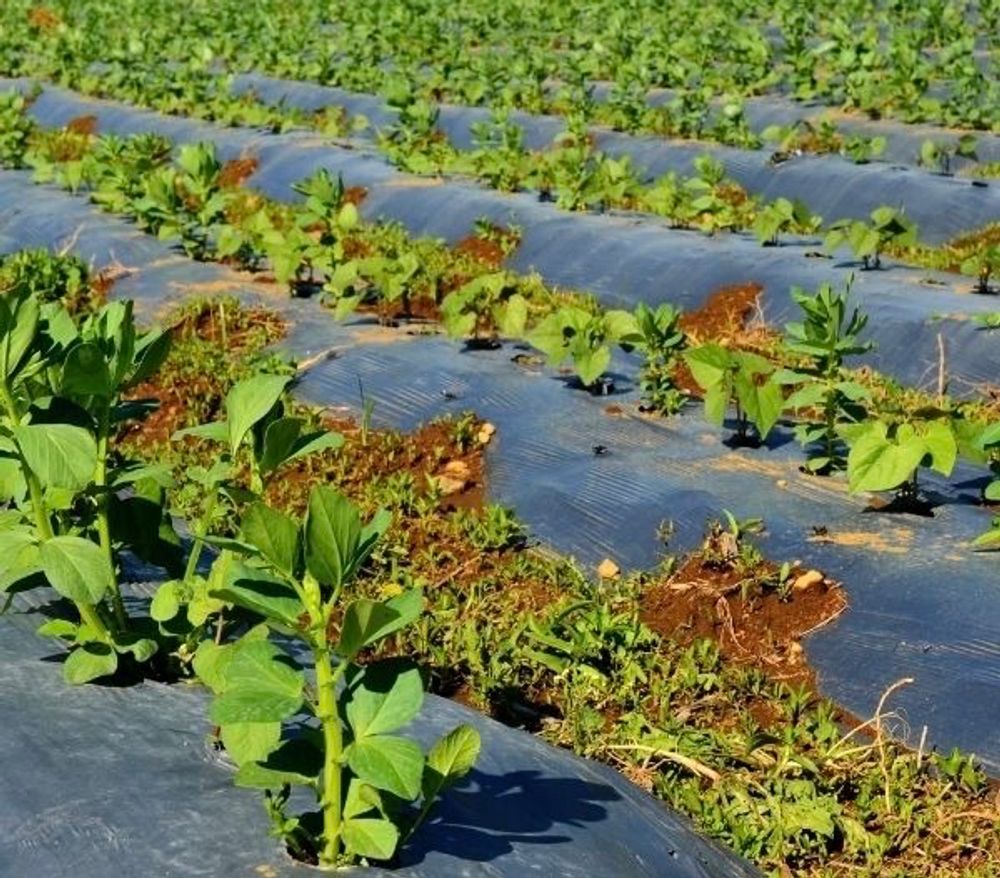
Mulching is often promoted as a simple and effective strategy to improve water efficiency in agriculture - but how strong is the evidence behind it?
A review published in Irrigation Science in 2024 analyzed 58 studies comparing mulched vs. non-mulched crops to better understand the effects on soil evaporation, crop coefficients (Kc) and evapotranspiration.
Some key findings:
- Mulching consistently reduced soil evaporation (30–50%) and crop coefficients (typically 15–40%) especially during early crop stages when the soil is more exposed.
- Plastic films generally showed stronger reductions than organic mulches like straw.
- Black plastic mulch appeared more effective than other colors during early growth stages.
- Seasonal reductions in crop evapotranspiration were more moderate, averaging around 13%.
- Results varied significantly depending on crop type, mulch material, soil coverage and local conditions.
The review also highlights an important issue: many studies lack detailed descriptions of mulch characteristics, making comparisons difficult and limiting the development of robust irrigation management guidelines.
As climate change increases pressure on water resources, improving irrigation efficiency becomes increasingly important. But these findings also remind us that agricultural sustainability solutions should continue to be evaluated carefully under real field conditions and across different production systems.
Source: Ramos, T.B. et al. (2024). Mulching effects on soil evaporation, crop evapotranspiration and crop coefficients. Irrigation Science