How PhageMatch Reduces Time and Cost in Phage Therapy
One of the biggest bottlenecks in phage therapy is not the lack of phages. It is the time and cost required to identify which phage actually works against a specific, often multidrug resistant, bacterial strain.
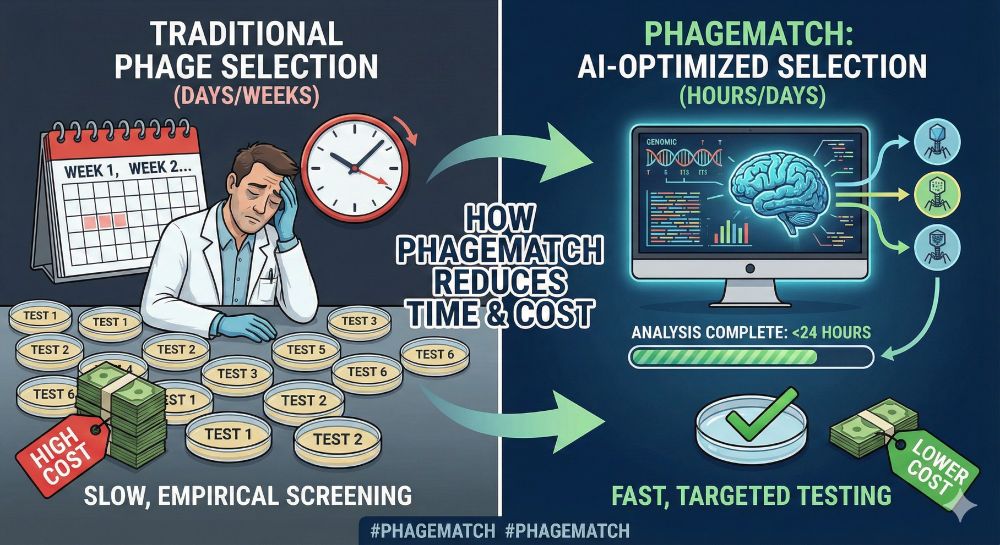
This is where PhageMatch comes in. Instead of testing phage after phage in the lab for days or weeks, PhageMatch uses AI to narrow the search space. It analyzes genomic and protein signals from both the bacterial isolate and available phages, learns from historical phage host interaction data (what worked and what did not), and produces a ranked shortlist of the most promising candidate phages and potential cocktails for each case.
In practical terms, this enables faster turnaround by shifting from long empirical screening cycles to targeted testing in hours or a few days. It reduces lab costs by focusing resources on high probability candidates, increases throughput so the same infrastructure can handle more cases per year, and helps phage libraries become data driven assets rather than static inventories.
The goal with PhageMatch is simple: make phage selection more predictable, scalable, and economically viable, so that phage therapy can move from niche to mainstream.
#PhageTherapy #AntibioticResistance #Bioinformatics #MachineLearning #HealthTech #ComputationalBiology
Investment
Collaboration
Partnership
Services