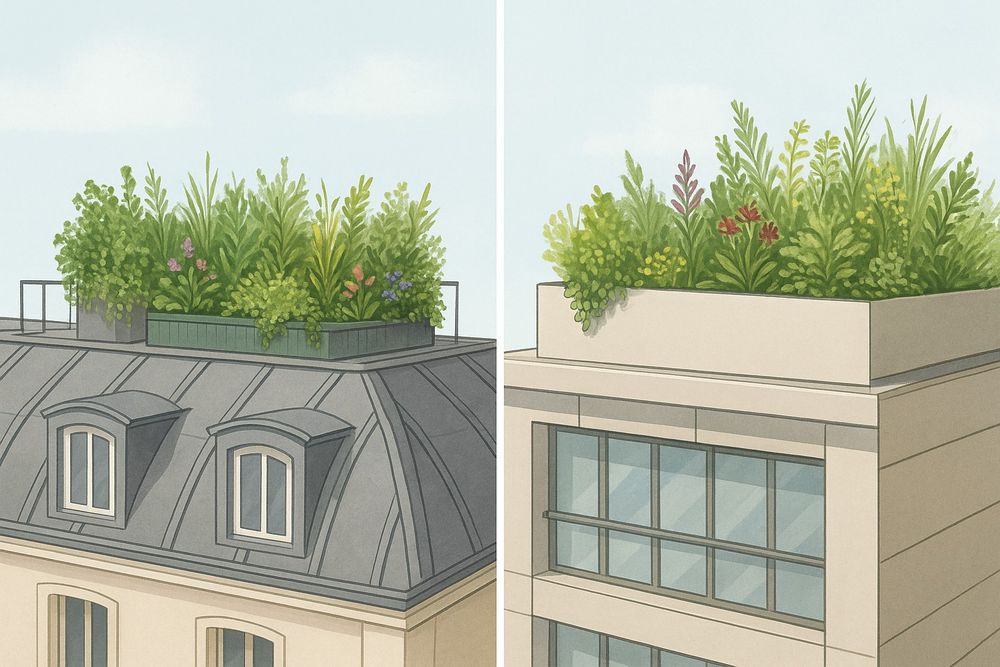
Paris is entering a key moment in its ecological evolution. As the climate becomes warmer, summers more intense, water increasingly precious, and city life more economically strained, rooftops have emerged as one of the most underused yet potentially transformative surfaces in the urban fabric. Green roofs are now encouraged by legislation, but most remain ornamental, disconnected from the deeper social, cultural, and ecological challenges the city must confront.
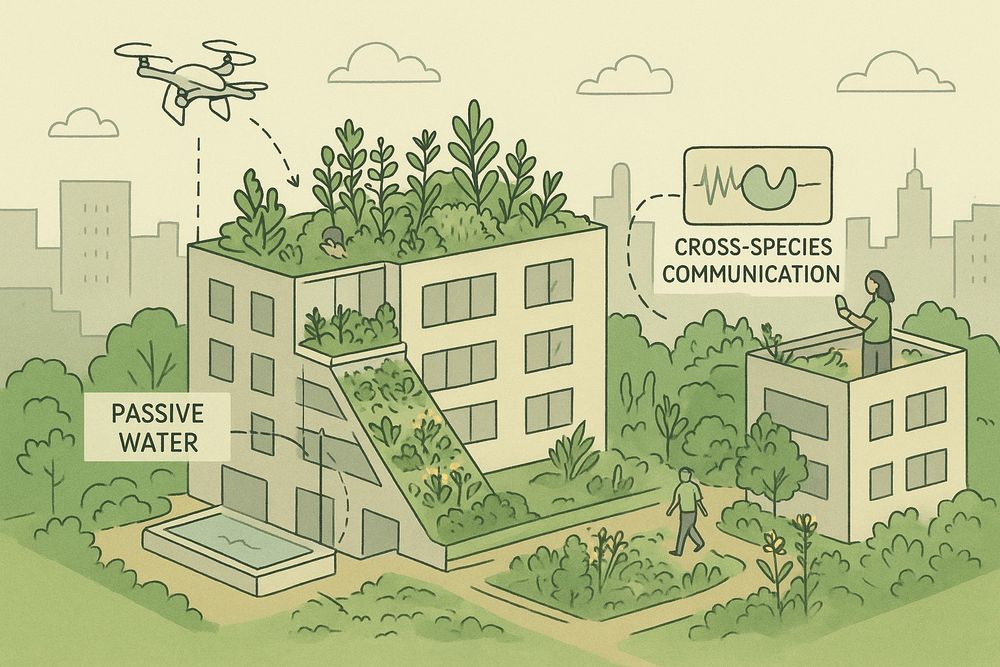
Ecosystem Rooftops proposes a new vision: rooftop ecosystems that are productive, intelligent, culturally rooted, socially supportive, and ecologically regenerative. These living rooftops will grow herbal teas, medicinal plants once used in folk medicine that are now researched fully by modern science, edible species, natural dyes for sustainable fashion, fibres for bio-based materials, and closed-loop resources for local industries. Given the amount of farmland that is next to highways, and amount of pesticides used, polluted plants should not be a negative focal point. At the same time, they will cool buildings, clean greywater using passive phytoremediation, create social resilience in a time of rising living costs, and integrate new research spaces exploring cross-species communication, plant intelligence, and non-intrusive acoustic environmental technologies.
This project is designed as a Paris-first prototype but deliberately conceived as globally scalable. The aim is to develop a ready-to-adopt architectural method so that: Architecture firms can plug the system into future rooftop renovation and construction projects. Municipal departments can use it as a tool to achieve compliance with Paris’s growing roof greening mandates. Public funding agencies can support it as an integrated climate-adaptation, biodiversity, and circular-economy solution for the city.
It uses a universal toolkit, slime-mould-derived spatial intelligence, modular rooftop ecologies, passive irrigation systems, plant communication interfaces, and drone-assisted harvesting.