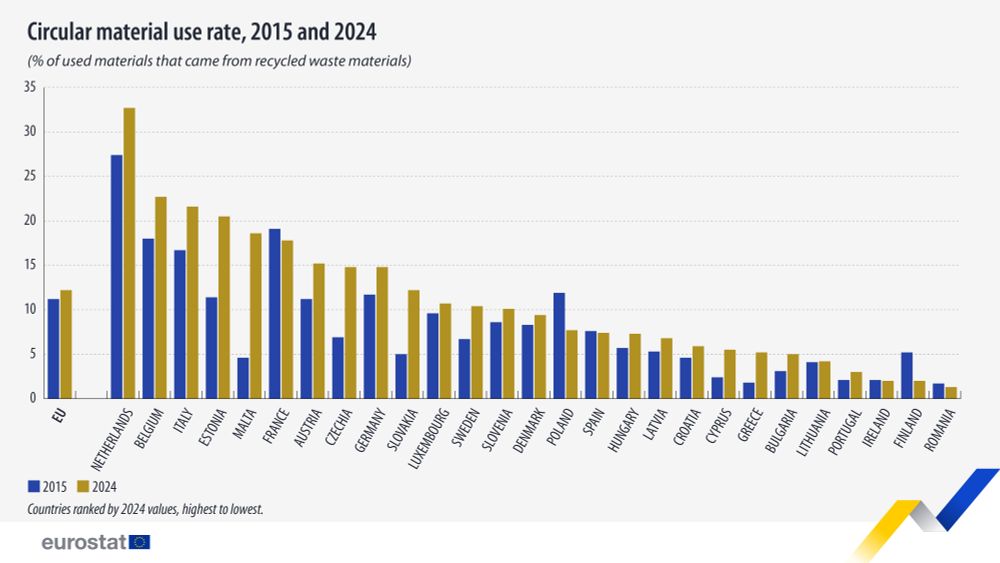
Not too long back, Eurostat confirmed that 12.2% of all materials used across the EU in 2024 came from recycled sources. The EU's own 2030 target is roughly 23%. At this pace, it seems that EU won't make the target
but two countries have already blown past that target and years early. The Netherlands sits at 32.7%. Belgium at 22.7%. Meanwhile, Romania is at 1.3%, Finland and Ireland at 2%. That's not a small gap. So what are they actually doing right?
The Netherlands started with a national conversation in 2017, where 180 organisations - government, businesses, trade unions, environmental groups signed a Raw Materials Agreement committing to figure this out together. That led to a concrete 2030 roadmap with targets broken down by sector. Cities like Amsterdam baked circular principles into public procurement, construction contracts, and even subsidised repair cafés. The goal was to halve primary raw material use by 2030, full circularity by 2050.
Belgium runs an Extended Producer Responsibility (EPR) scheme for packaging which means that the companies making packaging are financially responsible for what happens to it afterwards. The result is 80% packaging recycling, the highest in the EU, already past the 2030 target. Flanders alone saw circular business activity grow 35% in three years.
From the way I see it, countries with similar demographics and wealth can do three things right now:
1. Put the cost on producers, not consumers
2. Get governments buying recycled materials first
3. Fund repair culture - cafés, subsidies, second-hand incentives
The Netherlands even published their roadmap in English specifically so others could use it.