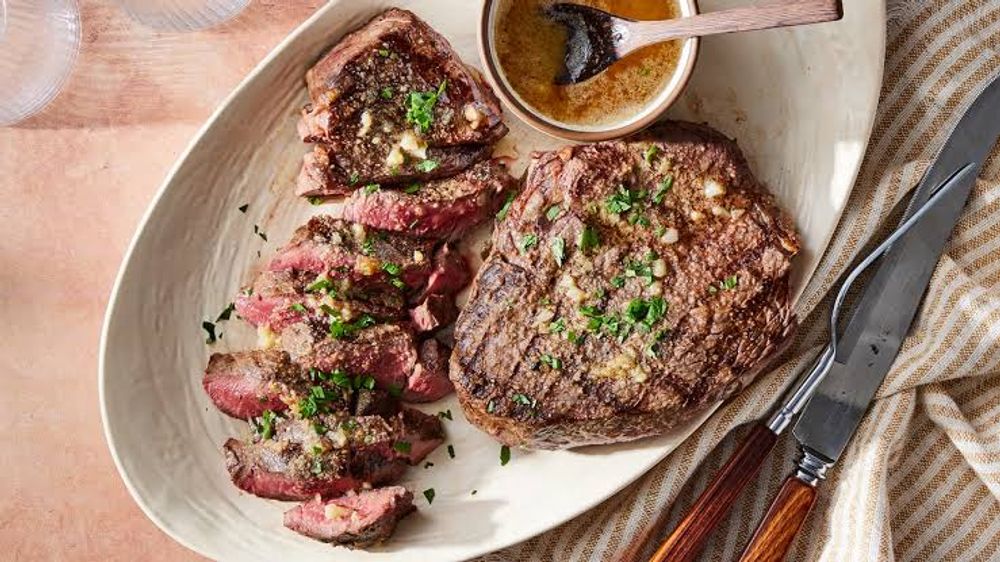
Aleph Farms has secured regulatory approval to sell its cultivated beef steaks in Singapore, with a launch planned for the first half of 2027. Cultivated meat is real animal meat grown directly from animal cells in a facility, rather than from raising and slaughtering livestock. A small sample of cells is taken from an animal once, then multiplied and grown into muscle and fat outside the animal's body.
The process goes like this: Cells are placed in large steel tanks called bioreactors, warm, nutrient-rich vats that mimic conditions inside a living body, and left to multiply. Aleph recently streamlined this, instead of growing cells in one tank and moving them to another to take shape, it now triggers the cells to start turning into muscle and fat within the same tank, then combines them with a plant-protein base to build the final cut. Fewer steps, lower costs, the company says.
On scaling, Aleph is not building its own factories. It's partnering with contract manufacturer Cell Agritech, starting in Singapore and expanding through Cell Agritech's larger Penang, Malaysia site as demand grows, with a similar setup underway in Switzerland.
The environmental picture is genuinely mixed. One widely-cited study found cultured meat could involve 78 to 96% lower greenhouse gas emissions and 99% lower land use than conventional meat. But a 2026 review found results vary hugely across studies, with the energy needed to run bioreactors often exceeding poultry or pork's footprint unless the electricity is low-carbon. A separate UC Davis preprint went further, suggesting current production methods could leave cultivated meat's climate footprint higher than retail beef's. The potential is real, but it hinges on how the power is sourced.