Earlier this week I talked about the "weird middle" of AI adoption and why most people are still using the word "agent" to describe something much closer to a really smart template.
Here's where it gets more interesting.
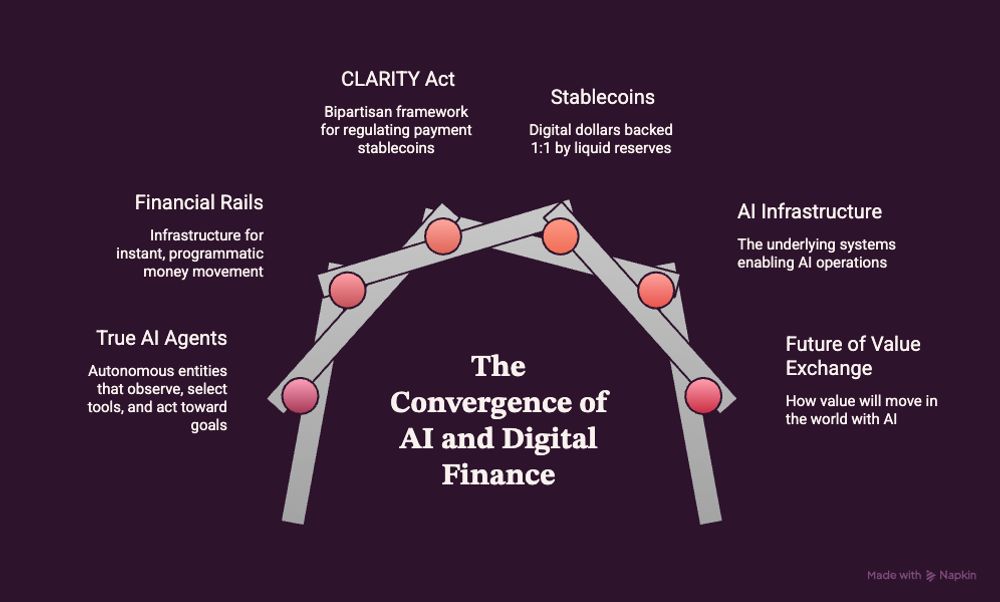
True AI agents, the kind that actually observe environments, select tools, and take autonomous action toward a goal, won't just process text and summarize documents. Eventually they'll negotiate. They'll transact. They'll book your travel, renegotiate your subscriptions, and manage purchases on your behalf in real time.
And when they do, they'll need to move money.
Not in three business days. Not through a legacy bank account waiting on an ACH transfer. Instantly. Programmatically. Without a human approving each transaction in the middle of the chain.
That's exactly why what happened in Washington a couple weeks ago matters more to the AI conversation than almost anyone is saying right now. The CLARITY Act cleared a major milestone in the Senate, advancing a bipartisan framework to regulate payment stablecoins in the United States. A stablecoin is essentially a digital dollar backed 1:1 by liquid reserves, a dollar that can move at the speed of code.
Most of the coverage has framed this as a crypto story. It isn't. It's an AI infrastructure story.
The financial rails that true agents will need to operate autonomously are being laid right now, while most people are still debating whether Siri's new voice sounds more human. The plumbing is going in before most people know a house is being built.
Reality Check: AI and digital value exchange are not parallel conversations. They are converging. The companies and people who see that now will read the next wave clearly. Everyone else will wake up surprised.
We are not just building smarter software. We are building a new operating system for how value moves in the world.
How many people in your network are connecting these two conversations?