The day SpaceX went public, my phone lit up.
Texts from family. Calls from friends. "Phil, should I buy SpaceX?" The excitement was real. The urgency was real. What most of them didn't realize is that anyone with a retirement plan likely already has a small SpaceX allocation sitting in their portfolio right now, thanks to the accelerated market entry the stock received.
That dynamic is exactly the lens I want to bring to this week's news. SpaceX went public and reportedly acquired Cursor, the AI coding platform, for $60 billion. The commentary has been loud and mostly focused on valuations and personalities. But if you filter the noise and look at what's actually being assembled underneath, something structural and quiet is happening.
This isn't a rocket company buying a software tool.
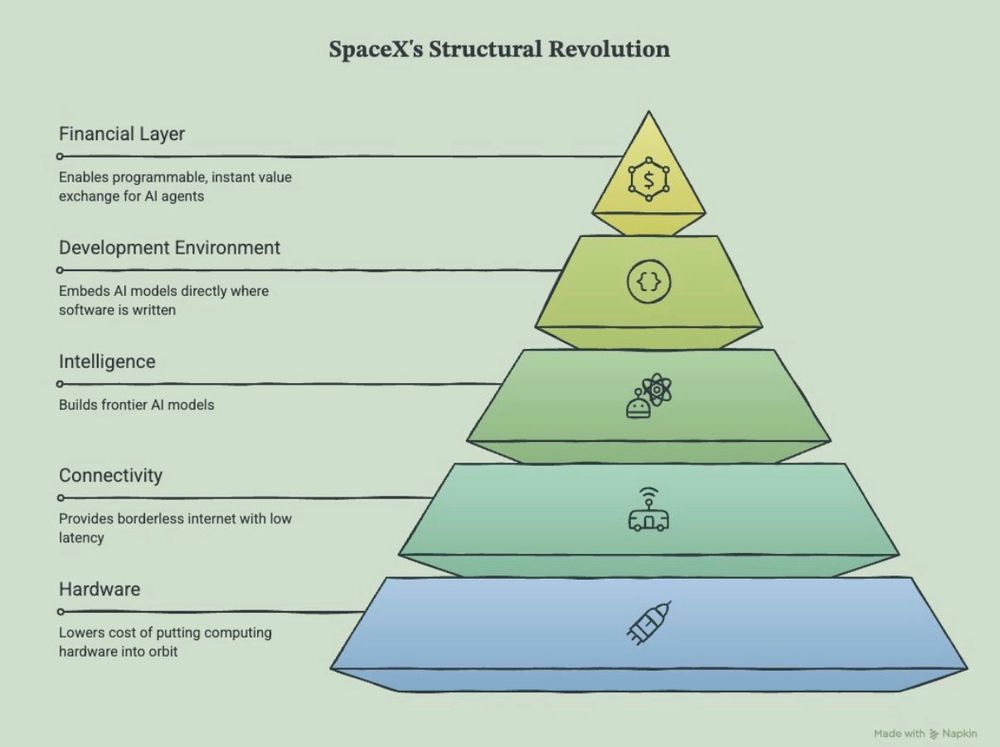
SpaceX lowers the cost of putting computing hardware into orbit. Starlink provides borderless internet with low latency to every corner of the planet. xAI builds frontier models. And now Cursor embeds those models directly where software gets written. Not a chatbot window. The development environment itself.
So what piece is getting almost no attention: AI agents don't have bank accounts.
When an autonomous coding agent needs to rent GPU space to compute, pull an external dataset, or commission a specialized agent to audit its work, it cannot wait three business days for an ACH transfer to clear. It needs programmable, instant value exchange. Tokenized payment rails. That's why the stablecoin regulatory framework moving through Washington right now isn't just a crypto story. It's the financial layer of this same stack being laid in real time.
The workforce of the next decade won't be measured in headcount. It will be measured in how well humans architect, govern, and add judgment to the agents doing the work.
I'm not here to tell you what to buy or who to root for. What I am saying is that the plumbing of the global economy is being replaced while most people are still asking whether they should buy the pipes.