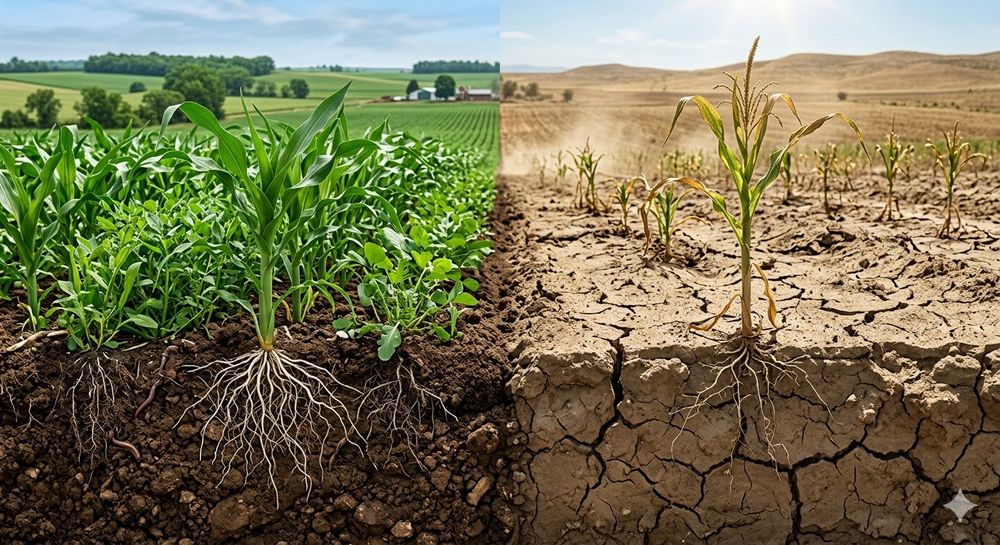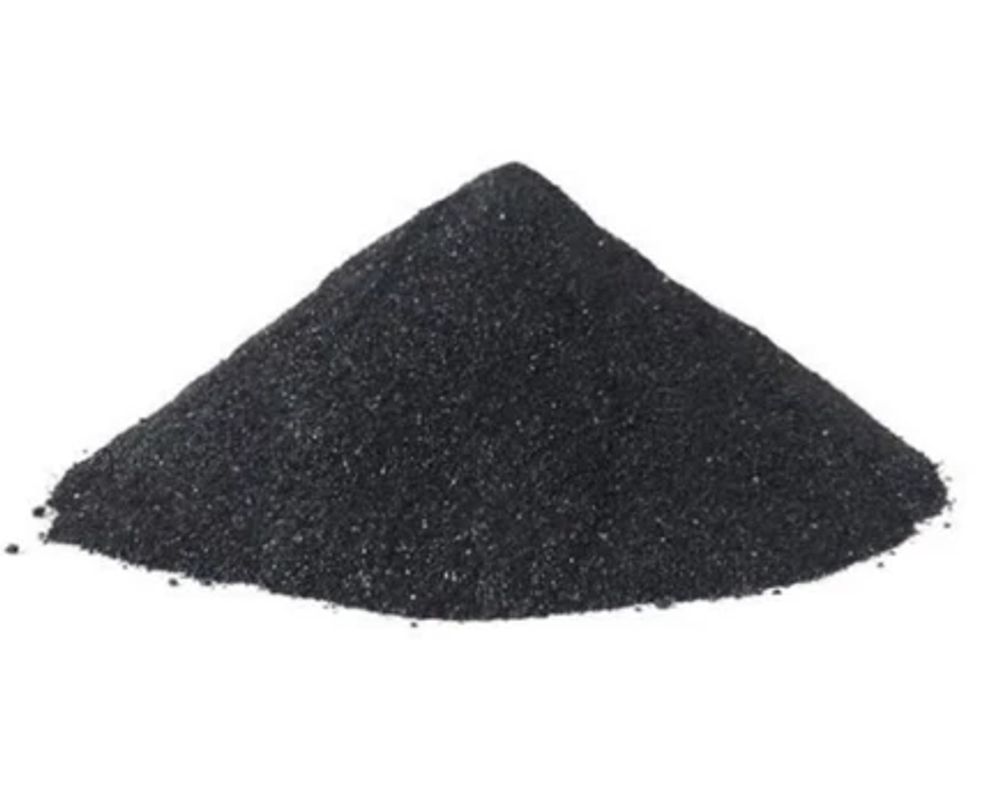

Silicon is not an essential nutrient, but it acts as a beneficial element that strengthens the leaf cell wall, forming a kind of “shield” of silica just beneath the cuticle, increasing the plant’s physical resistance to biotic and abiotic stresses and improving its leaf architecture.
Leaf stiffening and plant architecture
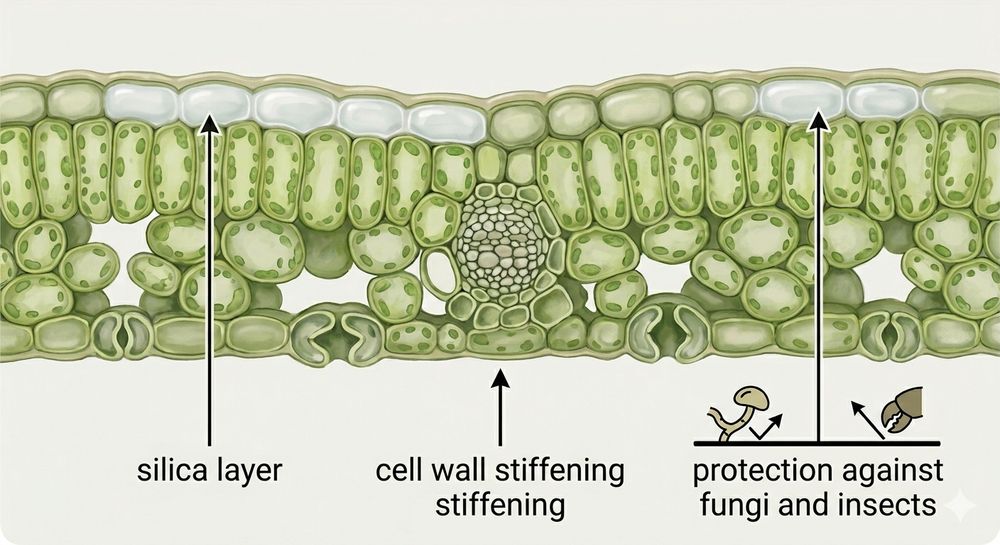
When the plant absorbs silicon, it is deposited in the epidermal cell wall, creating a double layer of silica that makes leaves and stems more rigid and upright. This reduces lodging, improves exposure to sunlight, and decreases self‑shading of the canopy, enhancing photosynthesis and, consequently, productivity (grains, fruits, etc.).
Protective layer against diseases and pests
The deposition of silica in the epidermis acts as a mechanical barrier, making it harder for fungi, bacteria, and nematodes to penetrate, while also reducing attacks by sucking and chewing insects. Studies show lower disease severity in crops treated with silicon, as pathogens encounter tougher cell walls and greater difficulty colonizing the plant.
Additional benefits of silicon
Reduced water loss: stiffer leaves and a reinforced cuticle decrease transpiration, increasing tolerance to drought and water stress.
Tolerance to salinity and toxicity: improves ionic balance and reduces the accumulation of toxic elements, such as aluminum in acidic soils.
Stimulation of photosynthesis and grain quality: upright leaves capture more light, enhance photosynthetic efficiency, and favor higher chlorophyll content and more grains per panicle in cereals.
Investment
Collaboration