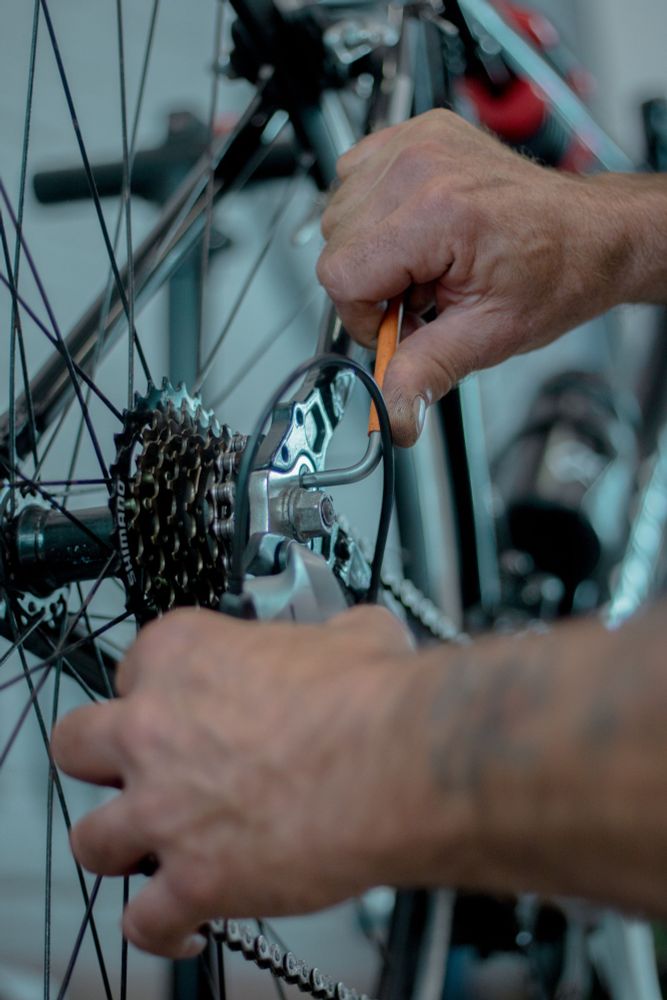
Much of the circular economy discussion focuses on recycling materials after products reach the end of their life. Restomod culture suggests a different path: extending product life through repair and modification.
Restomodding is nothing new. Enthusiasts have been restoring and modifying old cars and bicycles for decades. What seems different today is how accessible it has become. Parts can be found through online marketplaces, and knowledge that once belonged to small communities is now shared openly online.
What interests me is not the vintage value of old products, nor simply the fact that they are being reused. The value seems to lie in the act of modification itself.
Rather than treating products as finished goods to be consumed and replaced, people continue to adapt them to their own needs. In doing so, products remain useful long before recycling becomes necessary.
Perhaps circularity is not only about managing waste more effectively. It may also be about creating products and cultures that encourage people to keep improving, repairing, and using what they already own.
Thanks to space-tech like Starlink, we now have high-speed internet even in the deepest forests.
However, we face a major data paradox: The official coordinates of our land are still trapped in 19th-century paper registries.
This is not a problem for big, industrial logging companies that clear-cut vast lands with massive capital. But it is a fatal bottleneck for small-scale, sustainable foresters who want to manage and restore fragmented private lands. They cannot even touch the land because the official boundaries don't exist.
The next big frontier for forestry is turning these ancient paper records into high-precision digital data. We need to democratize land access for the next generation of eco-friendly foresters.
In Japan, waste separation rules vary drastically by region. Huge cities like Tokyo require minimal sorting because their massive, high-tech incinerators can burn almost anything. Rural areas, with lower processing power, require residents to meticulously separate waste into dozens of categories.
This creates a strange paradox: Does an advanced, centralized infrastructure accidentally lower our environmental consciousness by hiding the problem?
Does less processing capacity in rural areas actually force higher environmental awareness and stronger community accountability?
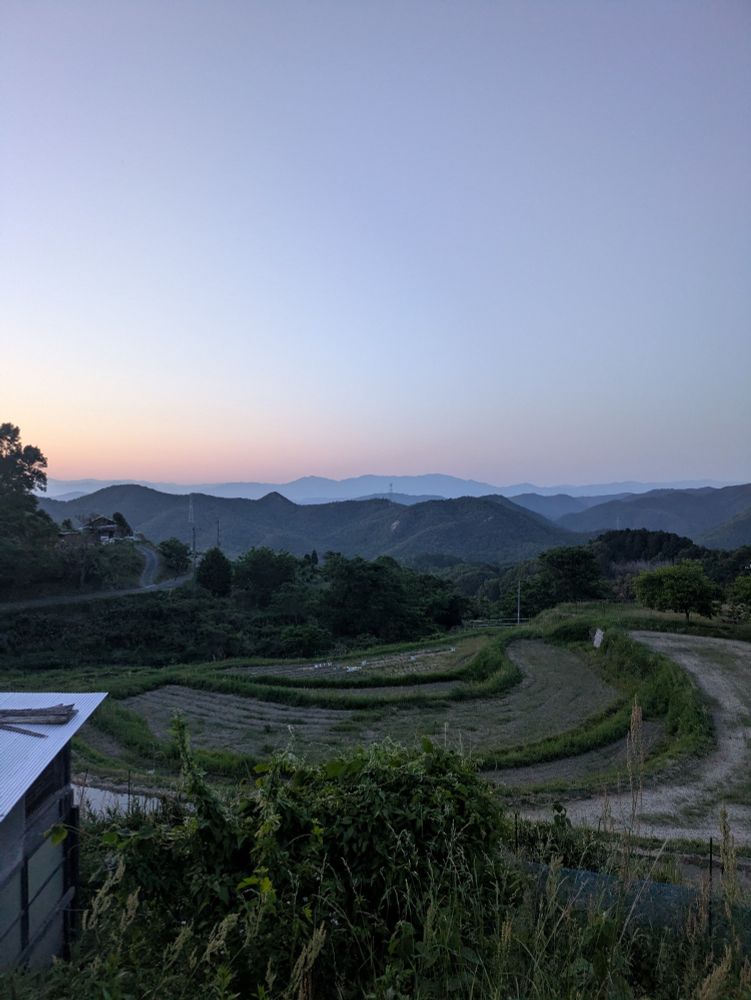
Japan's rice terraces (Tanada) are praised for their rural beauty, but their steep slopes and irregular shapes make farming incredibly difficult. As a result, they are rapidly disappearing.
Until now, most AgriTech has focused on maximizing efficiency for large-scale, flat farmlands. But shouldn't we use technology to boost efficiency in small, uneven plots like these terraces?
Transforming these increasingly abandoned rural fields into productive lands through technology is exactly what modern AgriTech should be striving for.
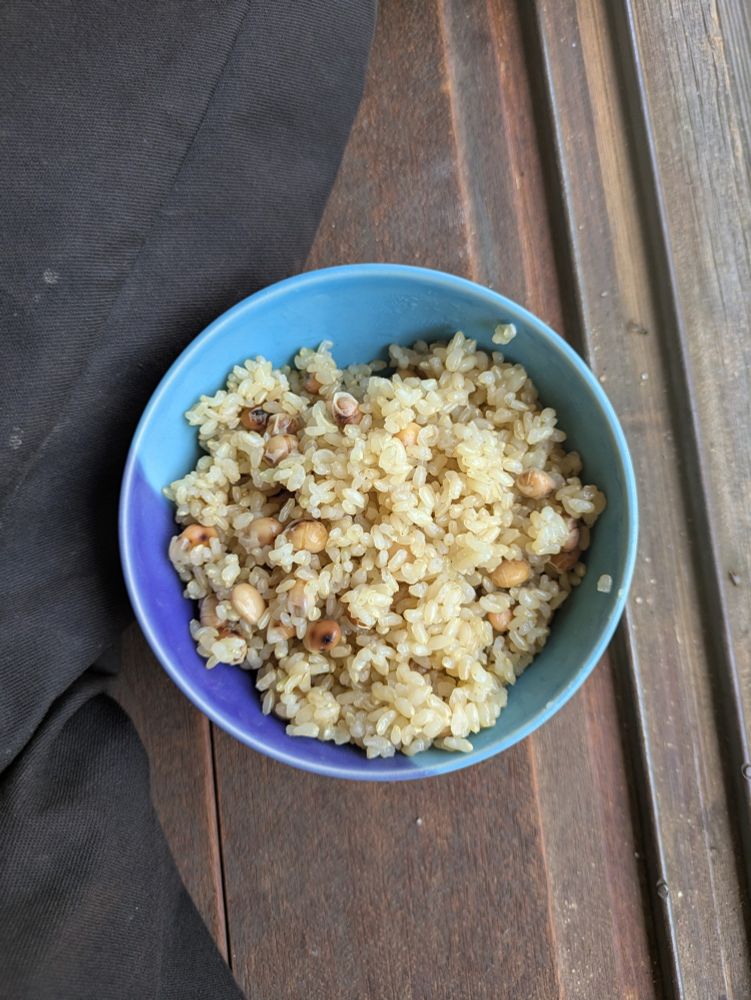
Shifting from white rice to a brown rice centered diet taught me a crucial fact: we need far less meat, fish, and extra vegetables to meet our nutritional and caloric needs than we think.
While this minimalism isn’t the sole indicator of culinary richness, it redefines our relationship with food.
Current food security debates focus heavily on securing imports and tech-driven supply chains. But shouldn't we focus on changing human perception? If we shift our dietary norms, we naturally lower the required supply load, inherently strengthening our food security and stable supply systems.
Brilliant ideas often spark during silly chats with friends, but pausing to take notes is too disruptive. What if AI meeting minutes expanded into an invisible lifelog?
It could automatically capture those random ideas and even eliminate false accusations. But where is the line between this and a hyper-surveillance society?
Today, logging and exposing our lives on social media is the norm. Will this all-logging AI just be accepted as a natural extension of diaries and SNS, or something darker? What do you think?
Should the human body itself be part of the circular economy?
Here in Japan, and in many modern societies, cremation is the absolute standard. We do not practice burial that returns the body to the earth. However, by doing so, we are incinerating immense biological potential and breaking the ultimate environmental loop.
While we must carefully consider hygiene and environmental impact, it seems we have become blinded by cultural habits. We overlook the fact that our physical bodies are the ultimate natural resource, meant to be returned to the ecosystem.
Funeral traditions and the emotional culture of mourning must be deeply respected. Yet, shouldn't "returning to the soil" be socially recognized as a valid personal choice?
Watching someone seamlessly operate an AI like Claude recently left me with a profound sense of both despair and hope.
The despair is obvious: the inevitable evaporation of routine, administrative jobs within corporate structures. But the hope is revolutionary: AI is drastically lowering the barrier to entry for small, independent businesses.
We may be on the verge of a historical reversal. Instead of a future dominated by massive corporations, AI could actually fuel a renaissance of the "personal shop"—small-scale, individual-driven spaces that serve as platforms for pure self-expression.
As non-human intelligence perfects efficiency and logic, what will people truly crave?
In a hyper-rational world run by machines, I believe our greatest value—and our deepest desire—will shift toward the exact opposite: the deeply human, the physical, and the beautifully "irrational" work that connects us.