Europe just made it illegal to destroy unsold clothes.
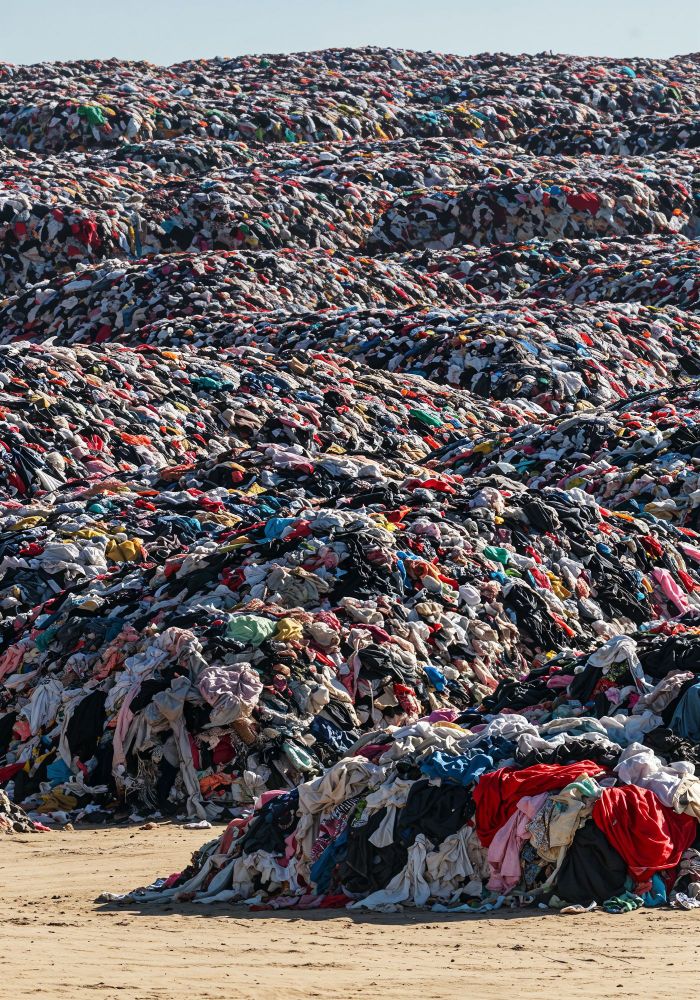
Starting today (July 19, 2026), big companies operating in the EU can no longer destroy unsold clothing, footwear, or accessories under new rules in the Ecodesign for Sustainable Products Regulation. It is a bigger shift than it sounds. Every year, an estimated 4 to 9 percent of unsold textiles in Europe are destroyed before they are ever worn, generating roughly 5.6 million tons of CO2, close to Sweden's entire annual emissions. Destruction now includes incineration and even certain forms of disposal, not just landfilling, and companies must instead prioritize resale, donation, repair, or recycling. Medium-sized companies have until 2030 to comply, and a standardized disclosure format for discarded goods becomes mandatory in 2027. This is exactly the kind of regulation that turns circularity from a marketing claim into an operational requirement. Retailers now need real answers for every unsold item, not a write-off. That pressure will likely accelerate demand for resale platforms, recycling infrastructure, and better inventory forecasting across the industry.
Source:
circulareconomy.europa.eu/platform/en/...Berlin just opened Germany's largest direct air capture plant, and it's tiny by design.
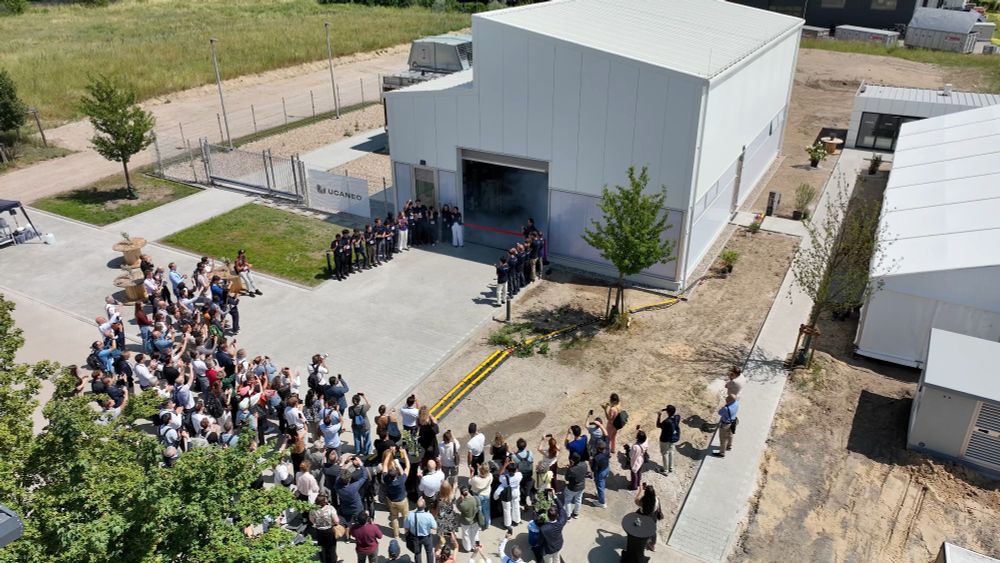
Ucaneo recently inaugurated Germany's largest direct air capture facility in Berlin, with a capacity of 150 tons of CO2 a year, a fraction of Climeworks' 36,000 tons plant in Iceland. What makes it notable is the pairing. Part of the captured CO2 will be permanently stored underground, making this Germany's first verified direct air capture project combined with geological storage. The technology uses an electrochemical process that the company compares to how a lung absorbs oxygen, delivering CO2 at over 99.9 percent purity. Siemens has signed on as automation partner to help standardize the process for wider rollout, and a follow-up plant with ten times the capacity is already in development. Ucaneo's own target for 2035 is half a gigaton of CO2 captured annually, roughly equal to Canada's yearly emissions.
The distance between 150 tons and half a billion tons is big, but every direct air capture company in this field has had to start exactly this small.
Source:
www.einpresswire.com/article/9238...Poland just generated its first offshore wind power.
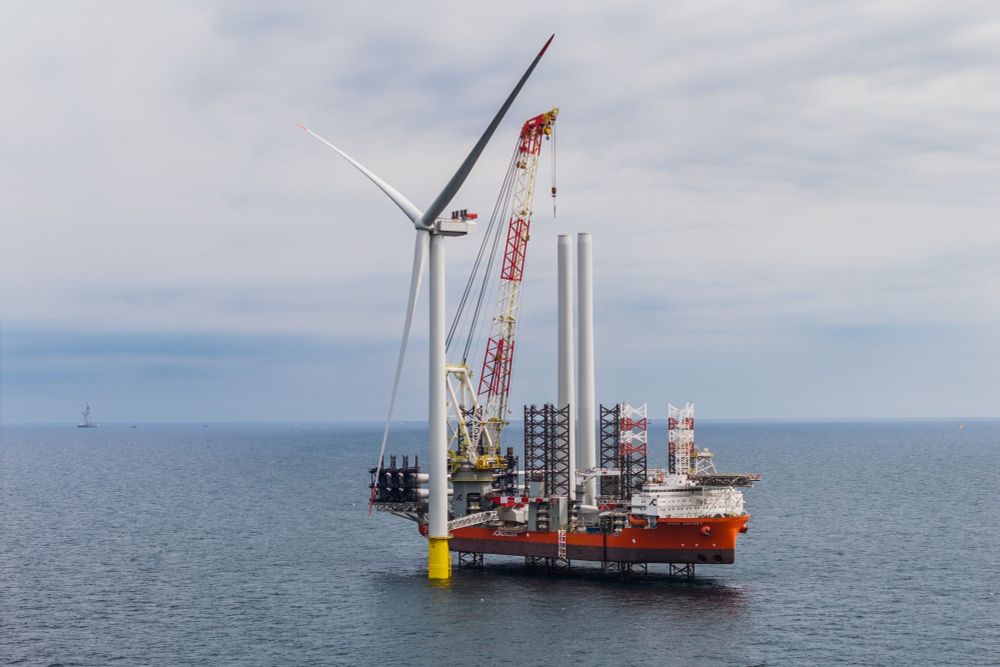
On July 10, the Baltic Power project delivered its first electricity ever generated by offshore wind to Poland's national grid. For a country that has relied heavily on coal for decades, this is the first real proof that offshore wind is becoming part of its energy system instead of just a long-term plan.
The project is being developed by ORLEN and Northland Power, with 54 of the planned 76 turbines already installed about 23 kilometers off the Polish coast. Once the full 1.1 GW project is completed later this year, it is expected to generate around 4 TWh of electricity annually, enough to power more than 1.5 million households and meet about 3 percent of Poland's electricity demand.
Just as notable, Northland Power says the project remains on schedule and within its original budget, a rare feat for a country's first offshore wind project and a meaningful signal for future investment. It also marks a real shift in Poland's energy transition, turning years of policy discussion into actual generation on the grid.
Sources:
www.globenewswire.com/news-release...CATL and its competitors just agreed to work together
CATL, BMW, Renault, Volvo, Google, and Xiaomi launched a new circular economy alliance for batteries on June 22 at London Climate Action Week, with the Ellen MacArthur Foundation coordinating the effort. The goal is shared standards for reusing, recycling, and designing batteries so they come apart cleanly at the end of their first life, with a formal design guide due out in 2027.
These are companies that compete fiercely for the same customers every day, yet they have agreed on common rules for measuring how much life remains in a used battery and how to disassemble it. It may sound like a technical footnote, but this is exactly the kind of infrastructure work that determines whether second-life batteries become a genuine market or stay a fragmented mess nobody can scale.
Anyone building in battery reuse or recycling should watch closely to see what standards this group will ultimately set.
Source:
www.electrive.com/2026/06/29/c...Researchers in Berlin just broke a world record that was barely six weeks old.
Most solar panels use a single layer of silicon to catch sunlight, but silicon has a hard physical ceiling on how much of the light spectrum it can capture. The solution is a tandem cell, stacking two light-absorbing materials so the combination captures more of the spectrum than either could alone. On July 1, teams at Helmholtz Zentrum Berlin and Humboldt University stacked perovskite on top of CIGS, a thin film material made from copper, indium, gallium, and selenium, and hit a certified 25.5 percent efficiency, meaning just over a quarter of the sunlight becomes usable electricity. Europe's official solar test lab verified it, so this is an independently checked result, not a company claim.
It edges out a Tokyo team's record from mid-May of just over 25.1 percent, and the German researchers say their own prototypes have already cleared 27.5 percent internally, though that still needs outside certification. Breaking two records in six weeks is a strong sign of how quickly this field is advancing. The real challenge isn't squeezing another fraction of a percent out in the lab, but turning a fingernail-sized champion cell into a full-sized panel that survives 25 years on a rooftop without degrading.
Still, the science is clearly moving faster than most people realize.
Source:
www.pv-magazine.com/2026/07/01/g...