Innovation often starts with an introduction.
We tend to imagine innovation beginning with a breakthrough idea, new technology or major investment.
Often, it begins much more simply.
One person knows a problem.
Another knows a possible solution.
Someone else makes the introduction.
The strongest communities don’t just share information. They connect people who might otherwise never meet.
AI can help us discover knowledge faster and platforms can expand our reach, but trust, curiosity and human relationships still turn possibilities into action.
Sometimes the most productive thing you can do isn’t build something new.
It’s to connect two people who should know each other.
What introduction has made the biggest difference in your work?
Saturday thought.
We spend a lot of time thinking about the next job, the next opportunity or the next milestone.
But every so often it’s worth asking a simpler question:
Am I actually building a life I want to live?
For me, that has increasingly meant valuing freedom, meaningful work, good people, travel, creativity and the ability to keep learning.
The path is rarely straight. There are wrong turns, setbacks and plenty of uncertainty along the way. But perhaps that’s the point — you learn a little more about yourself with every step.
That journey eventually became part of Soul Trader, the book I published this month.
It isn’t really a book about having everything figured out. It’s about questioning the path you’re on, recognising what matters and having the courage to keep moving towards it.
One step at a time. One rep at a time.
Have a great Saturday.
AI is moving incredibly quickly.
But perhaps the most important question is no longer simply:
“What can it do?”
It may increasingly be:
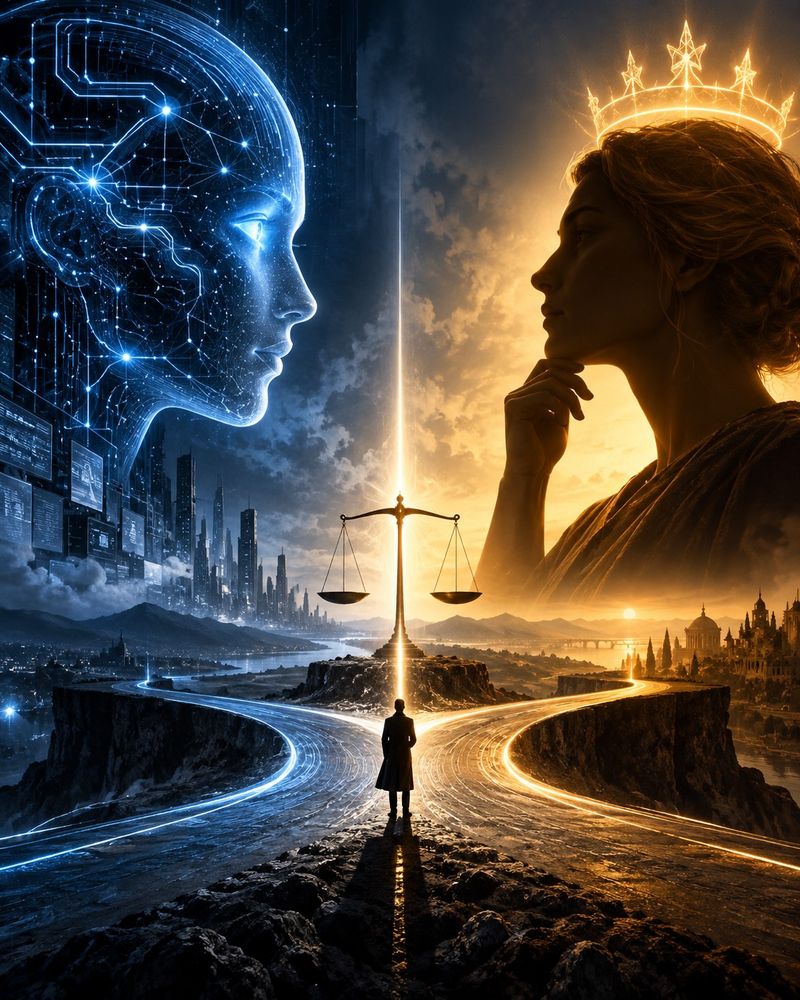
“What should we allow it to do — and what must remain under human judgement?”
This week King Charles brought leaders from some of the world’s biggest AI companies together in Scotland and raised concerns about the pace of development, the potential misuse of increasingly powerful systems and the need for safeguards.
What struck me was not the idea that AI itself is inherently good or bad.
It is that capability is advancing much faster than our ability to agree on responsibility.
AI can already help researchers, businesses, doctors, creators and millions of ordinary people do things that would have been impossible only a few years ago.
But greater capability also means greater responsibility.
The challenge may not be choosing between innovation and caution.
It may be learning how to pursue both at the same time.
Technology should expand human capability without removing human accountability.
As AI becomes more powerful, what do you believe must always remain a human decision?
Innovation is often less about invention and more about removing friction
We tend to associate innovation with breakthrough technologies, new products and big ideas.
But some of the most useful improvements are much quieter.
A form that takes two minutes instead of twenty.
A process that removes three unnecessary approvals.
A dashboard that turns scattered information into one clear decision.
A system that helps someone act without waiting for permission.
None of these things may look revolutionary.
But reducing friction changes behaviour.
It saves time.
It lowers frustration.
It helps people make better decisions.
And when repeated across an organisation, those small improvements compound.
Perhaps one of the best questions we can ask when trying to innovate is not:
“What can we add?”
But:
“What can we make simpler?”
What is one unnecessary piece of friction you would remove from your work today?
Kindness is an underrated form of innovation
We often talk about innovation in terms of technology, capital, data and scale.
But some of the most meaningful progress starts with something much simpler: noticing another person and choosing to make their day a little easier.
A useful introduction.
Sharing knowledge without expecting anything back.
Giving someone encouragement when an idea is still fragile.
Taking the time to listen before offering the solution.
None of these things appear on a balance sheet, yet they build something every successful community needs: trust.
Technology can connect millions of people. AI can accelerate ideas. Capital can turn those ideas into companies.
But people still decide whether to help one another.
Perhaps the future isn't only about building smarter systems.
Perhaps it's also about building kinder ones.
What small act of kindness has made a bigger difference to you than the person who did it probably realised?
Sometimes the most important project is the one you finally decide to release.
Today, I published my book, Soul Trader.
It started as a story about a career in financial markets, but while writing it I realised that the more interesting story wasn't really about markets at all.
It was about what happens around them.
The risks we take. The successes we celebrate. The mistakes we make. The times things don't work out. And the ability to learn, adapt and begin again.
For years, I measured performance through numbers, markets and P&L.
Writing this book made me think about a different kind of ledger — the experiences, relationships, failures, lessons and moments that shape who we become.
There are no perfect strategies for that.
Only experience, reflection and the willingness to keep moving forward.
After a lot of work behind the scenes, it feels good to finally say:
Soul Trader is published.
www.amazon.co.uk/dp/B0HJGDXWDP
One project completed.
And, hopefully, the beginning of another chapter.
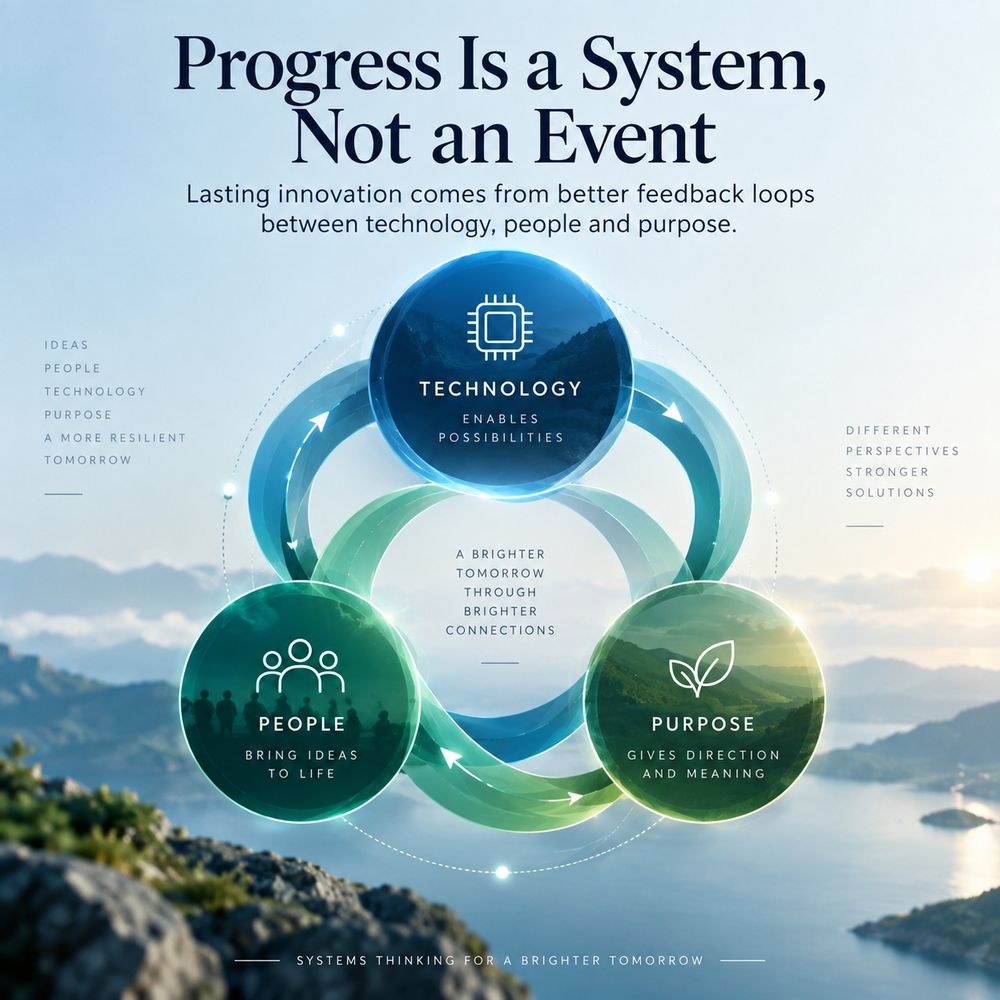
The most important innovations may not be the biggest breakthroughs. They may be the systems that help us make better decisions every day.
We often talk about innovation as if it arrives in one dramatic moment: a new technology, a breakthrough product or a completely new business model.
But lasting progress usually works differently.
It comes from hundreds of smaller decisions.
Measure what is happening.
Learn from what failed.
Keep what works.
Remove unnecessary waste.
Listen to the people actually using the system.
Then improve it again.
That principle applies almost everywhere — from AI and agriculture to climate technology, recycling, supply chains and the circular economy.
Technology can dramatically increase our ability to analyse, automate and scale. But it cannot remove the need for judgement.
In fact, as our tools become more powerful, good judgement becomes even more valuable.
Perhaps the organisations that succeed in the next decade will not simply be those with access to the best technology.
They will be the ones that build the best feedback loops between technology, people and purpose.
Progress does not always require revolution.
Sometimes it is simply one intelligent improvement after another.
What small change in your organisation or industry could create a surprisingly large impact if repeated consistently?
A small thing I’ve noticed about good ideas
The best ideas often don’t arrive when you are actively trying to find them.
They show up on a walk, over coffee, during a conversation, or while doing something completely unrelated to work.
Maybe that is because when we stop forcing the answer, the mind starts connecting things in the background.
In business we spend a lot of time talking about productivity, optimisation and output.
But there is probably still a place for unstructured thinking — time where nothing obvious is being produced, but something useful may be forming.
I’ve started to think that some of the most productive moments can look completely unproductive from the outside.
Where do your best ideas usually come from?