@khaedr avatar
@khaedr

Khaled Rashid

Zero-Emission Fuels - Disruptive TechnologyUnited Kingdom

2Following 4Followers
Posts
Pages

Recent posts

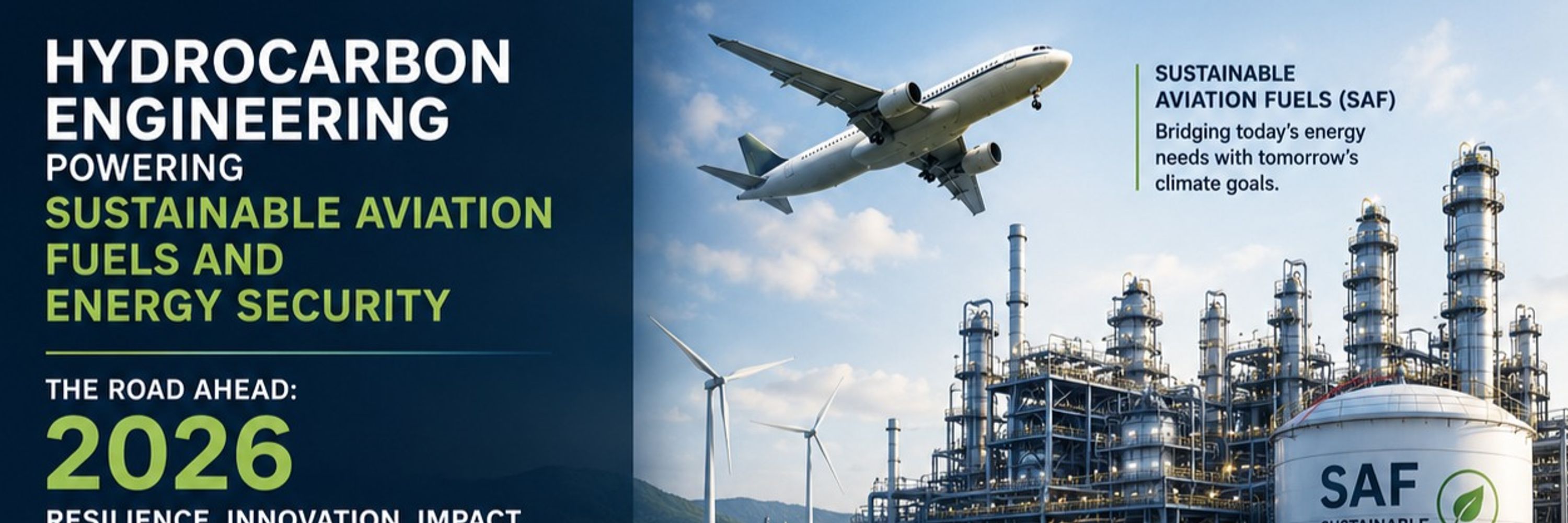
The UK Government has sent a strong signal to investors: the future of Sustainable Aviation Fuel (SAF) is being built in the UK. With the introduction of the Revenue Certainty Mechanism (RCM), the Government is helping to reduce investment risk and accelerate the deployment of first-of-a-kind SAF production facilities. At Hydrocarbon Engineering, we've already achieved TRL 6, validating our proprietary AAHS® technology through 23+ continuous-flow pilot campaigns. Our platform converts CO₂, biomass and organic residues into drop-in sustainable fuels, positioning us to support the UK's ambitions for energy security, industrial growth and aviation decarbonisation. The opportunity is no longer just about reducing emissions—it's about building commercially competitive, scalable fuel production for the future. We're moving from technology validation to commercial deployment, and we're looking for strategic investors and partners to help shape the next generation of sustainable aviation fuels.
Aviation is under unprecedented pressure to decarbonise, yet the world still lacks a scalable, affordable, and secure supply of Sustainable Aviation Fuel (SAF). That’s why Hydrocarbon Engineering is stepping forward with a TRL 5 breakthrough technology that is reshaping what’s possible. We’ve developed a new-to-market, disruptive pathway to produce green hydrogen and synthetic aviation fuels without electrolysers, without dependence on intermittent renewables, and without the cost barriers that have held the industry back. What makes our technology different? 🔹 Commercially viable SAF production — at a cost point designed for real‑world adoption 🔹 Green hydrogen at ~€1.5/kg — unlocking the economics the industry has been waiting for 🔹 Decentralised, scalable systems — deployable directly at airports, industrial hubs, or fuel
As one of the world's leading aviation hubs, UK jet fuel imports reached approximately 9 million tonnes in 2025 alone. This raises an important question: Why are we importing the majority of a strategic fuel that could be produced here in Britain? The transition to Sustainable Aviation Fuel (SAF) is not just an environmental opportunity, it is an industrial opportunity. By deploying Hydrocarbon Engineering's SAF technology across the UK, we can transform domestic biomass, waste streams and biogenic CO₂ into sustainable aviation fuel, reducing reliance on imports while strengthening national energy security.
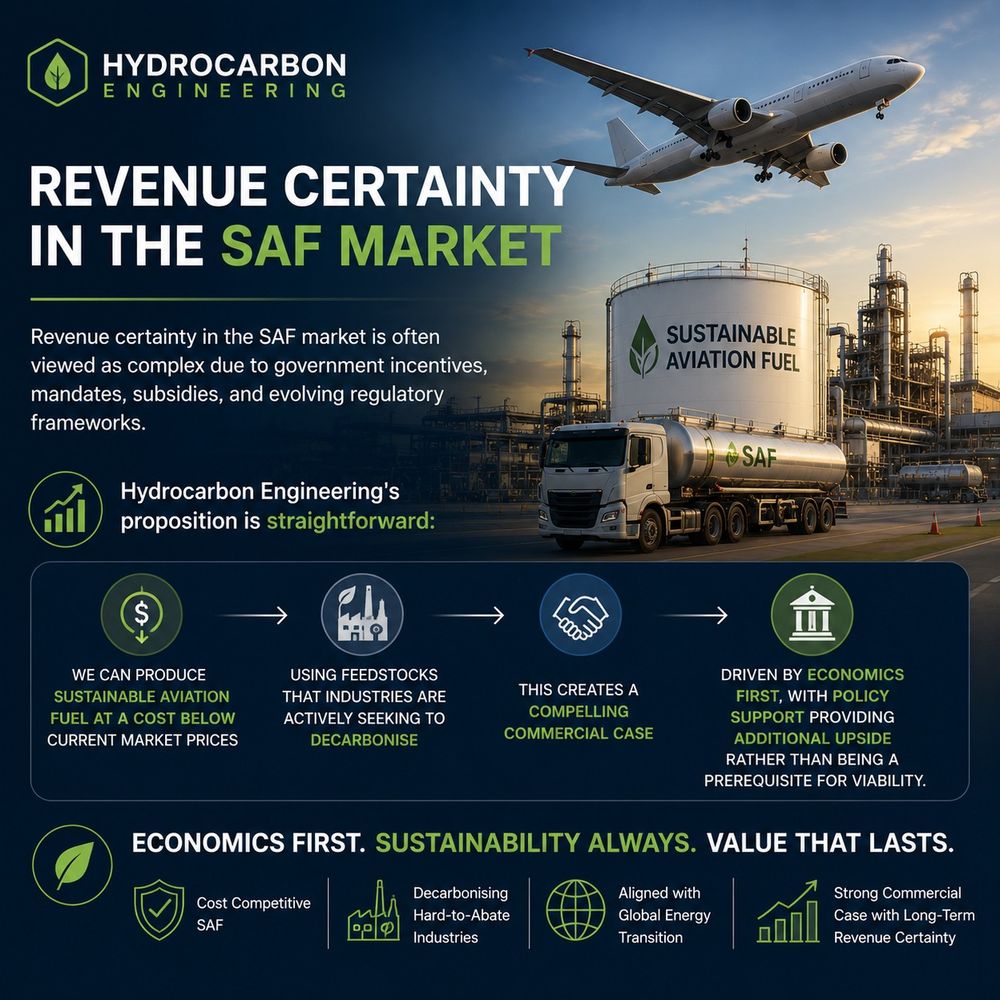
The Sustainable Aviation Fuel (SAF) market is often viewed through the lens of mandates, subsidies, and government incentives. At Hydrocarbon Engineering, we see it differently. Our business case is built on economics first. We are developing technology capable of producing SAF at a cost below current market prices using feedstocks that industries are actively paying to decarbonise. This creates a rare opportunity where commercial viability is driven by market fundamentals—not dependent on policy support. Government incentives and SAF mandates provide additional upside, but they are not the foundation of the business model. Lower production costs. Abundant feedstocks. Growing demand. Existing infrastructure compatibility. That is what creates long-term revenue certainty. As global aviation seeks scalable pathways to net zero, the winners will be the companies that deliver commercially competitive fuels—not just compliant fuels. Hydrocarbon Engineering is building exactly that.
Connect with Khaled Rashid

Join INSPIRED