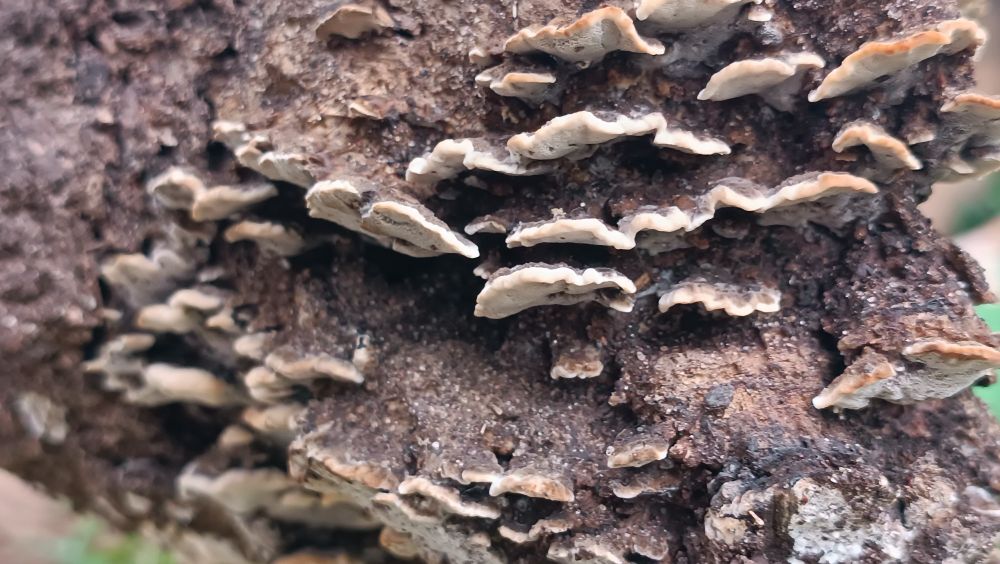
Mycelium grows from the bottom up, branches splitting and splitting again until the network fills the frame, then gently fades and regrows. Every tip glows while it's actively growing, then goes quiet just like real mycelium.
The mycelium branching is hyphal growth modeled with something called an L-system - a mathematical grammar that describes how branching organisms grow just like trees, lungs, rivers, lightning - they are all L-systems.
@kingsleypaul
Kingsley Paul
16Following
19Followers
I design visual systems for biosecurity, pandemic preparedness, biotechnology, and AI safety teams using nature's intelligence, turning invisible threats into dangers they can see and stop. I also make biology easy to understand through better bio/scientific communications.
Posts
Pages
Recent posts
Mathematical Morphology is D'Arcy Thompson's gift to the world. The idea that biological shape is just geometry that evolution discovered first. That is why Morphogenesis; the study of how living things get their shapes. How a flat sheet of cells becomes a hand. How a spore decides to branch left or right. The word literally means the origin of form.
We can use math and logic to explain why living systems look and behave the way they do.
Animated biological forms from equations, computer-generated shapes that look so biological your brain cannot separate them from life.
Below is a membrane dynamics and pseudopod formation. showing that biology has equations for that too.
In the video below, the Amoeba pulses with a green bioluminescent glow. The boundary never stops morphing, nucleus drifting inside, vacuoles orbiting slowly. 5 overlapping sine waves, each spinning at a different speed. None of them know about each other. The mess they create together looks alive.
Nature is never perfectly synchronized. That slight imperfection is what your eye reads as life.
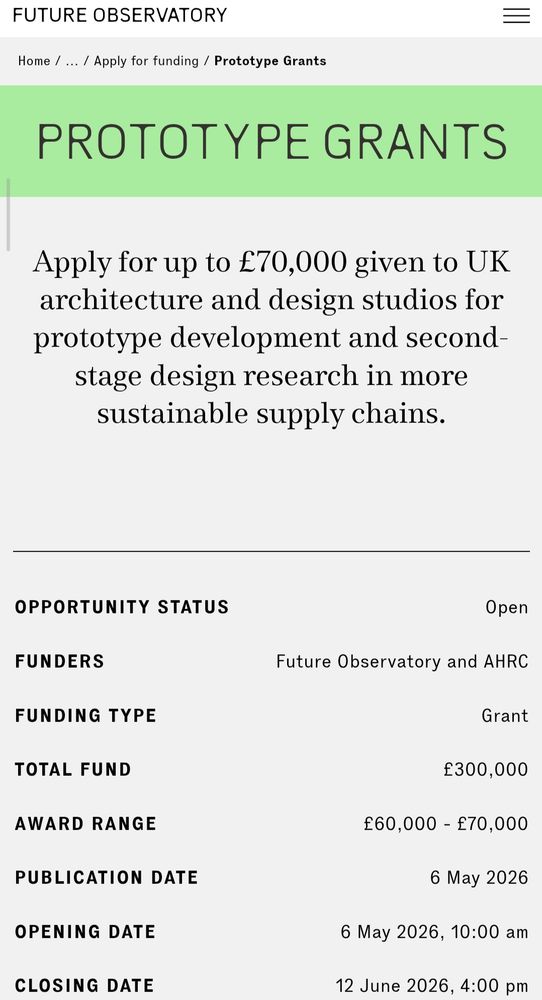
Is your studio already rethinking where materials come from, how things are made, or who supplies them?
Future Observatory’s Prototype Grants are open: four awards of up to £70,000 for UK-based architecture and design studios working on more sustainable supply chains.
We’re looking for second-stage research - projects ready to progress - and ideas that challenge business as usual, from biomaterials to circular and regenerative design.
Who can apply? UK-based studios with at least one year of practice and three completed projects.
futureobservatory.org/research/app...
Good morning inspired fellow.
My biggest announcement for today is to stay tuned to my post!
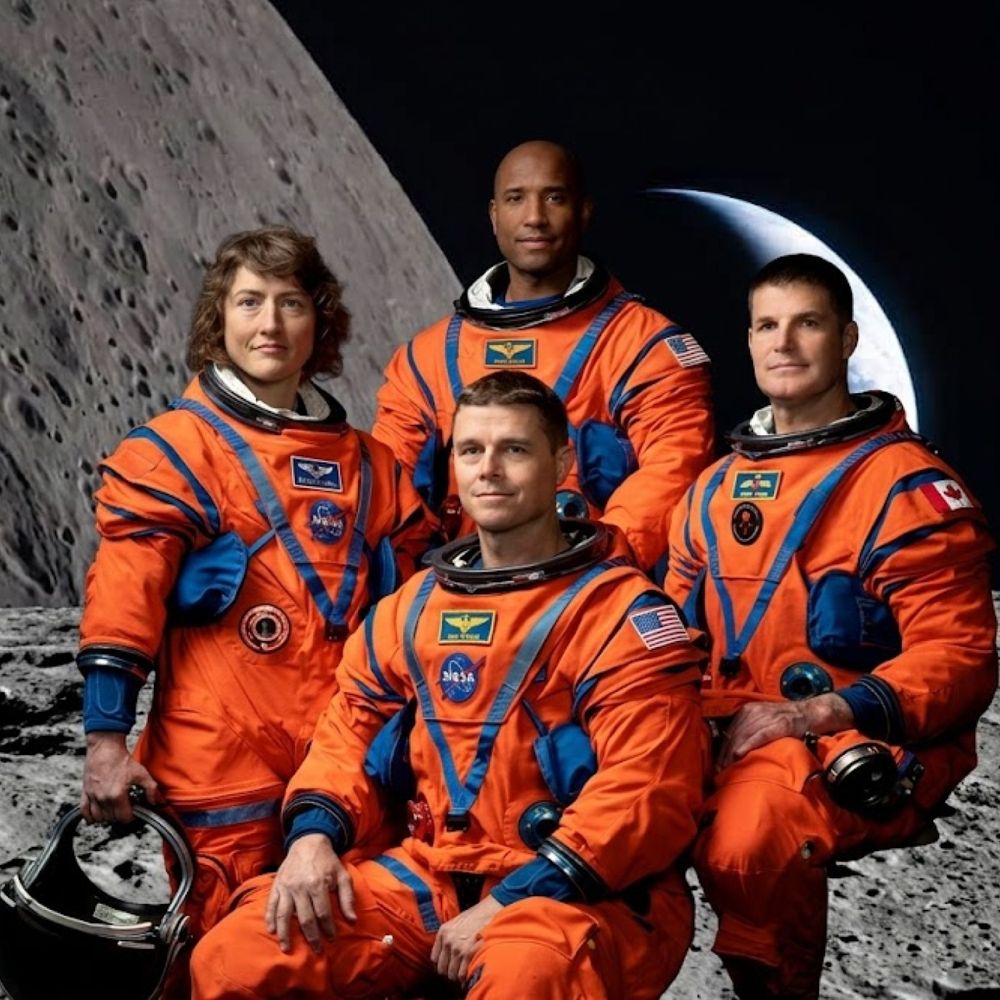
The images coming back from Artemis 2 are stunning-Earth suspended in darkness, the Moon's ancient surface up close, galaxies stretching endlessly beyond.
These moments exist because NASA - National Aeronautics and Space Administration's team made thousands of invisible decisions right.
But here's the thing: those breathtaking photos were captured through interfaces designed under intense pressure. One confusing alert. One unclear warning. One moment of cognitive overload during a system failure, and we lose more than pictures. We lose people.
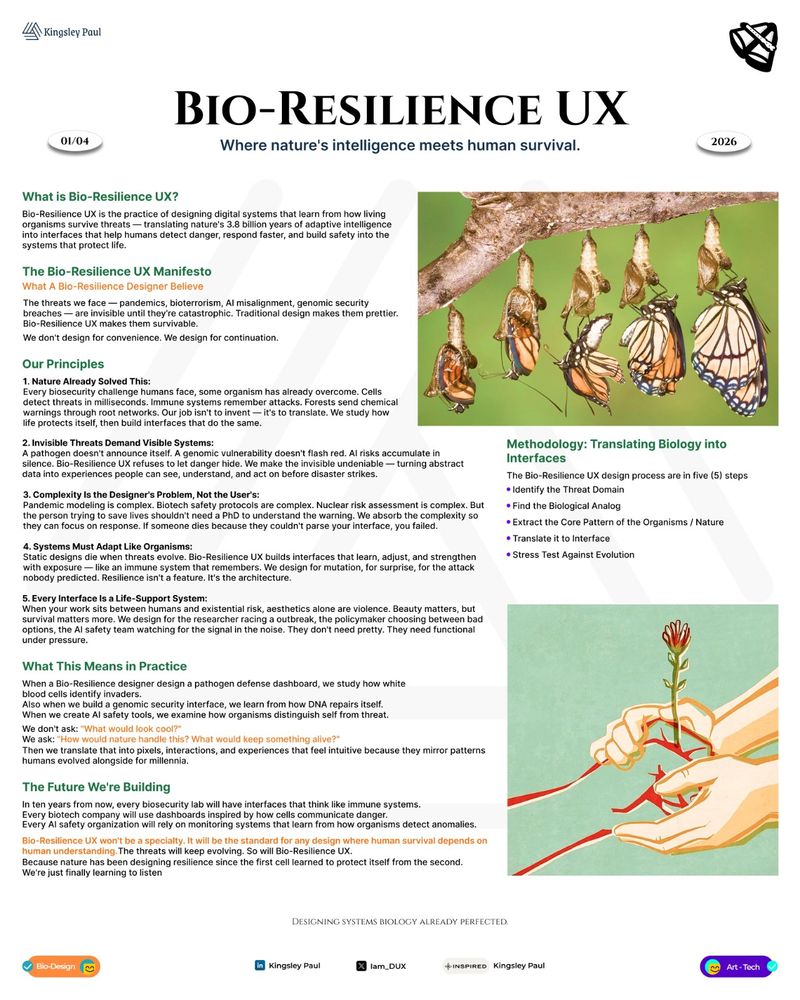
📌📌This is where Bio-Resilience UX comes in the future.
Future missions need interfaces that work like our own bodies; systems that sense danger before astronauts do, adapt when things go wrong, and stay intuitive when exhaustion sets in. This is so because looking at 230,000 miles from home, that clarity is survival and not just a feature.
Nature spent billions of years perfecting resilient systems. Today we're just starting to listen.
I believe the next generation of space exploration won't just show us the universe, It'll prove we learned how to protect the people brave enough to go see it.
Once again I want to thank the NASA - National Aeronautics and Space Administration team for their bravery, commitment, resilience over the years, through your work the whole world has experienced the beauty of God's mighty creations. -DUX
The Cost of Design Failure in Critical Systems.
For a few months now, I have been learning and carrying out personal research about nature and its principles. I have come to realize that we can't keep solving human problems with
just pretty interfaces but with resilient interfaces.
* When social media design fails, people waste time.
* When e-commerce design fails, companies lose revenue.
* When biosecurity design fails, people die.
Yet most critical systems-Pandemic dashboard, biolab safety protocols, nuclear monitoring interfaces, AI alignment tools- are designed using principles built for consumer apps.
We cannot afford to treat life-support systems like lifestyle products.
Why Traditional UX asks: "How do we make this easier to use?"
Bio-Resilience UX asks: How do we make this impossible to misunderstand when seconds matter?
As a biologist and a resilience designer, nature has solved all their problems billions of years ago. we can still adopt, adapt, learn from them. The designs are right at our faces every single second.
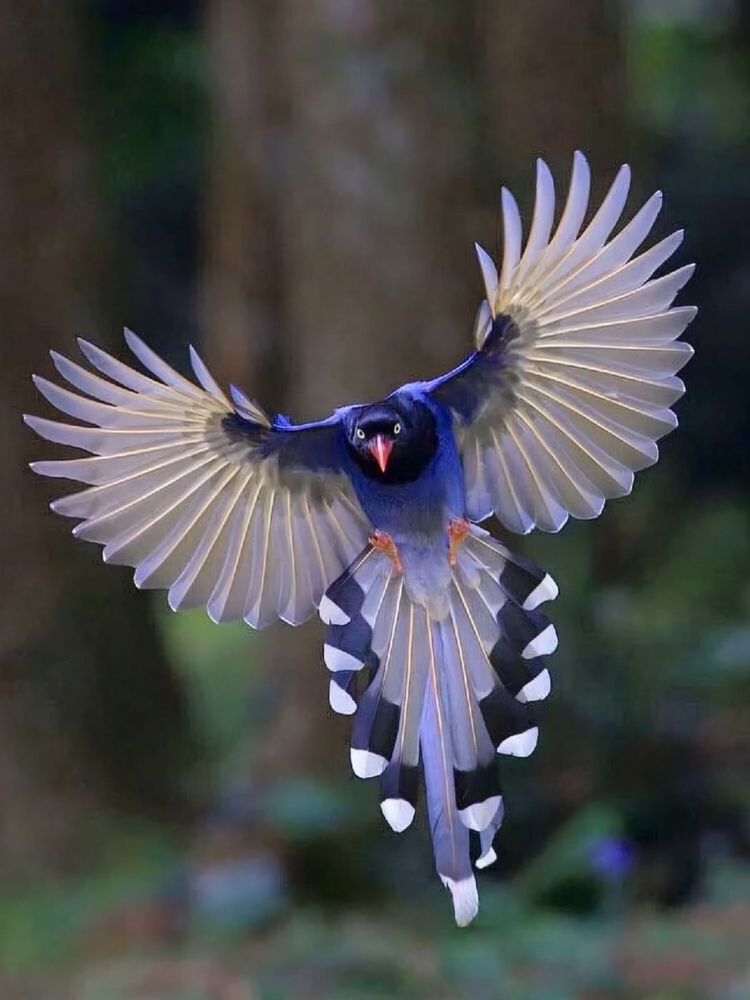
As the originator of Bio-Resilience Experience Design. One thing stands out for me. Biology is indeed God's perfection. I don't design a system to disrupt, I learn from nature's intelligence and collaborate with nature to design an interface or system that helps humans detect danger, respond faster and also protect itself.
I don't design for convenience, I design for continuity. Together we can rebuild our society 🌱