Living in Finland 🇫🇮 for two months completely changed the way I think about recycling.
In almost every supermarket, there were machines where you could return plastic bottles and cans and instantly get discount vouchers for your shopping.
At first, I thought it was just a nice extra. But after a few weeks, I realised how normalised the behaviour actually was. People would arrive with bags full of bottles. Students collected cans after events. Families returned packaging almost automatically during their weekly grocery run.
Honestly, there were weeks where my grocery bill became surprisingly cheap just from returning the bottles we used at home.
It made me realise something simple: A lot of people don’t avoid recycling because they don’t care. Sometimes there’s just no visible reward connected to the effort. And yes, maybe some people only do it because they get something back. But if more people recycle consistently because the system makes it worth doing, then honestly… that still feels like a very smart system.
@marinahernandez
Marina Hernandez
17Following
11Followers
Posts
Pages
Recent posts
While developing NEWASTE, our AI-assisted plastic waste classification project, one number really stayed with me:
In some recycling plants, impurity levels in plastic waste streams were reaching almost 30%.
Before working on the project, I honestly thought recycling mostly depended on people separating waste correctly at home. But I realised a huge part of the challenge happens later, during classification inside the plants themselves.
That’s why our solution focused on using computer vision and Deep Learning to help identify and remove improper waste faster and more accurately before contamination spread further through the process.
What surprised me most is how small improvements in sorting efficiency can have a much bigger impact on the entire recycling chain than people usually imagine. ♻️
Hi everyone 🤗
My name is Marina and I’m happy to be part of this community. I work in recruitment and I’m very interested in personal growth, mindfulness and creating a more intentional and balanced life.
I joined Rooted & Rising to connect with like-minded people, learn from different perspectives and continue exploring myself in a deeper way.
I’m looking forward to sharing this journey with all of you 🤍
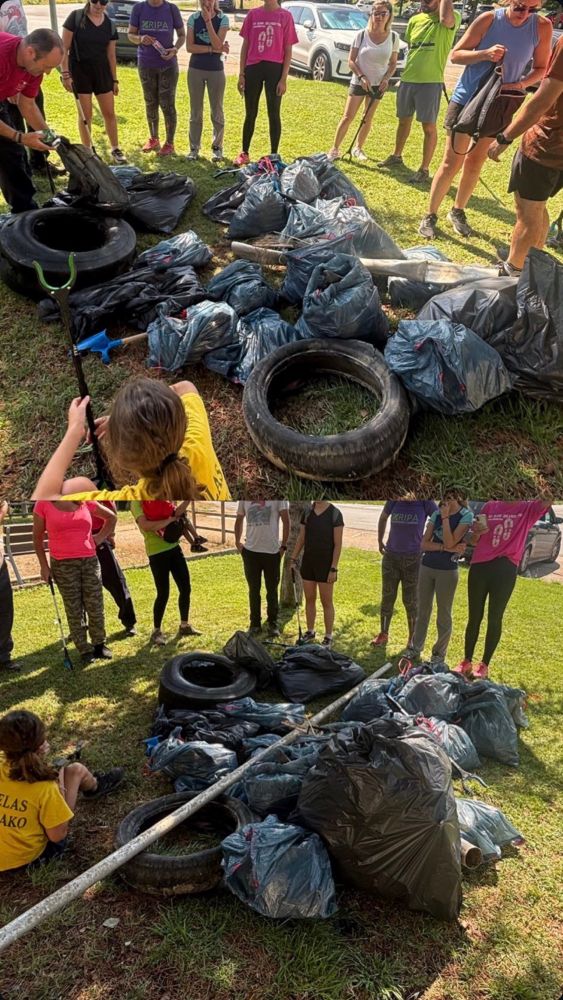
Every year in my town, our youth association organises a local river clean-up.
It’s not a huge initiative. Just a group of young people trying to give something back to the place where we grew up.
What I find interesting is how these small community actions slowly change people’s behaviour over time. Younger kids start seeing recycling and environmental care as something normal instead of something abstract or political.
A local company also supports our association financially through the recycling projects we organise during the year. That support helps us buy better equipment for waste collection and continue developing new sustainability activities.
None of this is revolutionary on its own.
But I think a lot of environmental progress actually starts like this: small communities, repeated actions, and people feeling personally involved instead of simply being told what to do.