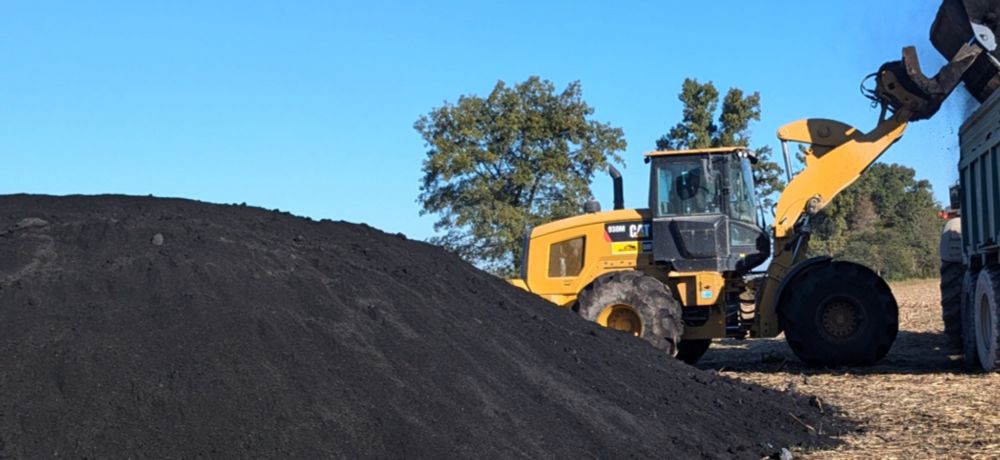
The US biochar market tripled in size from 2023 to 2025.
This increase is in part due to rising demand for credits, better awareness of biochar soil benefits, and better use of agricultural and forestry waste.
Is there a more promising agricultural technology available at the minute?
biochar.org/news/industr...U.S. biochar industry's economic value tripled since 2023 - American Biochar Institute
Full 2025 Biochar Market Report available now The most comprehensive snapshot of the U.S. biochar industry is now available, benchmarking […]
Lots of very valid concern recently about the effect of AI on climate. But one silver lining is that climate tech investment is on the up as a result of this AI boom.
For nuclear, geothermal and grid infrastructure, money that’s been hard to find for years is suddenly flowing. This could be a great chance for climate tech to scale faster.
But a lot of the power actually going live right now to feed AI is gas. Nuclear and geothermal plants take years to build unlike gas plants. So we are funding a long-term clean fix and the short-term emissions problem at the same time.
www.latimes.com/business/sto...AI power boom sparks record rush into climate tech deals
AI power boom sparks record rush into climate tech deals
When people in the UK talk about the heatwave, it's often followed by "it's worse than the heat in other countries" because:
1. It's muggy heat. High humidity means no sleep, no relief overnight, no way to cool down
2. Our infrastructure isn't built for it. Homes are designed to retain heat, not release it, and there is barely any A/C
That combination is why the same number on the thermometer feels much more oppressive.
This heat is taking lives. We can no longer use "we're not built for this" as an excuse - we have to adapt. That means retrofits, shading, ventilation, and A/C where it's needed. We need this alongside clean generation and efficient buildings.
Climate mitigation is essential. So is climate adaptation. This has to be the year we stop treating that as a choice.
www.theguardian.com/environment/...May and June heatwaves killed about 2,700 people in England and Wales, data suggests
Extreme heat led to 440 deaths a day during June peak, say scientists, with climate crisis ramping up temperatures
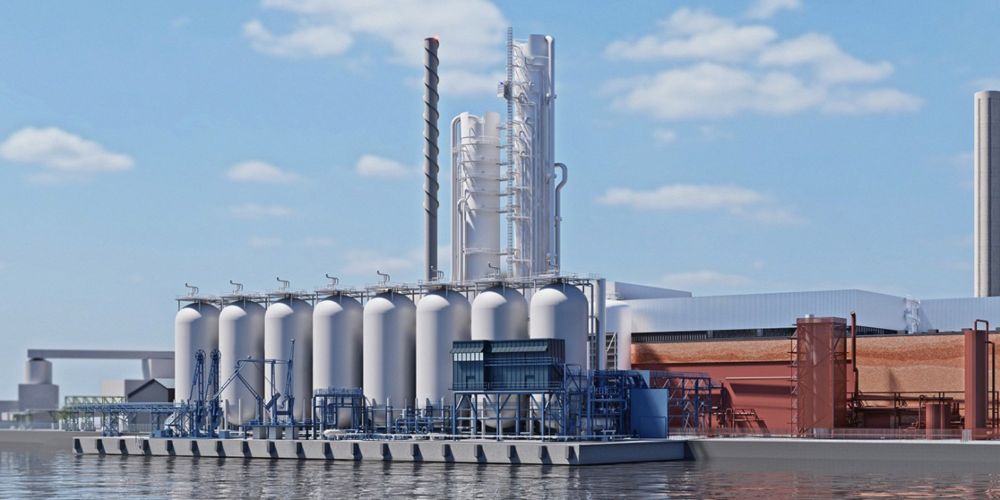
Frontier group (including Stripe, Google, Salesforce and newly joined Anthropic) commit another $915 Million to carbon removal!
It's been 2 months since Microsoft paused their carbon removal purchases which made many a little worried for the future of the carbon removal market... but this is a clear positive signal that the market is still looking good.
www.wsj.com/pro/sustaina...Anthropic, Google, Other Tech Companies Commit $915 Million to Pull Carbon Out of the Sky
The committment comes through buying group Frontier, which aims to scale up the carbon removal sector.
Stratospheric Aerosol Injection (SAI) is a geoengineering technique that involves releasing tiny reflective particles into the stratosphere to reflect incoming sunlight and cool the planet. For years, it was widely viewed as a radical, last-resort response to climate change.
But this year, Stardust Solutions announced that it has raised $75 million to help make the technology a reality.
This technology raises numerous scientific, ethical, and political questions. But it's now clear that SAI has moved beyond purely theoretical discussions and is increasingly being seen as a serious technological possibility.
www.eenews.net/articles/a-c...A closely guarded plan to cool Earth is revealed
A geoengineering company would use tiny specks of silica to block sun rays — and make billions of dollars.
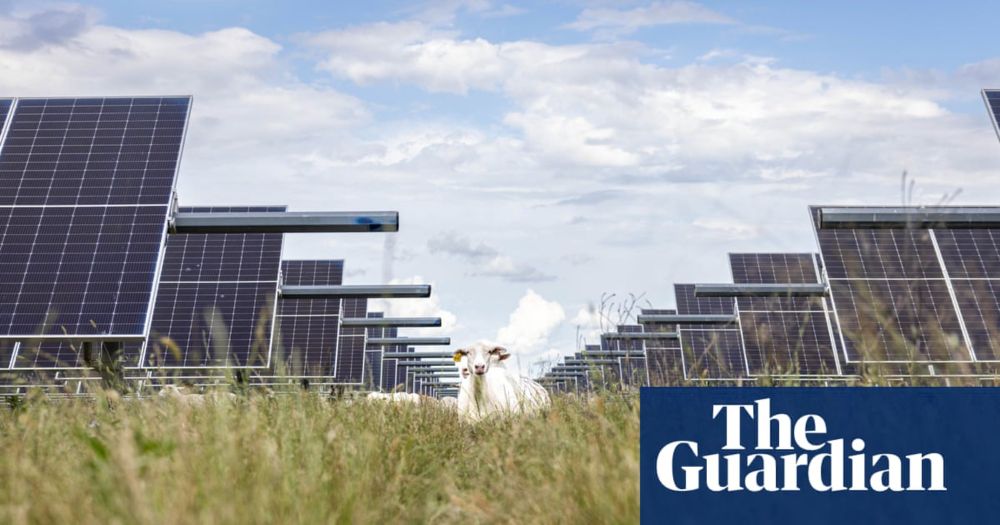
In the month of May, solar energy power generation overtook coal power generation within the US.
However, after the recent announcement from Trump that he plans to invest hundreds of millions into the coal industry using the Defense Production Act, it remains unclear for how long this lead will last.
www.theguardian.com/us-news/2026...Solar generates more energy in US than coal for first time
Solar supplied 12.8% of US electricity in May even as Trump boosts coal over clean energy
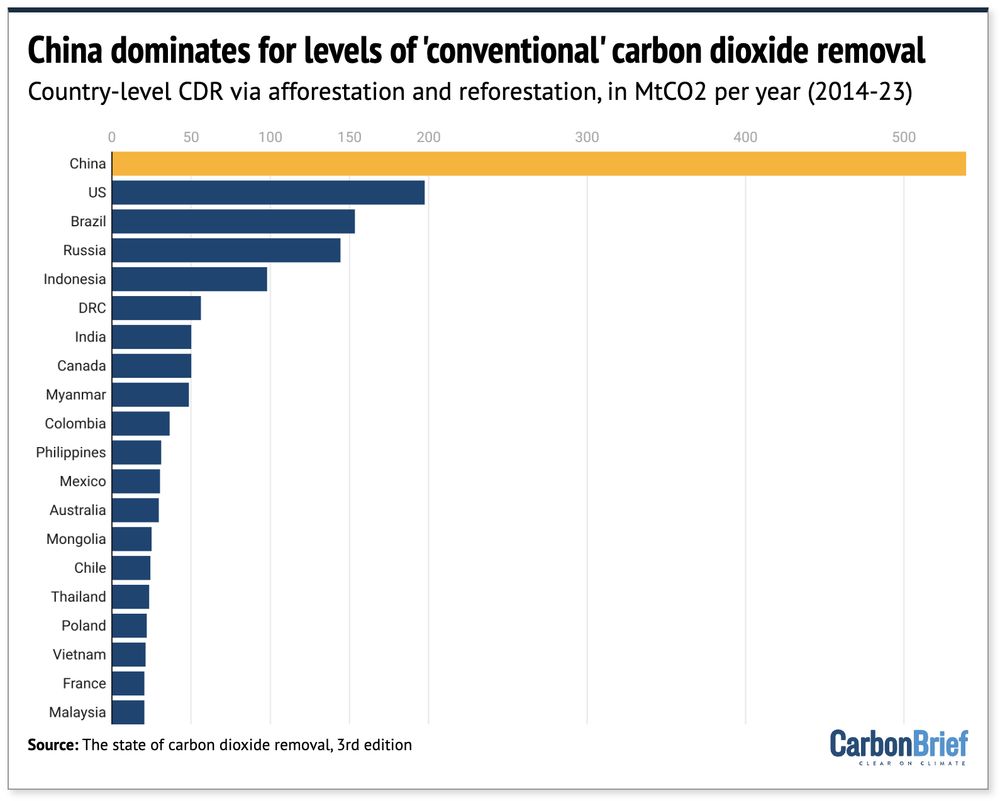
What country would you guess removes the most carbon from the atmosphere?
Brazil or Colombia with their huge rainforests? The US or Iceland with their novel DAC units?
No - the correct answer is... China!
www.carbonbrief.org/qa-the-curre...A group of climate scientists modelling future global warming scenarios recently announced that the worst case scenario for climate change is no longer plausible.
However, the best case scenario is also looking implausible, which demonstrates there is still a lot of progress to be made to ensure we keep global warming well below 2°C.
climate.ec.europa.eu/news-other-r...Five things you should know about climate scenarios
Scientists constantly investigate the state of our planet and our greenhouse gas emissions and policy choices. This allows them to make projections about what our climate will look like in the future,...