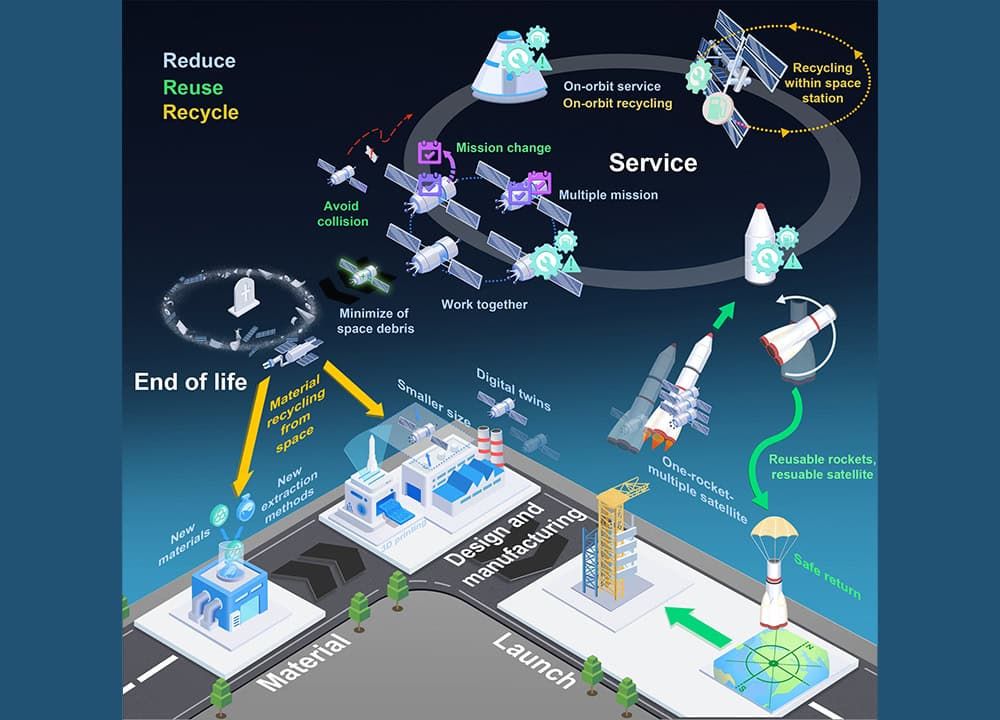
We are taking the circular economy to space before we have fully built it on Earth.
As space activity grows, so does the amount of equipment left behind. Satellites reach the end of their missions, components become obsolete, and valuable materials remain locked in orbit.
Researchers are now exploring a “Circular Space Economy”: ways to reuse, repair, refurbish, recycle, and even recover resources in space.
What makes this fascinating to me is the perspective it creates. Space forces us to think about resources differently, because every kilogram launched has a cost.
Maybe that constraint could teach us something valuable for Earth too. When resources are limited, designing out waste stops being an option and becomes a necessity.
What if plastic could tell a recycling machine exactly what it is?
A new technology called “transient thermal barcodes” gives plastics a temporary, machine-readable identity, so automated systems can sort them more accurately.
I find this especially interesting because it changes the way we think about recycling. We often focus on developing better ways to process waste, but sometimes the bigger problem is knowing what we are looking at in the first place.
If materials could carry their own information through the recycling process, sorting could become far more precise and valuable materials could stay in circulation.
Maybe the next generation of recycling won’t just need smarter machines. It will need smarter materials.
We spent decades making wind energy cleaner. Now we’re learning how to make the turbines themselves circular.
Wind turbines can generate clean energy for decades, but their blades are much harder to deal with when they reach the end of their life.
New European research is exploring ways to recover materials from used blades and bring those materials back into new products instead of sending them to landfill or downcycling them.
What I find most interesting is the lesson behind this: making energy renewable is only one part of the transition. The technologies we use to produce that energy also need a circular life cycle.
Clean energy shouldn’t have to mean linear materials.
I find it incredible that we can track a package across the world, but often lose track of its materials once a product reaches the end of its life.
AI could change that.
By combining product data, sensors, computer vision, and material databases, new systems are making it possible to identify what products are made of and where those materials could go next.
For the circular economy, this could be a major shift. Instead of treating every discarded product as an unknown mix of materials, we could start seeing it as a collection of identifiable resources with a traceable history.
What excites me most is the possibility of giving materials something they have never really had before: a digital identity that follows them beyond the first life of a product.
Our cities are becoming the mines of the future.
Urban mining is changing the way we think about waste. Phones, computers, batteries, cables, and old appliances contain valuable materials such as copper, lithium, cobalt, and rare earth elements.
For decades, we have searched for these resources beneath the surface of the Earth. Now, we are beginning to recognize that many of these materials already exist in the products surrounding us.
This shift in perspective is powerful. A discarded device is no longer just waste. It is a source of materials, energy, and opportunity waiting to be recovered.
The cities of the future may not only consume resources. They may become one of our greatest sources of them.
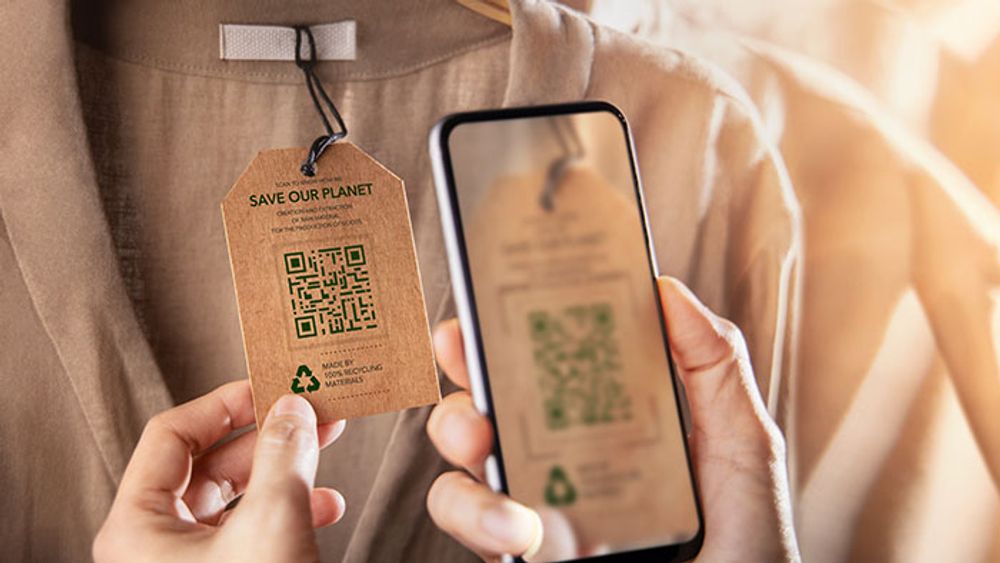
What if every product could tell the story of where it came from and where it should go next?
That idea is becoming a reality through Digital Product Passports, an initiative that is gaining momentum across Europe.
Instead of becoming anonymous waste at the end of their lives, products could carry information about their materials, origin, repair instructions, recycled content, and the best way to recover their components.
The more I learn about this concept, the more I think that the future of recycling may depend just as much on information as it does on infrastructure.
Perhaps the next revolution in the circular economy won't happen in recycling plants, but in the products themselves.
One of the most interesting developments I've been following in recycling is the progress being made with lithium-ion batteries. As electric vehicles and energy storage become more common, the challenge is no longer only how to produce more batteries, but how to keep their valuable materials in circulation when they reach the end of their first life.
Recent research is exploring new ways to recover battery materials more efficiently, with some processes showing promising results in restoring the performance of recycled battery components.
To me, this is where the circular economy becomes particularly exciting: waste is no longer just something to manage, it can become a resource for the next generation of technology.
Is replacing plastic with paper always a circular solution?
The shift toward “paperisation” is gaining momentum as companies look for alternatives to plastic packaging. But the material switch alone doesn’t guarantee circularity.
Some paper-based packaging uses plastic coatings that can complicate recycling. At the same time, increasing demand for virgin fibre raises questions about resource use and forest pressure.
Maybe the better question isn’t simply “plastic or paper?”
It is: Can we design packaging that is easy to reuse, repair, recycle, or safely return to nature, regardless of the material?