Big news for climate tech: Carbon removal just scaled up from the lab to massive industrial reality 🚀
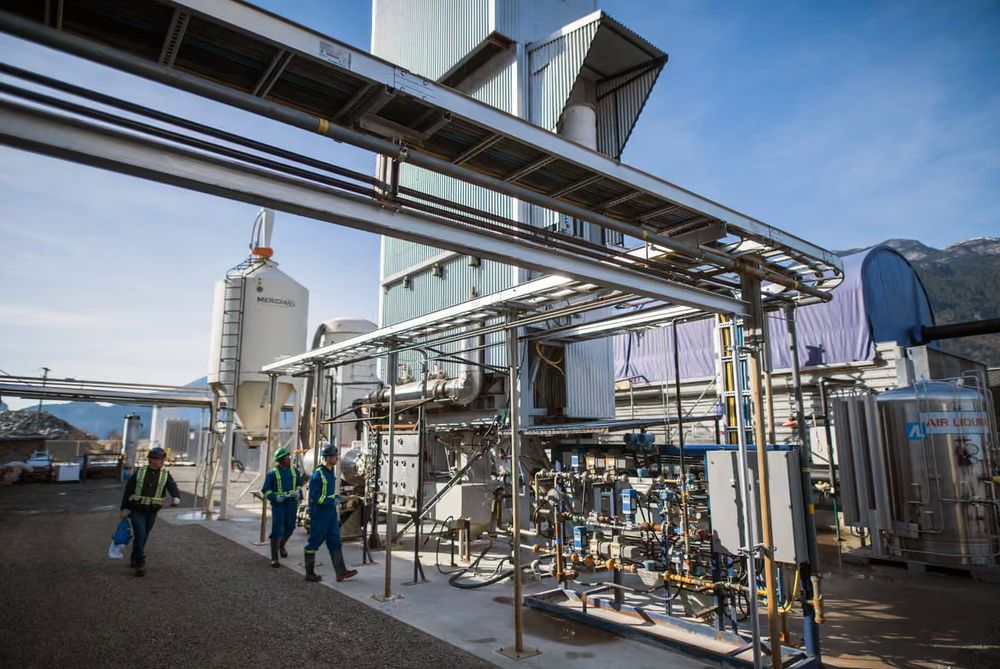
1PointFive is currently commissioning STRATOS in Ector County, Texas, the world's largest Direct Air Capture (DAC) facility.
Think of DAC like a giant, high-tech tree. Giant fans pull ambient air across a chemical liquid, trapping carbon dioxide. That trapped CO2 is then compressed and injected 4,400 feet underground into deep rock formations locking it away permanently.
At full operational capacity, STRATOS is built to capture 500,000 metric tonnes of CO2. That single facility increases global direct air capture capacity by over 800%
Sectors like aviation, shipping, and heavy manufacturing can't transition to electric or solar overnight. Engineered carbon removal helps neutralize these hard-to-abate emissions while cleaning up historical carbon from our atmosphere.
This isn't just a science experiment, it's big business. Corporate heavyweights like Microsoft, Amazon, Airbus, AT&T, Bain & Company, and JPMorganChase have already signed multi-million-dollar off-take contracts to meet their net-zero targets.
I still remember when I first started learning about CO2 emissions and climate tech, seeing projects evolve from simple ideas on paper to massive infrastructure like this is incredible to watch.
Geothermal energy is no longer just limited to natural hot springs. And it is officially going everywhere 🌋
For decades, geothermal power was restricted to very specific places where subterranean heat was easy to reach. Fervo Energy is changing that by using oil-and-gas horizontal drilling techniques to tap into deep, hot rock almost anywhere on Earth.
Their flagship Cape Station project in Utah is now preparing to deliver hundreds of megawatts of continuous, zero-carbon electricity.
Why is this so critical right now?
Because AI data centers and power grids require 24/7 "always-on" clean power. While solar and wind depend on weather, next-generation geothermal provides a reliable baseload, slashing drilling times by 143% and proving that clean tech can scale at a utility level.
This is how we tap into the heat beneath our feet to power the future.
What if we could store renewable energy using a process as simple as rust? 🔋
While standard lithium-ion batteries can only store energy for 2 to 4 hours, power grids need ways to keep clean electricity flowing through multi-day storms or calm, cloudy winter weeks.
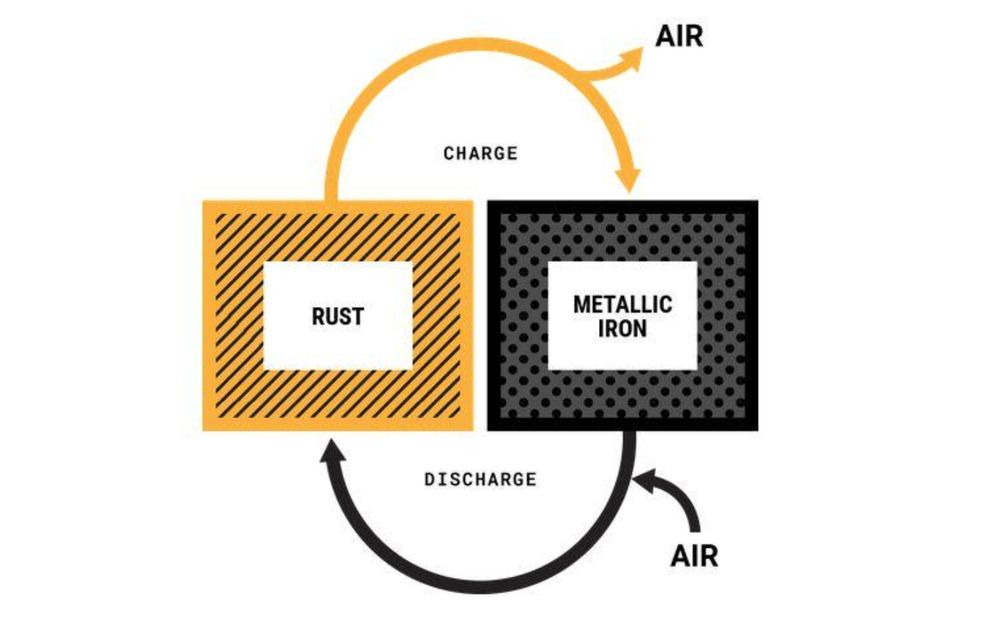
That is where Form Energy comes in. They have commercialized an innovative iron-air battery that operates on "reversible rusting." When discharging, the battery absorbs oxygen to turn iron into rust and release electricity. When charging, electricity turns the rust back into iron, releasing oxygen.
By using simple, abundant materials, iron, water, and air, these systems can discharge continuously for 100 hours at a fraction of the cost.
And I love to say this isn't just a prototype anymore. Massive multi-gigawatt deals are already underway with Google, Xcel Energy, and Crusoe to power giant AI data centers cleanly and keep power grids reliable for days
Healthcare is getting a massive upgrade, and it is going to save doctors and nurses millions of hours of paperwork 🩺
NHS England just launched a historic £10 billion technology program to roll out artificial intelligence across its entire health system. This isn't a small trial; it is a nationwide rollout designed to cut down long waiting times and make getting care much easier.
The plan focuses on two incredible changes:
A Smarter App: The official NHS App is getting an AI triage tool. It safely checks a patient's symptoms and instantly directs them to the right place, whether that's a local pharmacy, a GP appointment, or emergency care.
AI Notetaking: Doctors will spend less time staring at computer screens. New "ambient voice" tools will listen to patient consultations and automatically fill out medical notes.
By letting AI handle the heavy administrative burden, medical staff can finally reclaim hours of their day and focus on what they do best: taking care of patients.
What do you think? Will it work in your country?
We all heard about Robotic surgery, but do you know how it is going to change how we experience healthcare?🫀
Intuitive’s latest robotic platform, the da Vinci 5, just secured major FDA clearance to perform complex, delicate heart surgeries, like repairing heart valves.
But the real game-changer is where these surgeries can now happen. Instead of requiring long stays in traditional, crowded hospitals, this technology is expanding rapidly into outpatient Ambulatory Surgery Centers. Thanks to a smart new refurbished program, smaller local clinics can now afford these advanced tools, too.
For patients, this means faster procedures, incredibly high precision for surgeons working on delicate tissue, and a shift toward recovering comfortably at home much sooner.
As you see, this isn't just a technical upgrade. It's making cutting-edge, minimally invasive healthcare accessible to more people than ever before
What do you think? Why are surgeons switching to robotic heart surgery?
Source:
www.intuitive.com/en-us/produc...Most of my research is around transdisciplinarity, so I was amazed when I found the Aïra framework 🌐 Have you?
Most AI assistants today are designed for a single user doing a single task, like summarizing a paper or writing code. But real scientific breakthroughs don't happen in isolation; they happen when diverse minds collaborate.
That is where Aïra steps in. Introduced at a recent Stanford HAI conference, it is a new AI model built specifically for interdisciplinary research teams.
Instead of just responding to individual prompts, Aïra acts as an active mediator during group discussions.
If a neuroscientist and a philosopher use the same word to mean two completely different things, the AI translates the terminology in real time. It catches hidden assumptions before they turn into mistakes and maps out structured, auditable research plans.
Pilot testing shows it significantly bridges domain gaps and helps teams reach agreement faster on complex designs.
This is the future of collaborative science: AI built to help humans think better together
Scientists are using AI and autonomous robots to rewrite the rules of materials science and protect our global supply chains.
Right now, advanced electronics, electric vehicles, and clean energy depend heavily on critical minerals that are difficult to source domestically. To solve this, Ames National Laboratory and its partners are deploying AI to discover entirely new alternatives.
First, they are using smart machine learning models to design ultra-powerful permanent magnets completely free of rare earth elements. Second, by pairing active-learning AI with automated chemistry robots, they are extracting gallium, an essential semiconductor material, from industrial waste streams.
The best part? These AI systems can test over 100 material formulations a day, compressing research cycles that normally take 20 years into just a couple of years.
The future of clean tech manufacturing is being built in seconds
Source:
www.ameslab.gov/news/ames-la...Have you heard about DuctGPT? ⚛️
This is a generative AI that actually understands the laws of physics.
It is doing something scientists have struggled to achieve for decades to help unlock commercial nuclear fusion the ultimate clean energy source.
To build these reactors, we need metals that can survive extreme, sun-like heat. Tungsten is the perfect candidate because it won't melt, but it has a massive flaw: it is as brittle as glass at room temperature, making it impossible to shape into parts.
That is where DuctGPT steps in. Instead of humans spending years guessing and testing metal combinations in a lab, this AI used its understanding of physics to scan thousands of options in seconds.
It successfully discovered a brand-new blend of metals that keeps the extreme heat resistance we need, but makes the material flexible enough to actually manufacture.
A massive win for the future of clean energy!