The human voice is quietly becoming healthcare’s most accessible diagnostic tool 🎙️
Researchers and digital health startups are turning routine voice recordings into clinical-grade biomarkers. By analyzing micro-variations in pitch, acoustic frequency, and pause patterns, software can now screen for neurological and respiratory conditions long before physical symptoms appear.
This breakthrough centers on two key capabilities:
Early Neurodegenerative Screening: Acoustic changes in vocal cord vibration and speech cadence can detect early signs of conditions like Parkinson's disease and mild cognitive decline years ahead of standard clinical exams:
pmc.ncbi.nlm.nih.gov/articles/PMC...
Zero-Friction Telehealth Triage: Instead of requiring specialized hardware, vocal biomarker algorithms can analyze speech directly through standard smartphone microphones during routine virtual consultations.
Transforming everyday speech into passive diagnostic data could make early disease detection globally accessible at near-zero hardware cost.
Would you be comfortable having your voice passively analyzed for health markers during regular telehealth calls?
Voice for Health: The Use of Vocal Biomarkers from Research to Clinical Practice
Diseases can affect organs such as the heart, lungs, brain, muscles, or vocal folds, which can then alter an individual's voice. Therefore, voice analysis using artificial intelligence opens new oppor...
Medical diagnostics is moving into the simulation era, and it could end trial-and-error healthcare for good 🧬
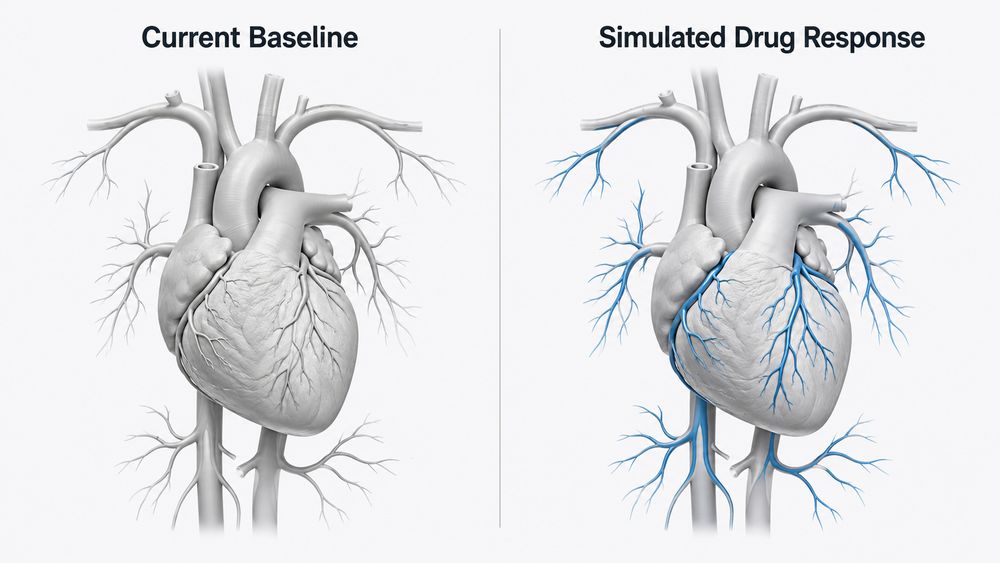
Instead of testing medications or protocols directly on patients to see what works, clinicians are starting to build "Digital Twins"—dynamic, real-time virtual models of individual organs and biological systems.
This breakthrough relies on two key technological shifts:
Multi-Modal Data Ingestion: By combining genomics, EHR history, continuous wearable feeds, and imaging into one dynamic computational model, the digital replica evolves as the patient’s body changes.
In-Silico Treatment Testing: Clinicians can simulate how a specific heart or metabolic system will react to a drug, dosage change, or surgical plan before administering anything to the actual patient:
pmc.ncbi.nlm.nih.gov/articles/PMC...
Moving from reactive treatment to predictive simulation has already shown major reductions in cardiac arrhythmia recurrences and improved glycemic control in complex diabetes cases.
Would you trust a personalized digital simulation to test your treatment plans before taking a prescription?
Medical software is crossing a massive regulatory milestone, and it is quietly transforming clinical diagnostics 🩺
The FDA has now authorized over 1,450 AI-enabled medical devices, clearing nearly 300 new tools in the past year alone. We are seeing a rapid shift from experimental algorithms to standard clinical tools.
This surge is being driven by two major advancements:
Diagnostic Pattern Recognition: Over 75% of authorized tools focus on radiology and cardiology, helping specialists catch subtle anomalies in scans and ECG signals in seconds.
Adaptive Safety Frameworks: Regulators are introducing predetermined change protocols, allowing software models to safely update and improve without requiring years of re-clearance delays.
By taking over tedious image analysis, these tools help clinicians make faster, more accurate diagnoses when every minute counts.
Are hospitals in your country already using authorized AI tools, or is adoption still slow?
For years, the biggest hurdle for digital health and preventative care platforms wasn't consumer demand, it was reimbursement.
If a digital therapeutic or continuous monitoring tool couldn't map to existing CPT insurance codes, platforms were forced to rely entirely on direct-to-consumer cash pay. That capped distribution and limited access to lower-income demographics.
As regulatory frameworks and insurance coverage expand for Remote Physiological Monitoring (RPM) and digital therapies, the commercial playbook for MedTech is shifting rapidly:
pmc.ncbi.nlm.nih.gov/articles/PMC...
The most resilient healthtech startups are no longer just building great clinical software; they are designing reimbursement-first workflows from day one.
Are you seeing more healthtech founders build around insurance integration early, or are direct-to-consumer cash models still the preferred entry point?
A systematic review of the impacts of remote patient monitoring (RPM) interventions on safety, adherence, quality-of-life and cost-related outcomes
Due to rapid technological advancements, remote patient monitoring (RPM) technology has gained traction in recent years. While the effects of specific RPM interventions are known, few published review...
Following up on the discussion around human-in-the-loop AI: while keeping clinicians in the loop is essential for patient trust, it introduces a major operational challengem, clinician burnout.
If an AI triage tool flags every minor anomaly for physician review, we haven't built collaborative intelligence; we’ve just built higher-volume alert fatigue.
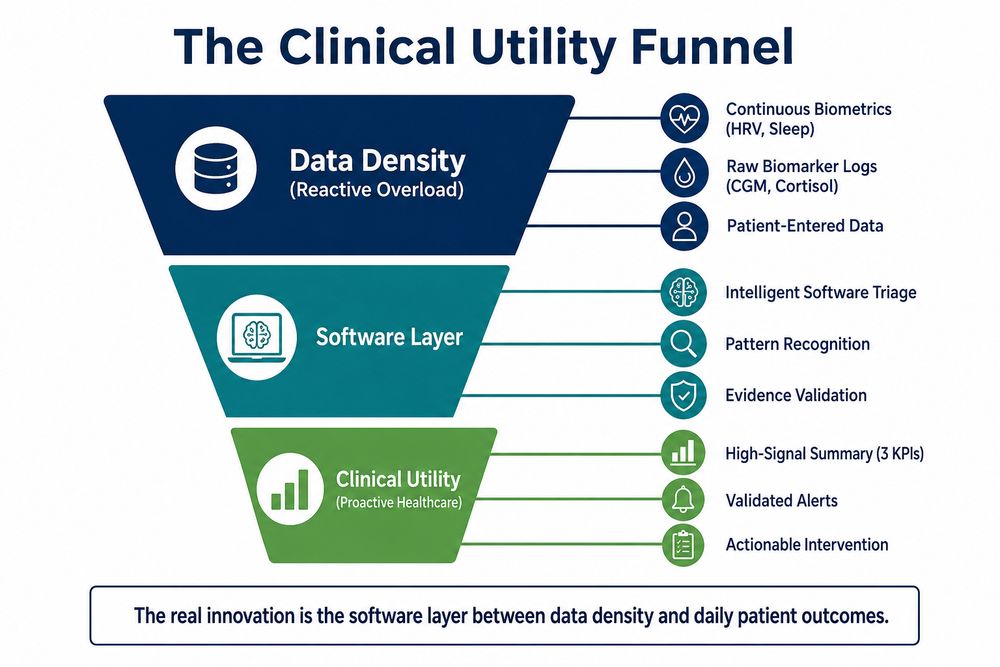
Recent implementation reviews on clinical AI stress that human-in-the-loop workflows only scale when the software handles low-complexity sorting, presenting clinicians with pre-synthesized decision contexts rather than raw data logs:
pubmed.ncbi.nlm.nih.gov/41740273/
The winning MedTech platforms won't just ask doctors to validate AI outputs, they will design frictionless UI layers that make that validation take 5 seconds instead of 5 minutes.
For builders in the space, how are you structuring the interface so human oversight enhances patient trust without overwhelming the care team?
Human in the loop artificial intelligence in healthcare: applications, outcomes, and implementation challenges - PubMed
This review advances the field by synthesizing cross-domain implementation patterns, mapping collaboration models to risk-stratified contexts, identifying regulatory gaps for adaptive systems, and pro...
Remote patient monitoring (RPM) is often sold as the ultimate bridge between clinical care and home health. But deploying connected hardware to patients' homes is only half the battle.
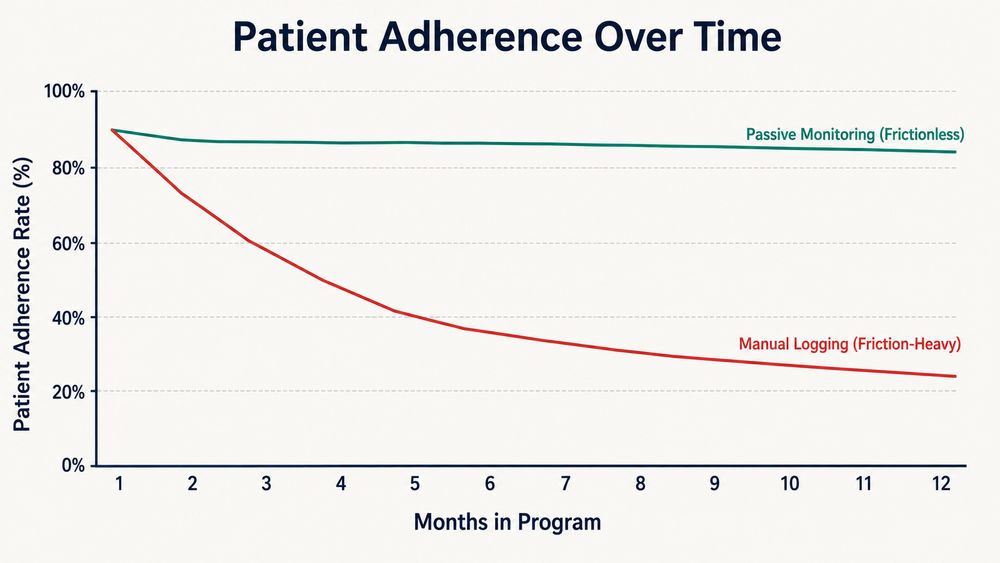
The true challenge in RPM programs isn't device accuracy, it’s long-term user adherence. Without passive data collection or meaningful feedback loops, patient drop-off rates surge after the first 30 days.
A systematic review of RPM interventions published in Nature Digital Medicine highlights that sustained clinical outcomes depend heavily on how friction-free data entry is for the patient:
pmc.ncbi.nlm.nih.gov/articles/PMC...
For MedTech founders, the winning RPM platforms won't just collect vitals; they will master behavioral design to keep patients actively engaged over months and years.
Are you seeing RPM platforms in your ecosystem successfully solve the retention challenge, or is device abandonment still the main bottleneck?
The wearable market is flooded with continuous glucose monitors, smart rings, and biomarker tracking tools. But collecting passive data doesn't automatically translate to healthier decisions.
In preventative health tech, the hardest problem isn't tracking the metric, but driving long-term behavior change. When users experience "metric fatigue," app engagement drops, and raw health data ends up sitting unused in a dashboard.
Research in digital medicine emphasizes that technology must combine biomarker insights with adaptive behavior loops to achieve lasting health outcomes:
www.nature.com/articles/s41...
For healthtech founders, hardware and sensors are becoming commodities. The defensible value sits in behavioral design that helps users actually stick to micro-habits.
Which consumer health apps do you think have mastered true behavior modification versus just offering pretty data visualizations?
There is a lot of excitement around AI triage tools and automated health coaching right now, but studying user behavior in the healthtech space reveals a consistent truth: people don't delegate their health to algorithms without human validation.
When platforms try to replace the clinician entirely to cut costs, user trust and compliance drop significantly. Research into AI adoption in healthcare consistently highlights that "collaborative intelligence" and human-in-the-loop workflows yield far higher patient adherence and trust:
www.nature.com/articles/s41...
The highest-performing preventative health models treat technology as an amplifier for the practitioner, not a replacement. AI handles the pattern recognition in the background, but a human expert delivers the protocol.
For ecosystem builders, the defensible moat in MedTech isn't purely proprietary algorithms, it’s human-centered workflows that build deep patient trust at scale.
Do you think fully autonomous AI health platforms will ever overcome the trust barrier, or will the winning models always be hybrid?
Collaborative Intelligence to catalyze the digital transformation of healthcare - npj Digital Medicine
npj Digital Medicine - Collaborative Intelligence to catalyze the digital transformation of healthcare