Health • United States of America
Follow
💥 STOP TREATING SYMPTOMS. START REVOLUTIONIZING CARE. 💥
The era of waiting for a crisis is over. The future of healthcare is not in bigger hospitals; it's in proactive intelligence and personalized care that meets people where they live.
We are entering a transformative chapter defined by:
👉 Prediction over Reaction: Shifting from treating acute illness to identifying and managing risks before they become emergencies. This moves the power of diagnostics from the clinic to the community.
👉 Radical Accessibility: Breaking down geographical and financial barriers. When high-quality, data-driven tools are available everywhere, we level the playing field for health equity.
👉 The Human Partnership: Technology isn't here to replace the human touch, but to amplify it. It frees up clinicians to focus on relationship-building, complex decision-making, and truly patient-centered care.
‼️ This is more than an upgrade; it's a fundamental redesign of the health ecosystem, a move toward dignity, independence, and better outcomes for everyone, particularly our aging population.
The revolution is quiet, but the impact will be loud.
Investment
Collaboration
Partnership
Health • United States of America
Follow
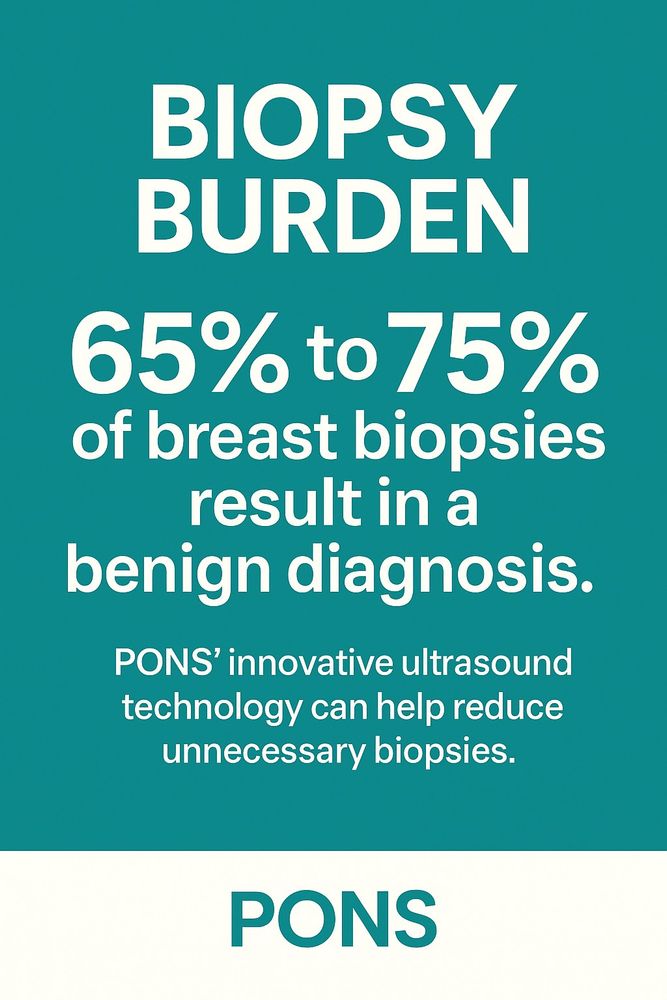
‼️ More Biopsy ≠ Better Care
We perform ~1.59M breast biopsies each year in the U.S., and 65–75% are benign. That’s roughly 1.0–1.2M invasive procedures that deliver anxiety, complications, and delays without cancer. At an average $1,938 per biopsy, that’s about $3.07B in annual spend before treatment even starts.
👉 The upstream failure is image clarity.
Low-quality ultrasound pushes borderline cases to biopsy “just to be safe.” PONS upgrades standard ultrasound with device-agnostic AI: higher tissue contrast, reduced noise, and digital contrast (no injections) that reveals subtle morphology on the first pass. Clinicians receive an AI risk report to triage who truly needs a biopsy now, and who doesn’t.
Health impact, not just cost:
Reduce avoidable biopsies by 10–15% and you free $300–$460M annually, shorten queues, and accelerate care for the women who do need intervention, especially in community clinics and rural sites.
Let’s replace over-biopsy with first-pass clarity.
Investment
Collaboration
Partnership
Health • United States of America
Follow
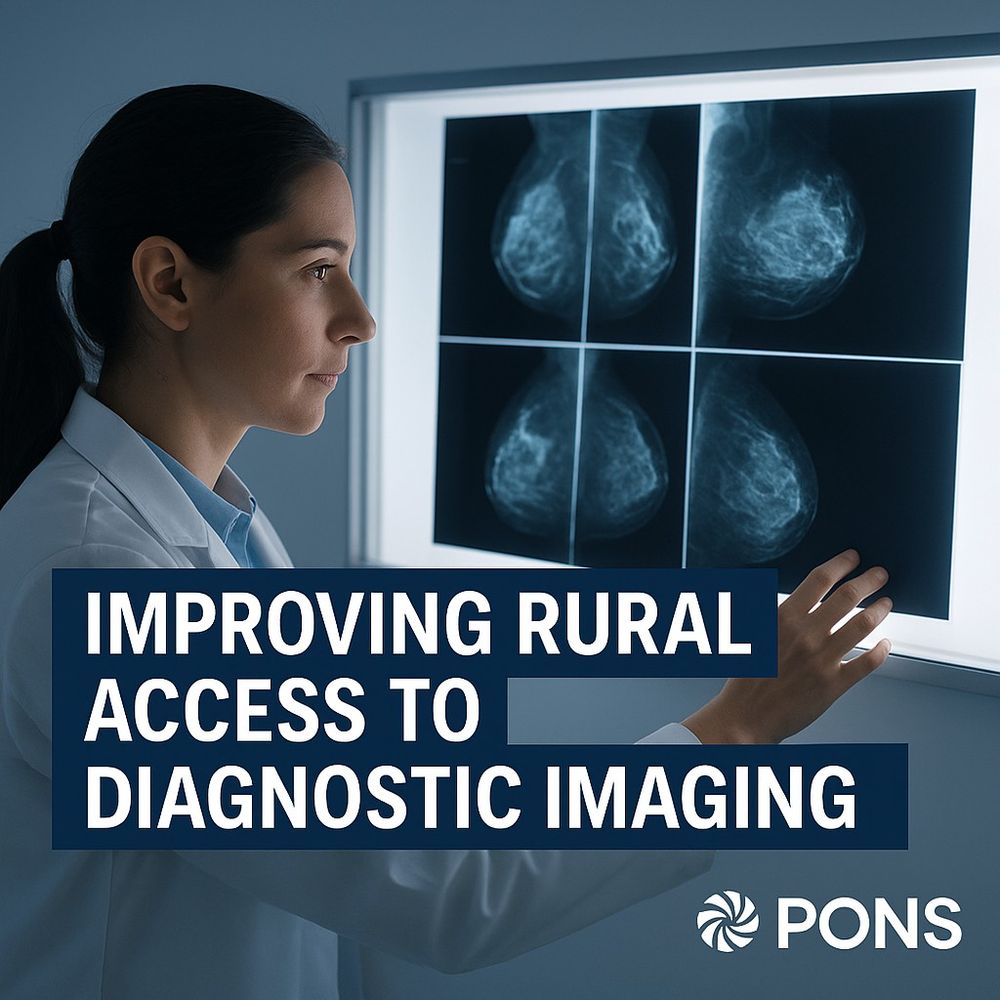
‼️40% of low-income communities and minorities don't have access to frequent medical imaging. ‼️
👉 Ultrasound has the potential to be utilized outside of the hospital for preventive monitoring. Traditional ultrasound technology has limitations for use in the earliest stage due to compromises between image quality and portability. PONS' device-agnostic AI models enhance ultrasound imaging quality by improving tissue contrast and reducing signal noise, revealing anatomical and pathological features that are often unnoticed by standard ultrasound systems.
PONS is here to democratize access to high-quality healthcare by harnessing the power of AI to simplify medical imaging. We aim to equip every healthcare professional with our innovative, portable, and user-friendly ultrasound technology, ensuring reliable diagnostics are accessible, regardless of location, income, or resources.
Investment
Collaboration
Partnership
Health • United States of America
Follow
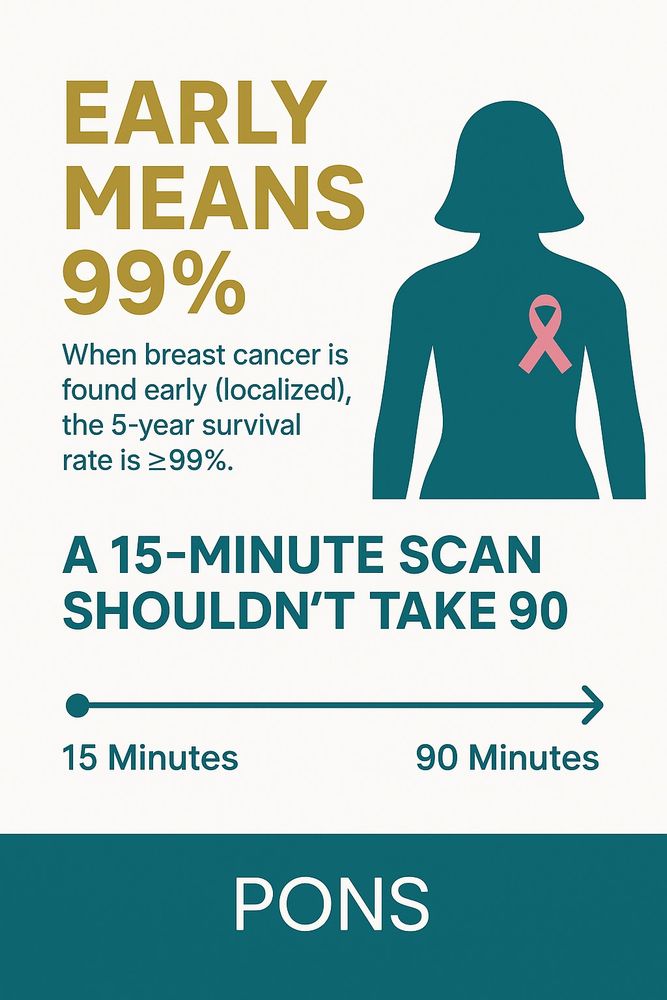
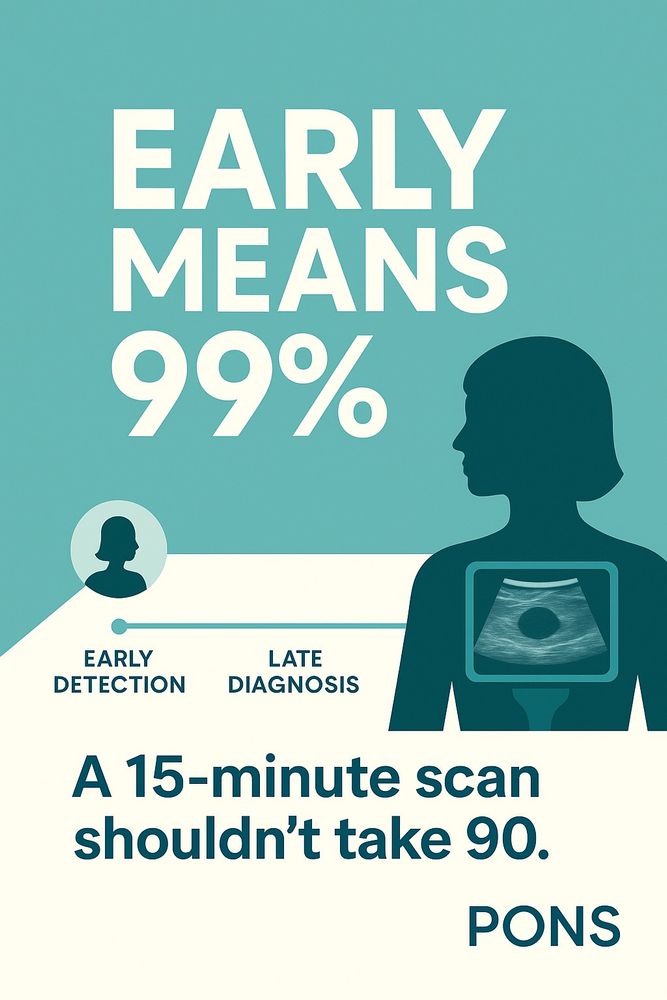
“If it takes 90 to see, it takes longer to treat.”
Delays at the imaging step cascade into later consults, later biopsies, and later treatment, exactly what women’s health cannot afford.
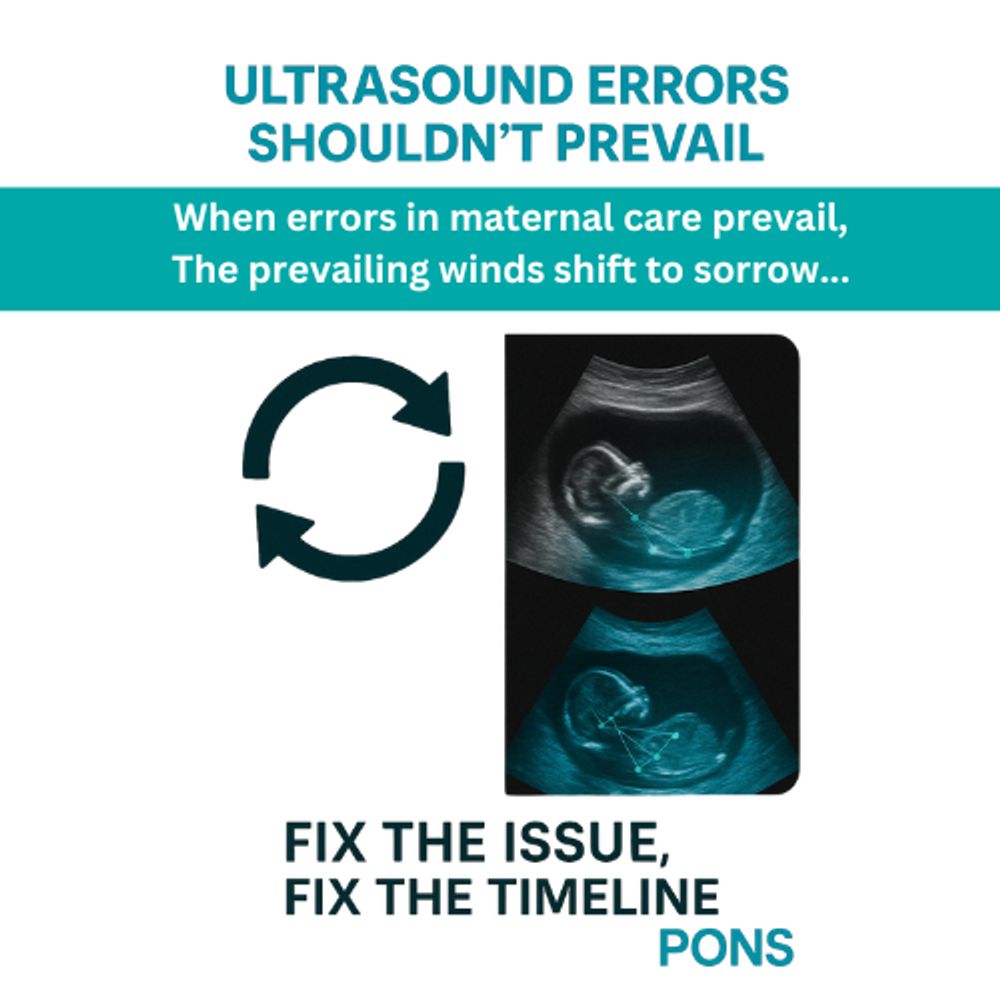
PONS compresses the pathway: AI-enhanced, device-agnostic ultrasound produces clearer images, then our deep-learning models analyze morphology and spatial context to generate actionable risk reports.
Care teams move from scan → decision in a single visit.
Fewer bottlenecks. Faster answers. Fairer access. That’s how we democratize early detection.
Investment
Collaboration
Partnership
Health • United States of America
Follow
‼️ Early or late is not a mindset; it’s a measurement.
When breast cancer is found early (localized), the 5-year survival rate is >99%. Yet we still funnel women into an invasive, anxious, and expensive pathway: ~1.59M breast biopsies a year in the U.S., 65–75% of them benign. That’s ~$3.07B in biopsy spend alone at $1,938 average cost, plus delays that push treatment later.
👉 PONS fixes the upstream failure.
Our device-agnostic AI upgrades standard ultrasound, sharper tissue contrast, noise suppression, and digital contrast (no injections). Clinicians get first-pass clarity and an AI risk report that helps triage who truly needs a biopsy now, and who doesn’t. Fewer unnecessary procedures. Faster answers for the women who do need care.
That’s not just efficiency, it’s survival.
Cut avoidable biopsies by 10% → save >$300M annually and reallocate time to earlier, lifesaving interventions.
Minutes to see → days to act → lives extended.
Join pilots where “early” means >99%.
Investment
Collaboration
Partnership