Recent posts
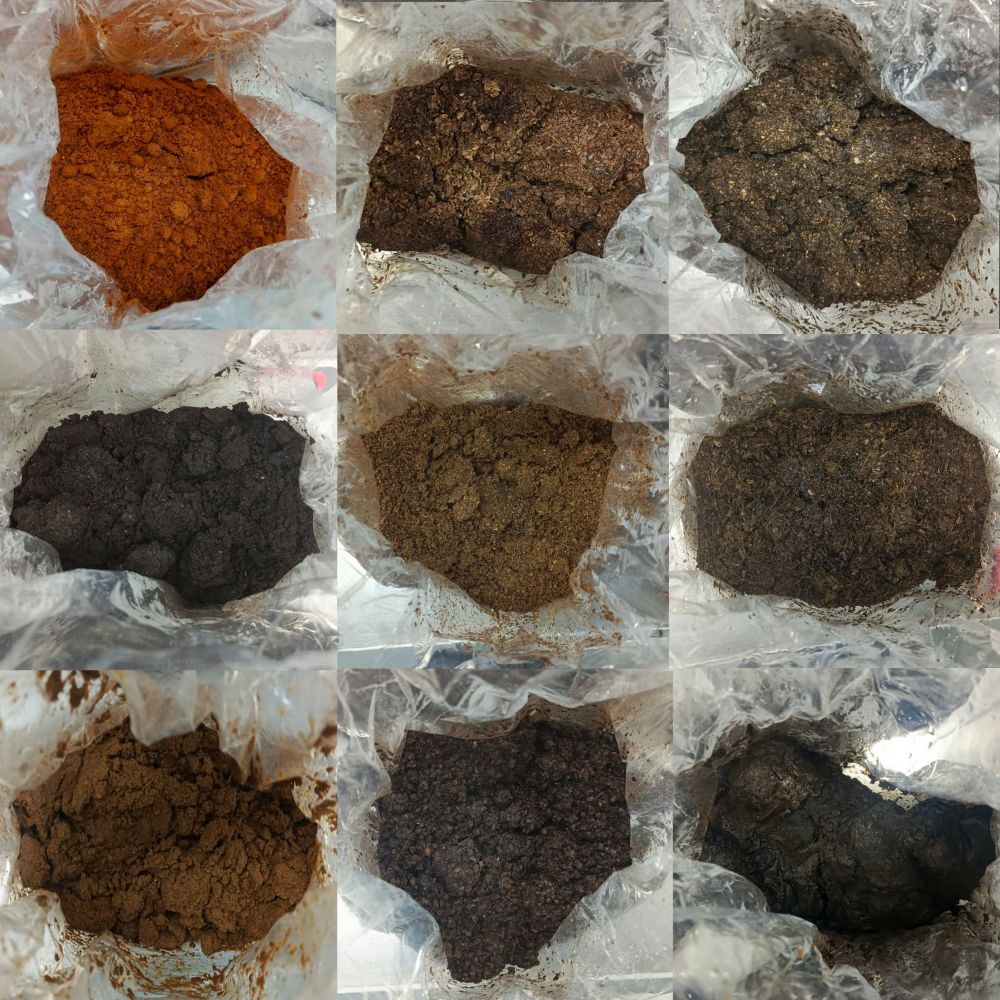
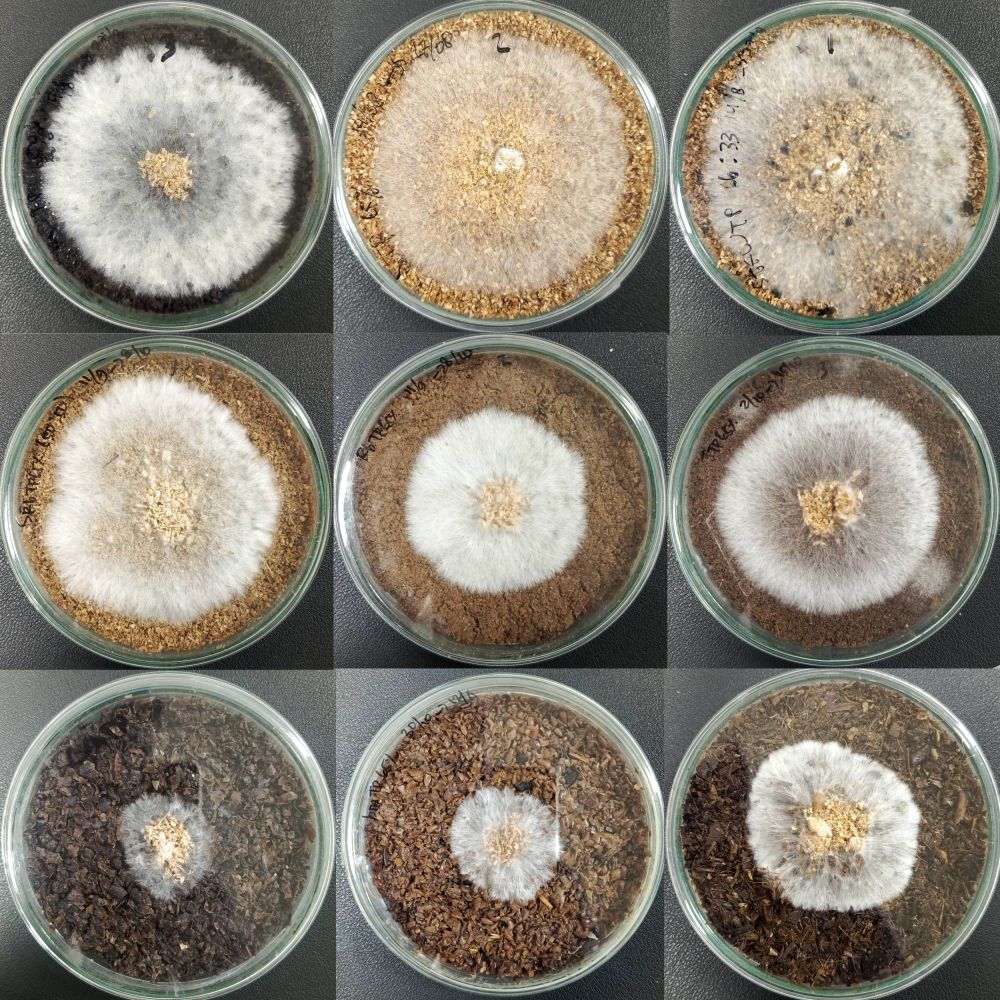
Our initial approach was to test a wide range of promising agricultural by-products as candidate substrates for mycelium-based biomaterials.
We explored them, to find which could best support the company's research goals.
As the experiments progressed, however, difficulties began to surface. Some substrates did not perform as expected, while others required pre-treatment that made them impractical. At that point, we chose the most suitable substrate as our primary raw material.
Once we narrowed our focus, we were able to devote our time and energy to developing the idea with the greatest potential.
Perhaps for some people, exploration is the beginning of research. But meaningful progress often depends on knowing what deserves your full attention.
Does committing to one promising idea always lead to greater progress?
Sometimes we explore new raw materials from collaborative partners as potential substrates for our mycelium.
Every new substrate can be challenging, often requires adapting to unfamiliar techniques. To minimize errors, we often relied on published research guidelines that had demonstrated positive results. However, every experiment has a way of teaching us something different.
We quickly learned that the substrate isn't the whole picture. It interacts with particle size, moisture content, nutrient availability, the strain, and cultivation conditions.
Each trial brought valuable insights to learn something new about the process, and repeated failure is part of most research journeys. Through these repeated outcomes, we better understand the limits and narrow the scope of future experiments.
Do you think repeated failure is part of the discovery?
Although we set a harvest date for our mycelium biomaterials, the cultures don't always follow the schedule. Sometimes they reach the stage sooner than expected, while other times they need more time to grow.
We always try to create the best environment for our cultures. Even so, unexpected things happen. A power outage, contamination, or equipment failure can quickly change the course of an experiment.
Moments like these remind me that biological systems don't always follow our plans, even after years of creating the best growing conditions. Living organisms respond to their environment in ways that aren't always easy to anticipate, and that's part of working with them.
At times, it can be frustrating, but isn't that one of the most heartening aspects of research involving living beings?
We once discovered a new agricultural waste that seemed highly potential for the biomaterial we were developing.
However, we soon realized that "waste" didn't mean easy to source. Finding a reliable supplier was much harder than we expected. In reality, many agricultural byproducts already have established value chains, serving as animal feed, compost, biofuel, or raw materials for other industries.
A natural material isn't automatically the most practical or sustainable choice if it already has economic value elsewhere. Diverting it into biomaterial production could create unnecessary competition.
That's why we evaluate not only material performance, but also whether a feedstock is genuinely underutilized and available in sufficient quantities.
Shouldn't a truly sustainable biomaterial be judged not only by its performance, but also by how wisely it’s feedstock is chosen?
We've been working with different agricultural byproducts as feedstocks for our biomaterials.
We chose them because they were abundant, often overlooked, and seemed too valuable to simply be treated as waste.
Eventually, some of them became harder to source. As market demand changed, many farmers switched to different crop varieties, making some of the byproducts we relied on harder to find. We had to find alternative materials that might also offer similar value.
That's one of the things I find most interesting about biomaterials research. The challenge isn't only in the lab. A lot of it is driven by changes in agriculture, local industries, and market demand, which constantly affect the materials we work with.
I'd love to hear others have dealt with this.
When we first started developing biomaterials, we put most of our efforts into making the material as good as possible. We thought that using standard process to produce sustainable materials was enough.
As our clients grew, we realized there was one question we hadn't really answered, were our products truly sustainable beyond the materials we used? To support our sustainability claims, we needed green certifications.
Just when we thought we were ready, the results surprised us. Some parameters were above the allowed limits.
From that point on, even small changes in the biofabrication process could affect the results. It shifted our focus from the material itself to the whole production process. We wanted every step to support our sustainability efforts.
For those working with biomaterials, what surprised you during certification?
I spent part of this week dealing with contamination issues in a mycelium materials project/production.
What stood out wasn't the production process itself, but the environment around it. We're based in a highland area with consistently high humidity. Moreover, there are cattle farms and mushroom farms nearby. Those conditions are great for biological activity, but they also make contamination much harder to control, especially during the rainy season.
It's made me wonder how much of scaling biomaterials is actually about improving the manufacturing process, and how much depends on adapting to the local environment.
Has anyone working with biological systems run into similar challenges?
Over the past year, we've tested quite a few agri-crop waste/byproducts as substrates for growing mycelium-based materials.
Some performed surprisingly well in the lab, but that wasn't the end of the story.
A few aren't readily available in our region, so sourcing them would mean shipping them from elsewhere. Others need several pre-treatment steps before they're suitable to use, adding time and increasing the risk of contamination.
It reminded me that choosing a substrate isn't only about biological performance. Availability, logistics, and processing can matter just as much when you're thinking about scaling.
I'm curious how others balance performance with practicality when evaluating agricultural residues or waste streams.