It's the New Year and we're sharing a new article to start 2026 with positive vibes.
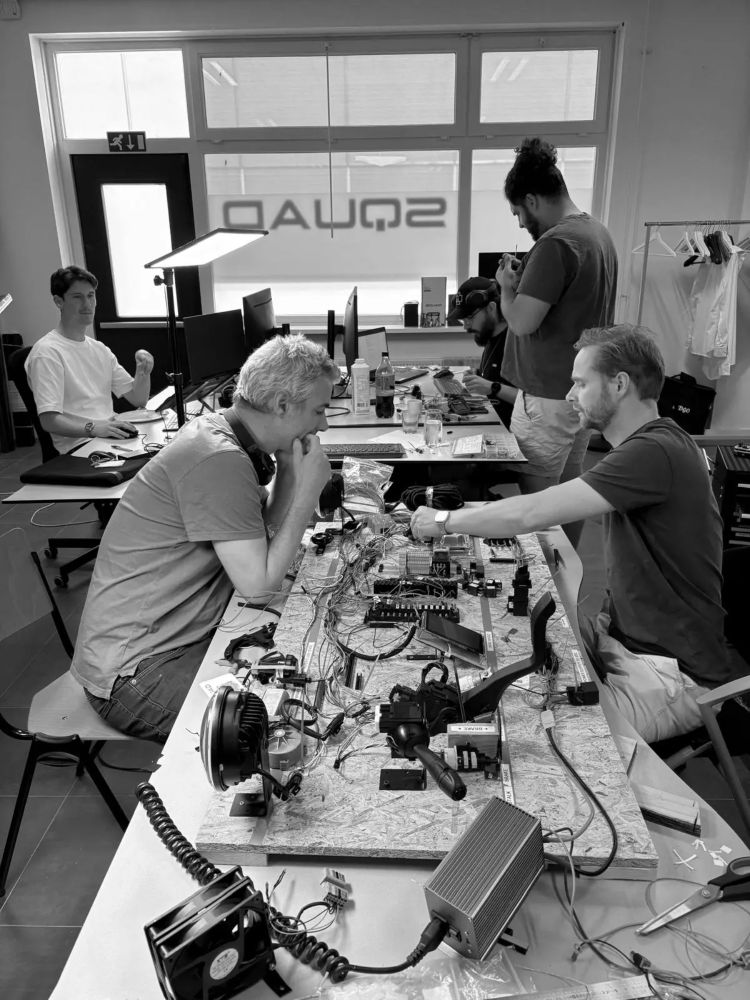
This time, our intern Bodgan and lead software engineer Kyriakos share the project they've been working on behind the scenes: automating unit testing.
Software unit testing has been an integral part of the automotive software development lifecycle for many years. Necessary, yes. Time consuming, immensely.
Designing, implementing and running software test cases takes up a large portion of the total development efforts. So, what if we could automate all these steps? Find out what we're doing at Squad Mobility.
Enjoy the read!
www.squadmobility.com/blog/squad-m...
Saying goodbye to hardware constraints with a software-defined vehicle
It's time for our lead software engineer Kyriakos Kapetis to share a few. "A vehicle should not be limited by hardware. Software keeps it modern with constant updates."
What is a software-defined vehicle (SDV)?
We’ve been hearing the term software-defined vehicle (SDV) in the automotive manufacturers world over the last decade. In this article, we’re breaking down what it really means and how we apply it to the Squad Solar City Car.
Software everywhere
For many decades, most functions in cars were controlled by hardware components, such as switches and relays. For example, a mechanical control point such as a light switch, would turn on the lights by electromechanically activating a relay for each light setting. Such a system meant that changes or updates were mostly made to the hardware only, and little was done to the electronics.
As vehicles became more complex and incorporated new features like anti-lock braking (ABS), and advanced safety systems, they required more electronics. This made the hardware-heavy approach inefficient and outdated, and paved the way for replacing direct hardware controls with centralized, programmable Vehicle Control Units, or VCUs. As software, rather than fixed hardware, increasingly managed the core of the vehicle, the industry transitioned to what we now call Software-Defined Vehicles, SDVs.
What are the benefits of a software-defined vehicle?
Read more on our website: www.squadmobility.com/blog/squad-m...
Also, in case you haven't heard...
Our crowdfunding campaign in on Republic Europe.
Now's your chance to be part of a change in urban mobility and take advantage of this powerful momentum. Have a look! europe.republic.com/squad-mobility.
Our lead electrical engineer Wouter shared a deeper dive into our 48 Volt architecture last week.
Most electric cars (EVs), even modern ones, rely on a dual-voltage system. They use a traditional 12-Volt system to power low-energy accessories like lights and infotainment displays, while the main motor and high-power components run on a newer, higher-voltage system (often 400V or 800V, but sometimes 48V for smaller vehicles). The main problem with this setup is inefficiency. The high-voltage battery's energy for accessories has to be converted down to 12V. Every conversion step wastes precious energy, which ultimately impacts the vehicle's total range.
At Squad, we streamlined the process by skipping the inefficient 12V system almost entirely. Read more on our website: www.squadmobility.com/blog/squad-m...
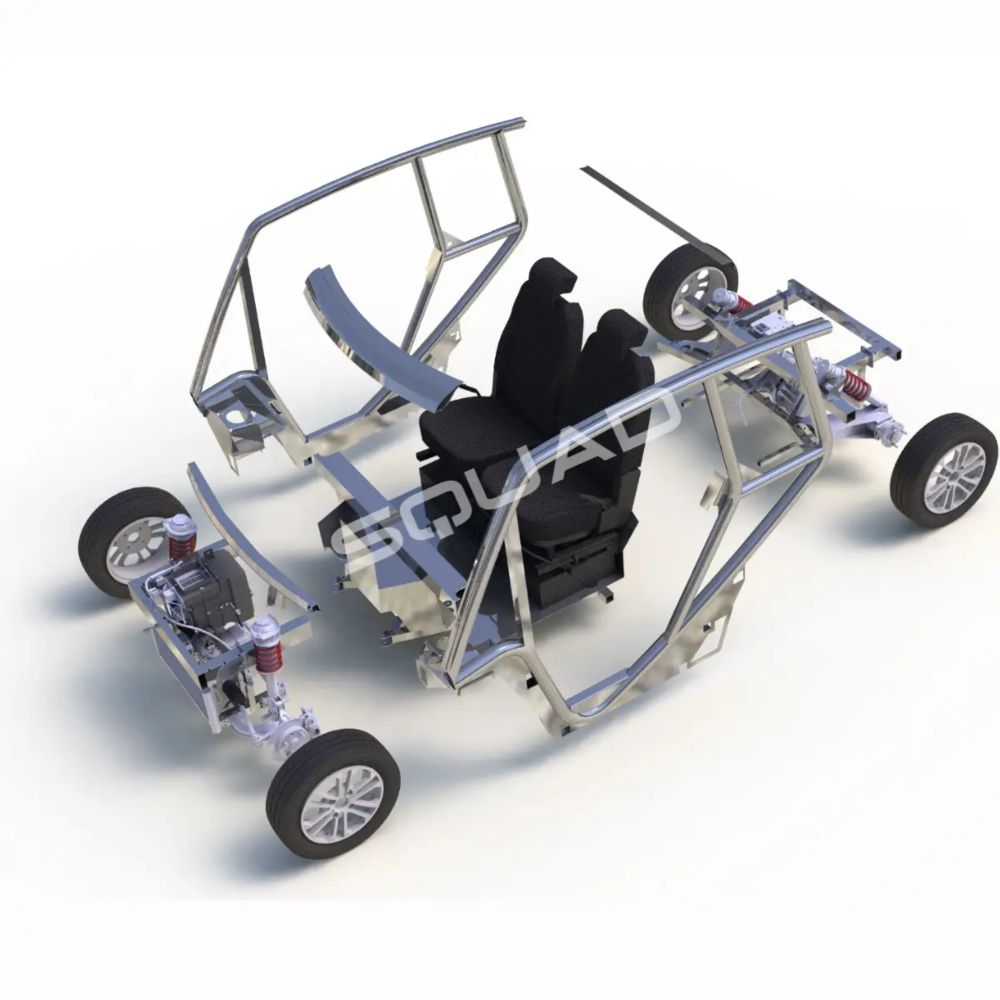
Here's a bit of a behind-the-scenes look at what we're doing right now: assembly plans.
At Squad Mobility, the way we work is in line with our mission: affordable and sustainable mobility for all. From the start, we’ve worked with a first-principles mentality. Looking at a problem from a fundamental point of view and reasoning from the ground up. We also study a situation in a holistic way. Meaning, not just the Squad car, but how it exists afterwards and how it is before it’s assembled. Making the parts, how parts travel, to which locations. And going further, we look at it from a community perspective. Who assembles the Squads, how are they distributed, and even further, how are they maintained throughout their lifecycle.
Read more on our website!
www.squadmobility.com/blog/squad-m...
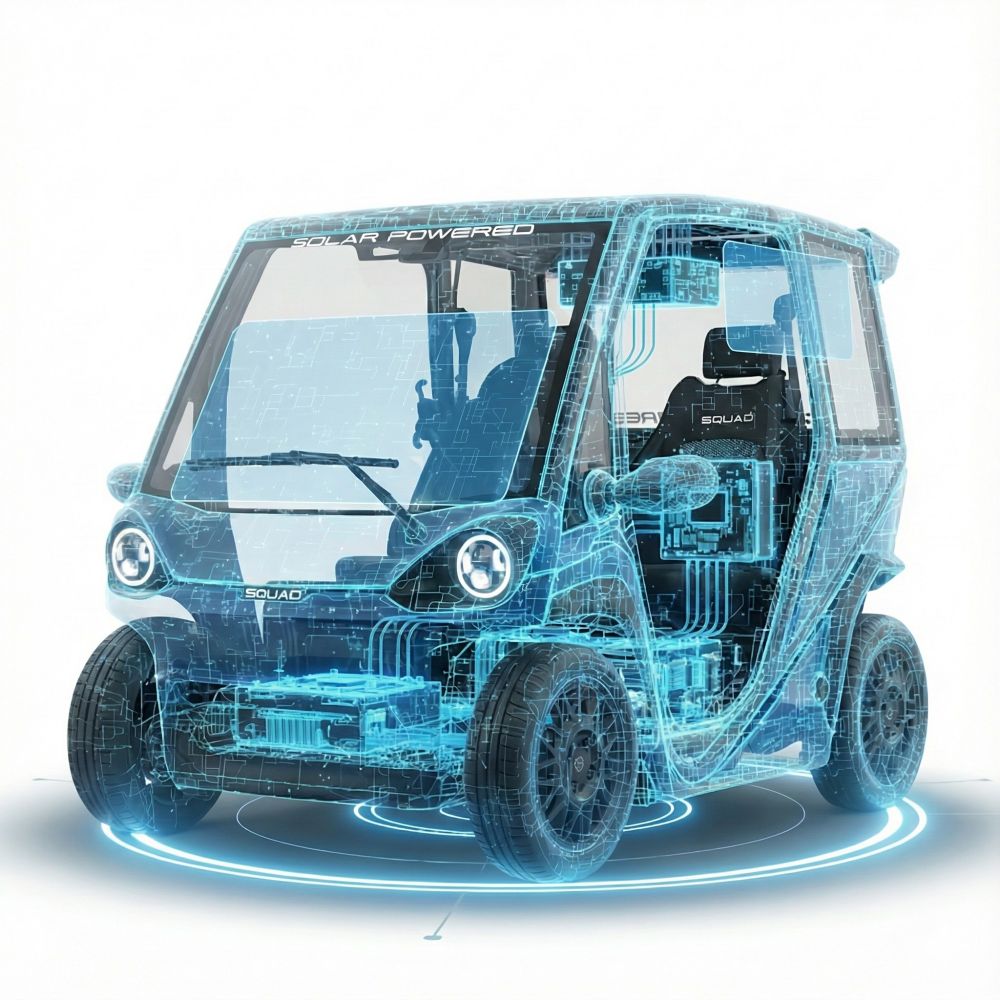
Hello everyone! Here's a solar car designed for you. Introducing the Squad Solar City Car: a compact and affordable microcar that charges itself with the sun. No need to put strain on the energy grid.
A few concrete points:
- 5300+ pre-orders worldwide, avg. pre-order fee €50
- 300+ interested distributors worldwide
- 4 patents granted, more in development pipeline
- EU Horizon project with Toyota, Renault, and Valeo
What's our mission? A future in which cities are free of pollution, traffic jams, and parking stress. Where drivers and those around are safe. We envision our solar-powered vehicles becoming the go-to solution for everyone. And where we help transform urban life and mobility for the better in a lasting and sustainable way.
EU cities currently have more than 500 low-emission zones and are banning petrol cars. Squad Mobility offers an affordable and sustainable Solar City Car that runs fully on solar energy for nearly 90% of the world population, accelerating a transition to clean urban mobility and reducing emissions.
Our energy-efficient vehicle is designed to provide an affordable and inclusive way for everyone to reduce their carbon footprint while reclaiming city space and improving air quality.
We believe in creating mobility that strengthens independence from the energy grid, allowing users to drive on free solar energy and prevent grid overloads. This approach helps us build healthier, happier communities for current and future generations. It brings freedom from range anxiety, city congestion and parking chaos.
We are presenting an opportunity for people, investors, distributors, resellers, fleet owners, and drivers to make a difference. It’s within their power to drive change now. This change can be as small as a new way for the family to move around, or as large as cleaning up city air with a new fleet of Squads for car sharing. No matter the size, change is significant. Join us in making sustainable urban mobility affordable for everyone!