

Has anyone here used an autonomous tractor in an orchard?
This spring in east Georgia was tough - frost, heavy rain, and shorter application windows hit at the same time while labour was already hard to find.
Spraying five hectares takes two hours. Some blocks reach their sixth application while others are still on their fifth.
The pressure on drivers is real. Hours in a small cab, early mornings in remote fields and health risks - if something goes wrong mid-spray, the driver has to step out and risk direct contact with pesticides.
I believe autonomous tractors could change this.
No driver needed - operations managed remotely.
If you use them, how do they perform?
@teaimnadze
Tea Imnadze
9Following
9Followers
Passionate about how precision farming, smart data, and tech innovation can build a more sustainable food future. With hands-on experience in walnut orchard operations and a background in climate-smart agriculture from the FAO. I am currently focused on using technology to help track and improve farm work, connecting field operations with digital tools.
Posts
Pages
Recent posts
Lately, I’ve been thinking about how susceptible modern crop varieties have become to pests and diseases. Breeders focus so heavily on yield, convenience, and appearance.
This weekend, during a trip, I noticed a wild walnut tree growing along a mountain road. Having spent eight months living in a walnut orchard, I instinctively started examining its leaves. To my surprise, there were very few aphids, and I even spotted some ladybug eggs nearby. This wild tree is massive and unreachable, and its nuts have incredibly hard shells - a stark contrast to the "Chandler" variety, which stays relatively short and produces easy-to-crack nuts.
Yet, I vividly remember that two years ago at this time of year, despite having natural predators like ladybugs around, we were desperately applying pesticides to beat back an aphid infestation in the orchard.
We have gained a lot of convenience, but our trees now require high maintenance.
It makes me wonder: should we continue focusing strictly on the fruit, or is it time to prioritize the resilience of the plants themselves?
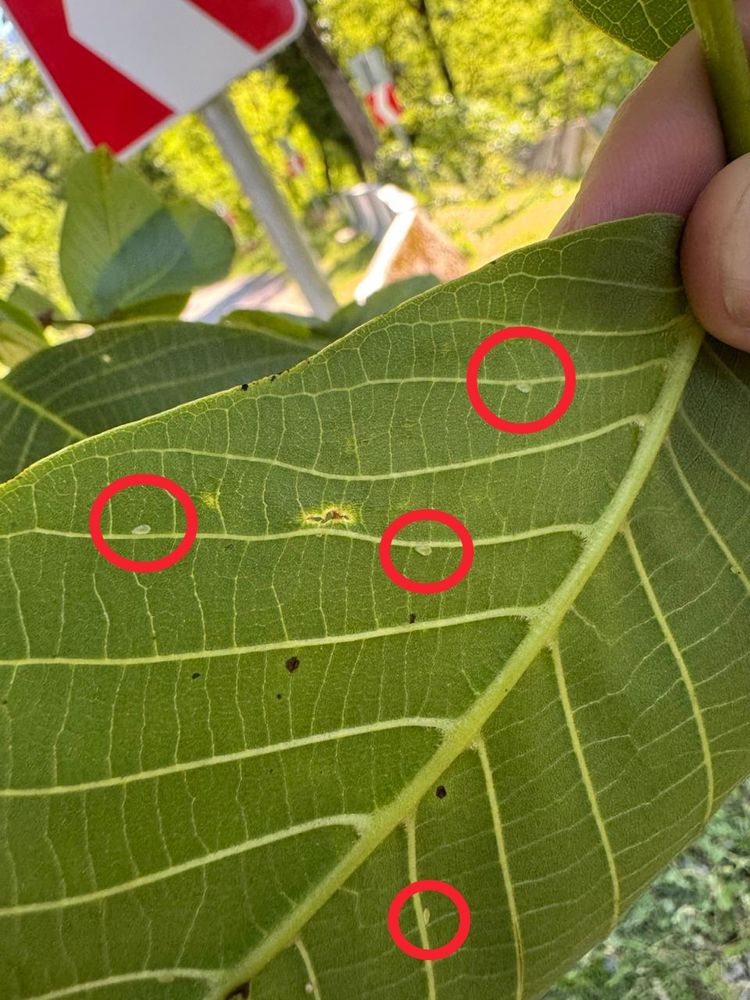
In this picture, you can see four small aphids along the leaf veins:
GPS tracking has made my work as a junior agronomist more effective.
Two years ago, while working in a walnut orchard, I had to check field coverage by physically following the tractors, which was impossible to do all the time across 150 hectares. The drivers would report their completed tasks, but I never fully knew if they had skipped any rows. It wasn't on purpose - we are all human and make mistakes.
After a year, I shifted my career to an apple orchard, where I can easily monitor both coverage and tractor speed from a distance - something that is very hard to control on-site.
Implementing this technology has made my work not only easier, but far more efficient.
In my country, Georgia, new technologies are adopted quite slowly, and people tend to be pretty skeptical. How is the situation in your countries?
What if we cut down pesticide use by using light itself?
Constantly switching chemical groups to avoid pest resistance and watching crops become more vulnerable motivate me to find sustainable alternatives to chemical application.
Instead of just treating symptoms, I believe the real solution is to make plants stronger.
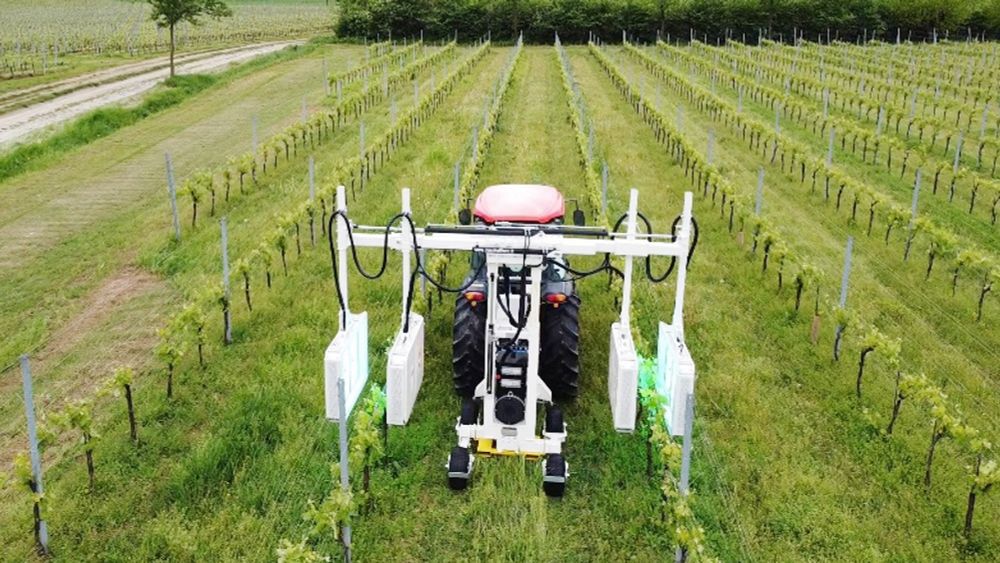
During my research, I came across the UV-C boosting technique, in which automated UV-C light machinery is used in the field to flash light onto crops. This exposure prevents fungal growth while triggering the plant to increase its salicylic acid levels, which acts as a natural systemic defense.
Early data shows that it has been helping farmers lower application rates and costs while maintaining high production.
But the question is: how will it affect plants in the future?
Has anyone here used this technique, and what do you think about its long-term effects?
I have recently been thinking about agricultural drones, wondering how they can cover the entire canopy from above, while many diseases spread from the ground up.
On one hand, purchasing a drone for an orchard may sound very attractive. They are more efficient, safer to use, and no longer expensive on the market.
On the other hand, drones are under-investigated because they are new to the market.
A recent 2025 study evaluating aerial application efficacy in Italy concluded that during aerial spraying, farmers should be selective with plant protection products due to the lack of coverage.
Researchers found that the efficacy of systemic pesticide application is comparable to ground spraying, whereas contact pesticides show reduced efficacy, particularly at later growth stages when it is difficult to cover the entire canopy.
What are your thoughts on investing in drones for organic orchards?
You can see the full article here:
doi.org/10.3390/agro...