
FERTIGATION π±π§
WHEN IRRIGATION AND PLANT NUTRITION WORK TOGETHER
Can water and fertiliser be used more efficiently at the same time?
Fertigation is the application of water-soluble fertilisers through an irrigation system, most commonly drip irrigation. Nutrients are delivered directly to the root zone in small, controlled doses according to crop needs.
Fertigation can supply:
πΏ Nitrogen β urea, calcium nitrate or potassium nitrate.
π± Phosphorus β monoammonium phosphate or monopotassium phosphate.
π₯ Potassium β potassium nitrate or potassium sulphate.
π§ͺ Calcium and magnesium β calcium nitrate and magnesium sulphate.
π¬ Micronutrients β iron, boron, zinc and manganese in water-soluble forms.
Compared with conventional fertiliser application, a well-managed fertigation system provides more precise plant nutrition, reduces nutrient losses and, in some systems, may lower fertiliser use by approximately 15β25% without reducing yields.
However, successful implementation requires soil and water analysis, compatible fertilisers, correct equipment calibration and regular monitoring.
@yevaagronomy
Yeva Alieksieieva
60Following
32Followers
Posts
Pages
Recent posts
EL NIΓO AND ITS IMPACT ON MODERN AGRICULTURE ππΎ
El NiΓ±o is a natural climate phenomenon caused by unusually warm surface waters in the tropical Pacific Ocean. Although it develops far from Europe, it can influence global atmospheric circulation and contribute to unusual weather patterns.
Ireland is currently experiencing unusually hot conditions, which creates additional pressure on the agricultural sector. High temperatures can accelerate soil moisture loss, reduce grass growth and increase water demand for livestock. Dairy and beef cattle may also experience heat stress, which can affect animal health, feed intake and productivity.
However, El NiΓ±o should not be seen as the only cause of extreme heat in Ireland. Local weather systems and long-term climate change also play an important role.
For farmers, adaptation is becoming increasingly important. Better water management, soil moisture conservation, heat-resistant crops, shaded areas for animals and accurate weather forecasting can help reduce climate-related risks.
π± How is your farm or agricultural business preparing for longer periods of heat and unpredictable weather?
π THE WORLDβS MOST FERTILE AGRICULTURAL REGIONS πΎ
Land is not just soil beneath our feet. It is the foundation of civilizations and a key to humanityβs future.
Some regions have been blessed with extraordinary natural advantages:
π± Ukraineβs chernozem soils β among the richest and most fertile soils on Earth;
πΎ the Nile Valley, the Mississippi Basin, and the Indo-Gangetic Plain β feeding millions of people for thousands of years;
π Brazilβs Cerrado β a remarkable example of how science and innovation can transform challenging landscapes into global agricultural powerhouses.
But the future of farming depends on more than just fertile land. The most valuable resource is healthy soil β and protecting it is essential for generations to come.
π What do you think: which agricultural region has the greatest potential to help feed the world of tomorrow? π±
BIOGAS = when agricultural waste becomes energy β»οΈπ±
Can agricultural residues generate new energy?
In a circular agricultural economy, even βwasteβ can have value.
Manure, plant residues, and food waste can be processed in special bioreactors, where microorganisms break down organic matter without oxygen β a process known as anaerobic digestion.
This produces two valuable products:
β‘ Biogas β a mixture of gases, mainly methane and COβ, which can be used to generate heat and electricity.
π± Digestate β the material remaining after digestion, rich in nutrients, which can be returned to the soil as fertiliser.
This is an example of how farms can not only produce food but also transform their own waste into a valuable resource.
β»οΈ Could the farms of the future become more self-sufficient through these technologies?
GREEN MANURE π±
What kind of plants are they? πͺ΄
Green manure crops are plants grown not for harvesting, but to improve the soil before the next crops are planted.
Each type of green manure has its own small βjobβ in the soil:
π± Clover β works together with beneficial bacteria to help increase nitrogen levels in the soil.
π± Lupin β has a deep root system that helps improve soil structure and brings nutrients from deeper soil layers.
π± Vetchβ grows quickly and produces a lot of green biomass, which becomes a source of organic matter when returned to the soil.
π± Mustard β grows fast, protects the soil surface, and can help reduce the development of some soil pests.
This is a simple example of how plants can not only take resources from nature, but also help restore them.
π± Do you think we can use natural processes more in modern agriculture?
CROP ROTATION π±
CHANGING CROPS CAN INFLUENCE SOIL HEALTH π«
Iβve always been interested in how choosing the right crops can affect not only crop yields but also soil health.
In fact, this idea isnβt new. Many centuries ago, people noticed that certain plants grow better together and help one another.
One interesting example is the βThree Sistersβ system: maize, beans, and squash.
π½ Maize provides natural support for the beans.β¨π« Beans help increase nitrogen availability thanks to the activity of beneficial bacteria in the root zone.β¨π Squash, with its large leaves, protects the soil surface and helps retain moisture.
Sometimes the path to more sustainable agriculture begins not with complex technologies, but with a more attentive approach to natural processes.
π± What traditional farming practices do you think could be useful for the future?
PHYTOREMEDIATION π±
When plants become natural βcleaning systemsβ for the soil
I have always been fascinated by the ability of plants not only to produce food, but also to interact with soil and support ecosystem recovery.
Phytoremediation is a nature-based approach that uses plants to absorb, accumulate, or stabilise pollutants in soil and water.
Due to industrial activity, intensive agriculture, or environmental accidents, soils can become contaminated with heavy metals such as lead (Pb), cadmium (Cd), zinc (Zn), copper (Cu), and nickel (Ni).
π» Sunflower (Helianthus annuus) is one of the most studied plants for phytoremediation. Its strong root system can absorb and accumulate elements including:
β’ cadmium (Cd)
β’ lead (Pb)
β’ zinc (Zn)
β’ radionuclides such as caesium-137 (Cs-137) and strontium-90 (Sr-90)
This is why sunflowers have been studied after nuclear accidents, including Chernobyl and Fukushima, for their potential role in contaminated soil recovery.
But even common agricultural crops can have interesting abilities π±
For example, beetroot (Beta vulgaris L.) is not only a food crop. Thanks to its developed root system and adaptability, it is also studied in sustainable agriculture for its interaction with soil elements, including some heavy metals such as cadmium (Cd).
Plant roots also work together with soil microorganisms, influencing nutrient availability, soil structure, and biological activity.
πΏ Legumes work in a different way. They do not mainly remove heavy metals, but through their symbiotic relationship with Rhizobium bacteria, they can fix atmospheric nitrogen (Nβ), naturally improving soil fertility.
Phytoremediation is not an instant solution β it is a long-term process where plants, soil, microorganisms, and time work together.
Sometimes solutions for a more sustainable future already exist in nature. We just need to understand how to use them wisely ππΎ
#Phytoremediation #SustainableAgriculture #SoilHealth #AgriTech
Hi INSPIRED community ππ±
My name is Yeva Alieksieieva. Iβm from Ukraine and currently based in Ireland.
Iβm passionate about agriculture, sustainability and finding better ways to grow food while protecting our environment.
Iβm finishing my studies in Horticulture, Vegetable Production, Fruit Growing & Viticulture at NUBiP of Ukraine. I also study Business in Ireland and Iβm continuing my journey towards Climate Change, Agriculture and Food Security.
My interests include:
π± sustainable farming
π climate change adaptation
π viticulture in different climates
πΎ soil health and regenerative agriculture
π‘ AgriTech and innovation
I have completed 16 FAO e-learning courses and I also run my own agriculture page AgroCu, where I share knowledge about farming and sustainability.
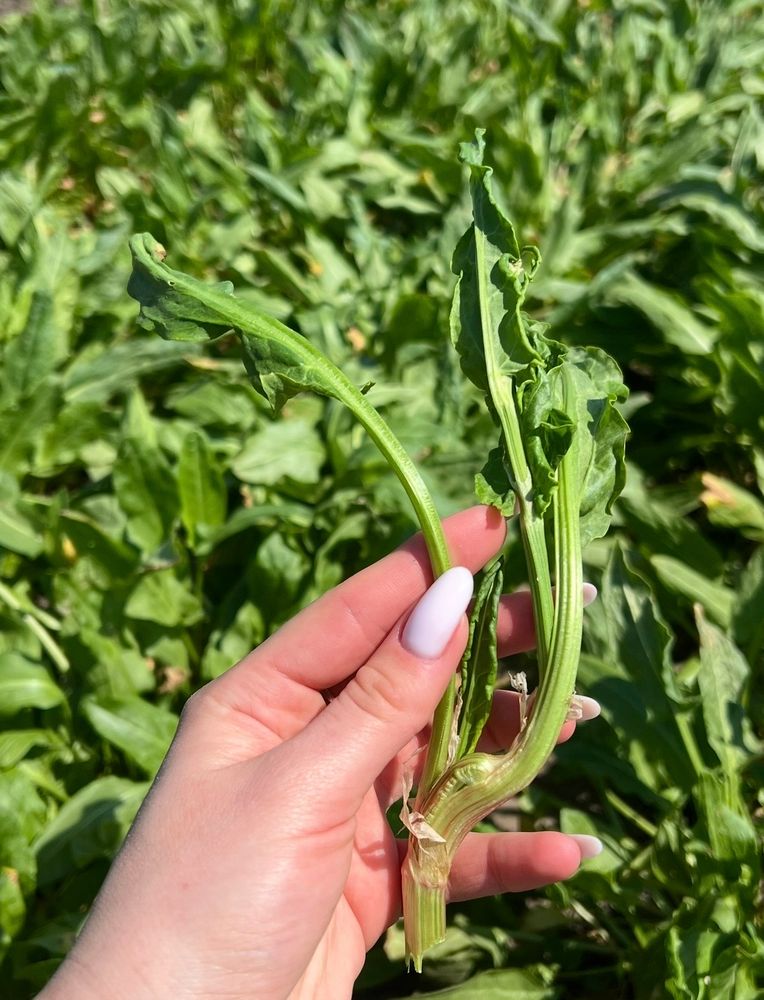
The photos are from my practical field work experience, where I had the opportunity to observe crops, plant development and real growing conditions. π±
I believe that combining scientific knowledge, practical experience and innovation is the key to the future of sustainable agriculture.
I speak Ukrainian, Russian and English, and Iβm currently learning Spanish.
Happy to join this community and connect with people who are passionate about agriculture, climate solutions and a more sustainable future ππΎ