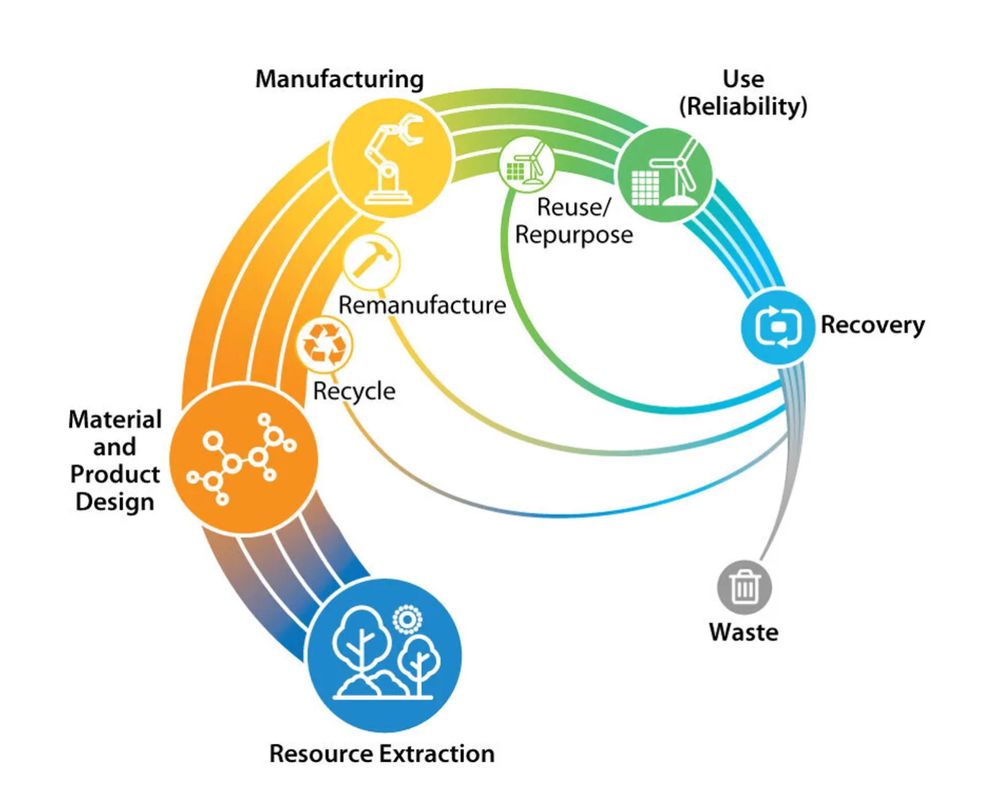
I used to think of recycling as primarily an environmental problem.
The more I’ve worked around sustainability, the more I’ve come to see it as a design and incentives problem.
If a product is difficult to disassemble, its materials have little resale value, or nobody is responsible for recovering them, what happens at the end of its life is almost predetermined.
That’s what makes circularity interesting to me.
It asks businesses to think beyond the moment a product is sold: Who owns the material next? What is it worth? Can it be recovered? Can it become an input again?
A truly circular economy requires more than better recycling rates.
It requires businesses to rethink products, supply chains, ownership models, and incentives from the beginning.
Sometimes the best recycling strategy is simply not creating something that was designed to become waste.