It is a common misunderstanding that tumor cells can mutate, such that their capacity to sustainably and effectively ferment ATP from substrates other than glucose and glutamine, is upregulated.
Quite specifically, findings indicating that tumors with the v600eBRAF mutation can use fatty acids and ketone bodies for ATP fermentation, are inconsistent with what is known about the v600eBRAF oncogene.
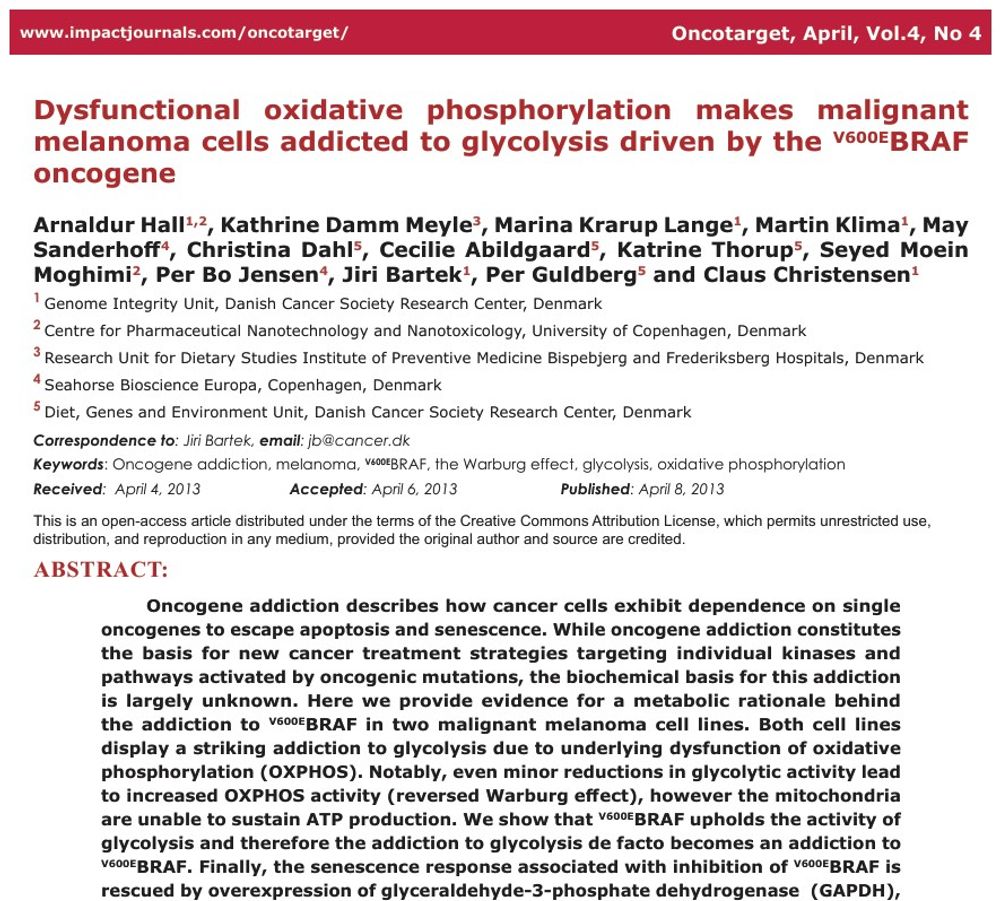
Mitochondrial Oxidative Phosphorylation is defective in melanoma with the v600eBRAF mutation, making it unlikely that much ATP can be derived from fat (Hall et al., Dysfunctional oxidative phosphorylation makes malignant melanoma cells addicted to glycolysis driven by the V600EBRAF oncogene. Oncotarget 4: 584-599, 2013).
Also, Magee, et al, showed that sustained therapeutic ketosis, which elevates acetoacetate and Beta-hydroxybutyrate in blood, reduce melanoma cell metastasis to lungs in mice (Aust. J. Exp. Biol. Med Sci. 57: 529-39, 1979).
Studies from the Kofler group showed that sustained therapeutic ketosis slows melanoma growth, in vivo, regardless of tumor genetics including those with v600eBRAF mutation (doi.org/10.1186/s401...).
Dr. Jocelyn Tan from the Pittsburg VA published data demonstrating that patients with melanoma responded well to sustained therapeutic ketosis. Indeed, in her study, one melanoma patient with the v600eBRAF mutation, who performed optimally, remains alive after 153 weeks. (DOI: 10.1186/s12986-016-0113-y).
These observations in mice and humans with melanoma contrast with the information presented in the Xia, et al, paper indicating that acetoacetate would enhance growth of melanoma and especially melanoma with the v600eBRAF mutation (dx.doi.org/10.1016/j.cm...).
It is unfortunate that some investigators fail to remove both glucose and glutamine from their cell culture media, and thus make inaccurate conclusions regarding the necessary and sufficient energy production role of fatty acids and ketone bodies in cancer cells.