It is a common misunderstanding that tumor cells can mutate, such that their capacity to sustainably and effectively ferment ATP from substrates other than glucose and glutamine, is upregulated.
Quite specifically, findings indicating that tumors with the v600eBRAF mutation can use fatty acids and ketone bodies for ATP fermentation, are inconsistent with what is known about the v600eBRAF oncogene.
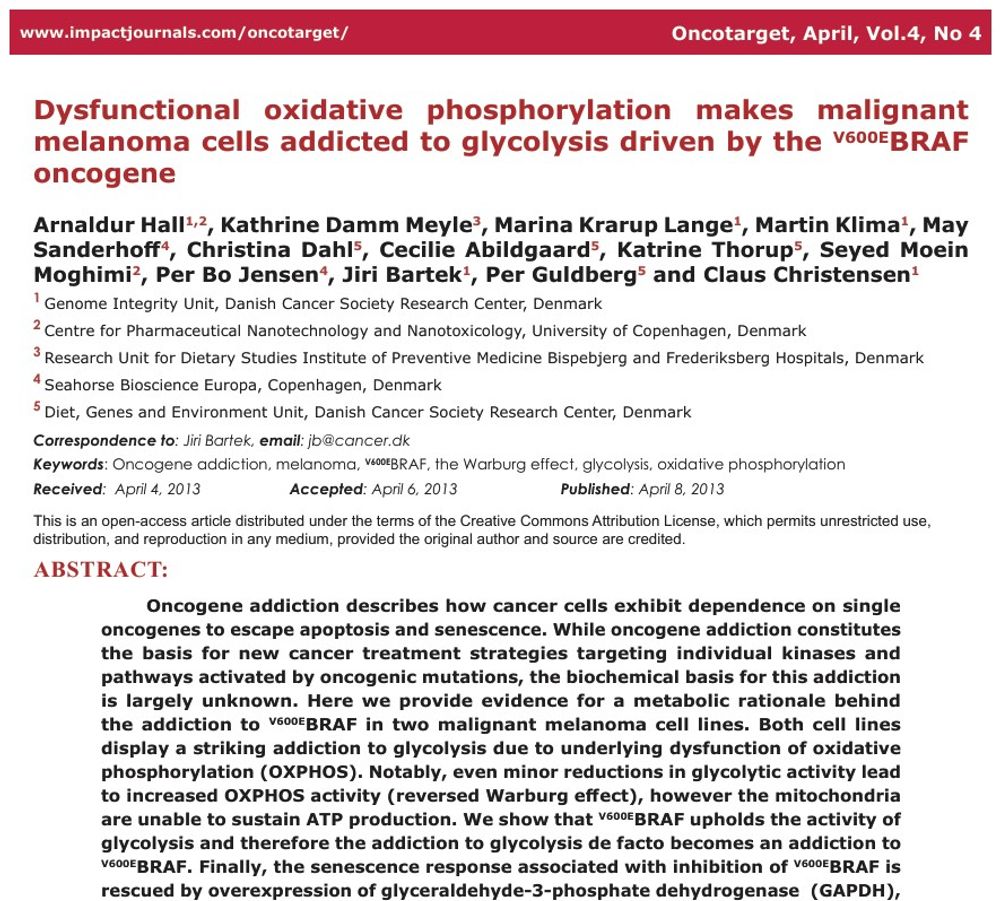
Mitochondrial Oxidative Phosphorylation is defective in melanoma with the v600eBRAF mutation, making it unlikely that much ATP can be derived from fat (Hall et al., Dysfunctional oxidative phosphorylation makes malignant melanoma cells addicted to glycolysis driven by the V600EBRAF oncogene. Oncotarget 4: 584-599, 2013).
Also, Magee, et al, showed that sustained therapeutic ketosis, which elevates acetoacetate and Beta-hydroxybutyrate in blood, reduce melanoma cell metastasis to lungs in mice (Aust. J. Exp. Biol. Med Sci. 57: 529-39, 1979).
Studies from the Kofler group showed that sustained therapeutic ketosis slows melanoma growth, in vivo, regardless of tumor genetics including those with v600eBRAF mutation (doi.org/10.1186/s401...).
Dr. Jocelyn Tan from the Pittsburg VA published data demonstrating that patients with melanoma responded well to sustained therapeutic ketosis. Indeed, in her study, one melanoma patient with the v600eBRAF mutation, who performed optimally, remains alive after 153 weeks. (DOI: 10.1186/s12986-016-0113-y).
These observations in mice and humans with melanoma contrast with the information presented in the Xia, et al, paper indicating that acetoacetate would enhance growth of melanoma and especially melanoma with the v600eBRAF mutation (dx.doi.org/10.1016/j.cm...).
It is unfortunate that some investigators fail to remove both glucose and glutamine from their cell culture media, and thus make inaccurate conclusions regarding the necessary and sufficient energy production role of fatty acids and ketone bodies in cancer cells.
The growing global community of people who are independently pursuing Press/Pulse protocol do demonstrate, albeit anecdotally, that perhaps even imperfect implementation of adjuvant metabolic therapies can produce measurable and meaningful clinical results, in the form of statistically significant increases in Overall Survivorship as evidenced by PET/CT scans and MRIs, in contrast to only Standard of Care therapies, via comparison to known Kaplan-Meier survivorship curves for any given Standard of Care protocol.
Given that the Oncology market (cancer diagnostics and treatments) in the United States is projected to increase from $81B in 2024 to $180B in 2033, this begs the question: what is the scale of underwriting and funding, along with private and philanthropic investment, that would have to occur for the clinically managed application of Dr. Seyfried’s Press/Pulse protocol, to sufficiently scale to begin to preempt the deaths from cancer of 700,000 people annually?
Relatedly, what is the most expeditious means of training Oncologists, and more broadly, Functional or Complementary Medicine physicians, D.O.s and Naturopaths, to effectively apply Press/Pulse protocol in their clinics, as an adjuvant therapy in context to the Standard of Care?
And lastly, who will be the first entrepreneur to create a successful global franchise of Press/Pulse clinics which offer the entire balance of metabolic therapies alongside the Standard of Care, all under one roof?
As with all revolutions, be they medical or social, they are typically initiated in modest fashion, by a relatively small group of people, in solidarity, coalescing and collaborating around a single, inescapable idea.
Survive.
While metabolic approaches to addressing cancer are not new in the scientific literature or clinical application, they have yet to become part of the Standard of Care in Oncology.
As such, almost a century ago, famed biochemist Otto Warburg postulated a theory where all cancer cells arise from mitochondrial defects in number, structure and function, making them avid consumers of glucose and other fermentable sources, such as glutamine, even in the presence of oxygen.
Despite the ample genetic and histological heterogeneity of cancer, a relatively small number of metabolic processes is responsible for maintaining ATP generation and redox balance.
ATP can only be physically generated in two distinct processes: substrate-level phosphorylation or fueling the proton gradient of the mitochondrial electron transport chain. Their adequate functioning is essential for the maintenance of a proliferative status, redox balance and cell viability.
Notably, contemplating glycolytic capacity as a survival advantage and, at the same time, a vulnerably due to defective mitochondria are two opposing concepts.
Hence, exploiting this known phenomenon via chronic downregulation of glucose via the precise administration of grams of Fat, grams of Protein and grams of Carbohydrates, in combination with intermittent inhibition of glutaminolysis via pan-glutamic inhibitors such as 6-Diazo-5-Oxo-L-Norluecine, can constitute a sustainable and non-toxic method for managing disease.
Therefore, metabolic therapy constitutes a promising management strategy for cancers with very poor prognosis and ineffective Standard of Care. Glycolytic and glutaminolytic dependencies are a well described and targetable feature of many tumors, such as brain, pancreatic, breast, lung, gastric, skin, and prostate, among others. Multiple interventions are viable under the metabolic therapy umbrella, e.g., calorically and macronutrient-controlled nutrition, hyperbaric oxygen therapy, and metabolic reprogramming- however, clinical standardization is required.
Glycolysis and glutaminolysis not only provide cancer cells with ATP from the readily available substrates glucose and glutamine, but their rapid energy flux can also provide cancer cells with the necessary substrates and metabolic intermediates for lipid, amino acid and DNA synthesis that are needed for growth.
Notably cancer cells produce far less ATP per molecule of glucose, though nevertheless, they can produce ATP at a much faster rate due to rapid consumption of substrates.
Cancer cells produce ATP almost a hundred times faster than normal cells.
Cancer cells actively produce more glucose transporters on their cell surface membranes, so that more glucose is brought inside the cell. This increase in glucose metabolism through glycolysis allows the generation of glycolytic intermediates that funnel into biosynthetic pathways that support the production of NADPH, lipids, proteins and nucleotides.
Mitochondria are continually confronted with factors that can jeopardize how well they function. These factors include: chronic stress, sleep disturbances, hyperglycemia, xenobiotics such as drugs, antibiotics, organic pollutants and environmental toxins.
These factors can cause mitochondrial dysfunction, which can be characterized by any of four ways; (a) insufficient number of mitochondria, (b) insufficient substrate or nutrient co-factors needed for oxidative phosphorylation, (c) acquired dysfunction in the ATP synthesis machinery, or (d) damage to the mitochondrial membranes.
Mitochondrial dysfunction results in a number of cellular consequences, including: (i) decreased ATP production; (ii) increased reliance on alternative anaerobic energy sources; and (iii) increased production of reactive oxygen species (ROS) and reactive nitrogen species (RNS).
Hence, with this understanding of the fundamental biology of tumor energy production in mind, treatment regimens which address this phenomenon directly, constitute the next step in delivering effective and sustainable Oncology therapies to patients.
In order to remain viable, cancer cells require the primary fuels glucose and glutamine, to compensate for Oxidative Phosphorylation insufficiency.
Damage to mitochondrial concentrations of diphosphatidylglycerol and structurally abnormal cristae, induce downstream overexpression of oncogenes and inactivation of tumor-suppressor genes, which further enhance abnormal energy metabolism in cancer.
To date, no evidence has demonstrated the growth of any tumor cells, including Cancer Stem Cells, can occur with the deprivation of the fermentable fuels, glucose and glutamine.
Notably, any given tumor model's degree of malignancy can be directly correlated with significantly lower mitochondria and lower total respiratory capacity in tumor cells.
Furthermore, the tumor microenvironment is characterized by low
pH, hypoxia, entropy, pressure and deformation, increased temperature, stroma, altered rotation of cytoplasmic water, and downregulated proton gradient potential.
Hence, interventions which directly address the fundamental biology of disease, offer a sustainable and non-toxic method for managing cancer, longitudinally.
The combinatory effects of low glucose and elevated ketones, in tandem with the application of Hyperbaric Oxygen Therapy, three days per week at 2.5AT, for 90 minutes each session, demonstrates remarkable tumor response, absent any toxicity.
Hence, this combination of chronic metabolic control alongside intermittent pro-oxidant therapy in the form of HBOT, constitutes a key pillar of Dr. Seyfried's Press/Pulse protocol.
Notably, the scientific literature demonstrates that glucose and ketone control alone significantly downregulates tumor growth and increases mean survival time.
Crucially, while HBOT as a solitary intervention does not influence cancer progression, combining chronic glucose and ketone control with HBOT elicits a significant decrease in tumor growth rate, increasing mean survival time beyond what a given single intervention offers.
With this understanding in mind, one can begin to strategize as to what a longitudinally viable means of sustainably and non-toxically managing cancer can look like, both with, and absent, the Standard of Care.
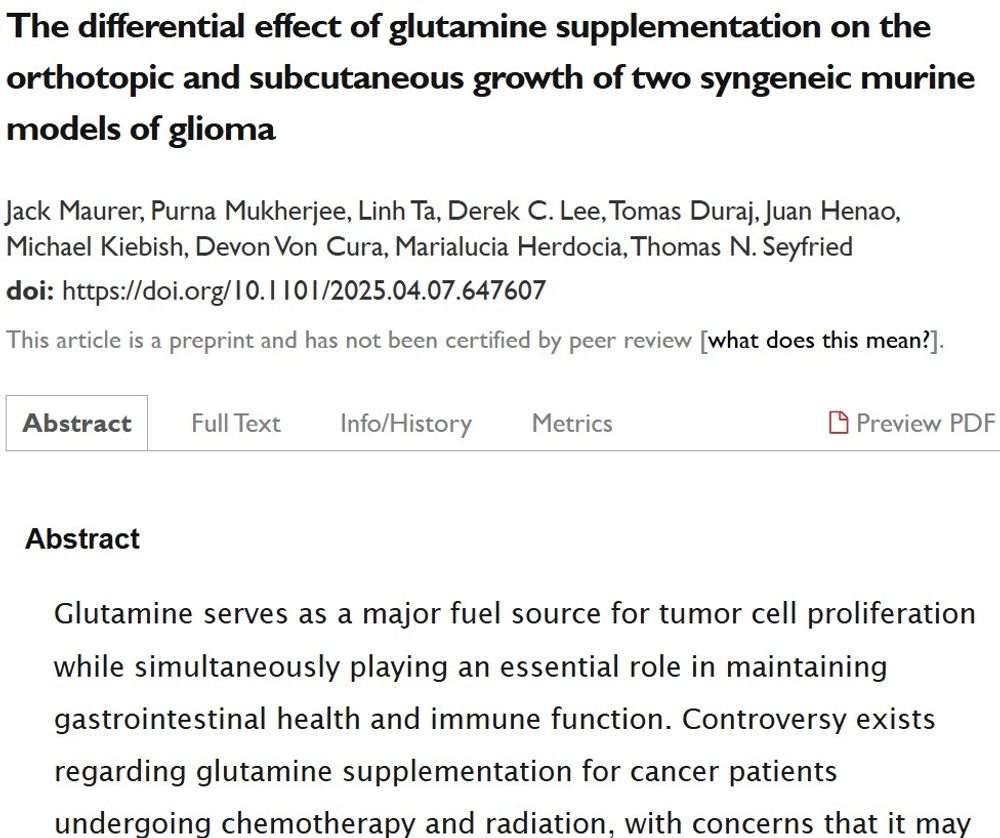
Glutamine is an essential amino acid for the proliferation and viability of cancer cells, making it a critical target for cancer therapy.
With this understanding in mind, important microenvironment-dependent
effects of glutamine metabolism on tumor progression necessarily have implications for cancer patients considering exogenous glutamine supplementation.
Notably, the differential response between orthotopic and subcutaneous tumors suggests that tissue microenvironment significantly influences glutamine metabolism and utilization.
Hence, the absence of significant growth stimulation by supplementary glutamine in brain tumors might reflect the tight regulation of glutamine levels in the glutamine/glutamate cycle, in relation the blood-brain barrier.
Conversely, the significant growth stimulation observed in subcutaneous tumors via supplementary glutamine, suggests that systemically located malignancies outside the brain directly benefit from increased glutamine availability.
Furthermore, decreased intratumoral glutamine concentrations despite elevated serum levels, may indicate rapid glutamine consumption, supporting the glutamine addiction phenomenon described in many aggressive cancers.
As such, these insights can offer instruction as to the caution given to supplementary exogenous glutamine for cancer patients, depending on tissue of origin, and correspondingly, the potential requirement to employ pan-glutamic inhibitors such as 6-Diazo-5-Oxo-L-Norleucine as a primary intervention, pursuant to addressing the fundamental energy metabolism of disease.
While socio-economic status, level of education and genetic predisposition can most certainly influence health markers, they are not necessarily determinative of them.
Hence, using key metrics of both lifespan and healthspan, such as VO2max and grip strength, can offer profound insight as to precisely what a human's history of dietary inputs and exercise frequency and intensity, has been.
Notably, VO2max sheds light on one's respiratory capacity, in terms of their maximum oxygen consumption rate during physical exertion.
Dead hang time at or above 120 seconds not only describes one's grip strength, but is also a surrogate for what one has had to do from the standpoint of sustained resistance training over time, to achieve said grip strength.
While it may not be surprising to understand that nutritional inputs and exercise are primary determinates of one's health, they are often times critically absent, or insufficient, in many individuals' self-care regimens.
The great news however, is that they are available to just about anyone, immaterial of age, state of health, or lifestyle, and as such, can dramatically alter one's lifespan and healthspan profile.