Innovation isn’t just about invention - it’s about how and where ideas take root.
Our pursuit of innovation has often fixated on the potential for invention, we often think of innovation as the moment a new idea is born - usually in a lab, a studio or a startup, but in reality, this is only half the journey.
The second half of that journey requires the invention to be adopted by people and without that adoption, an invention remains just an idea…
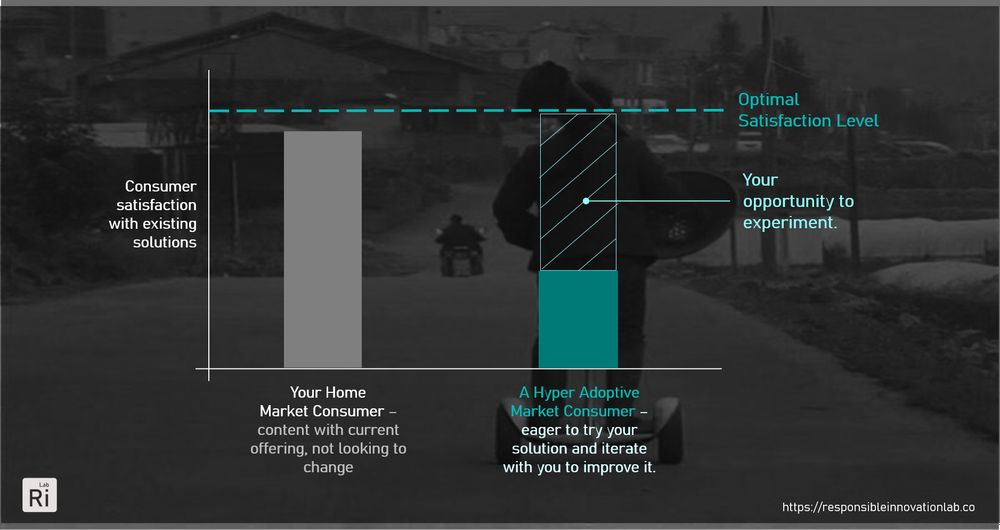
So when we seek to understand adoption, it’s important to recognise that the 'early adopters' may not be in the country where the invention occurred. In today's highly connected world, the early adopters of an invention could exist anywhere. In fact, the countries undergoing rapid economic and social change are often where we find the people who are the most open and adaptive to new ideas.
Take Kenya, for example. In a country experiencing rapid economic and social shifts, we’ve seen how innovations that originated elsewhere can find unexpected success. In Nairobi, mobile payments like M-Pesa in a matter of months became an integral part of daily life, changing the way people interact with money. What’s striking is how quickly these new tools are adopted and then adapted to better suit local needs.
This highlights a key point: the place where an idea originates is not always the best place to test its potential. In fact, it’s often in environments undergoing significant change - where new ideas are most likely to be embraced and transformed.
To understand how an innovation can truly make an impact, we need to look to places that are ready to experiment, adapt and push the boundaries of what’s possible. It’s in these spaces where the real innovation happens.
Learn more about Responsible innovation Lab’s approach to innovation with our free ebook:
www.responsibleinnovationlab.co/publications...