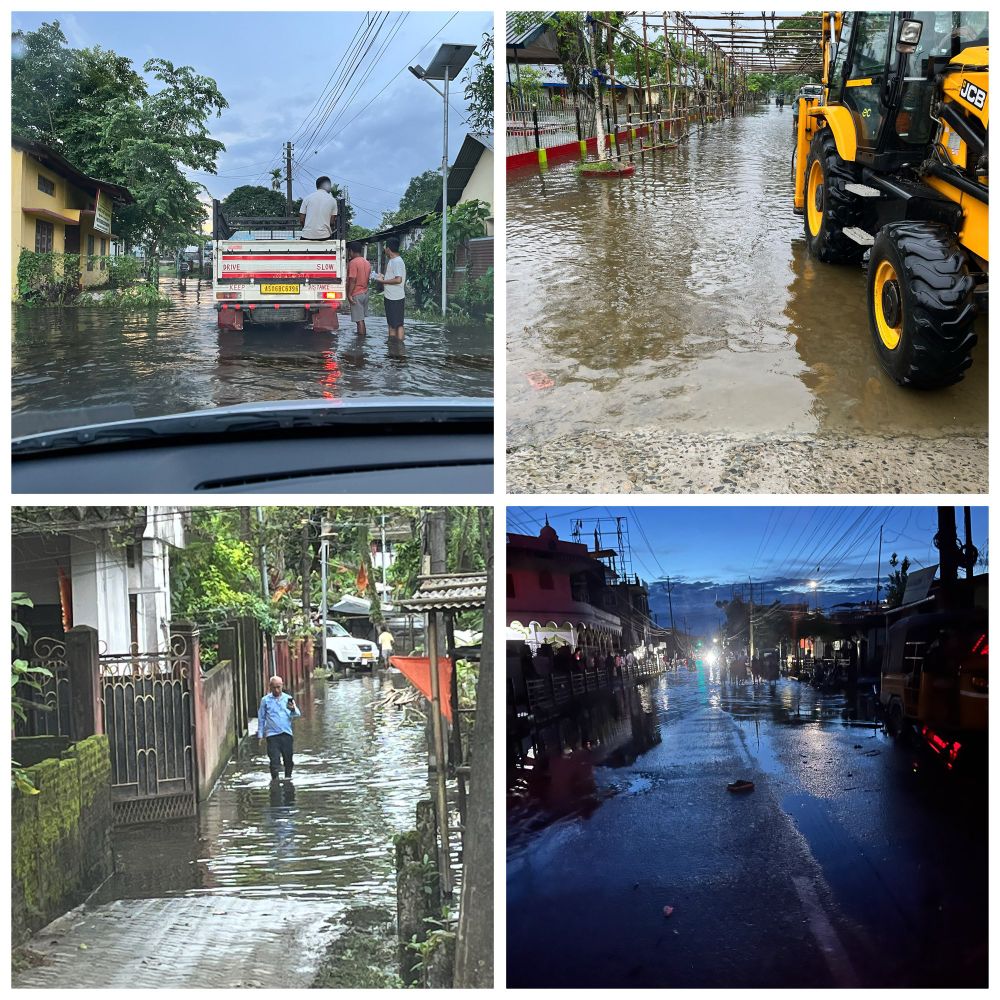
A Day When the City Nearly Drowned
At 5:30 AM, the city felt like any other day.
By afternoon, it was struggling to stay afloat.
The Town Protection Drain, the major outlet of the flood waters had overflowed. Within hours, it had swallowed parts of the National Highway. Traffic froze. Water rose. Panic spread.
By then, there was no time to “plan.” Only to act.
Sanitation workers were the first to step in.
They entered clogged, overflowing drains, risking their lives to clear blockages with bare hands and basic tools. It’s work that often goes unseen, until a day like this.
Our office mobilised every available resource. The district administration moved into emergency mode. The police worked alongside us to manage traffic and to calm growing public unrest.
Because this wasn’t just about water.
People were watching their homes, their belongings, their sense of security being washed away.
At the centre of it all was the Mayor who was facing questions, anger, desperation. I found myself trying to support him, even as the situation kept evolving by the hour.
We had to reroute public transport.
We had to respond in real time.
We had to make decisions with incomplete information.
And yet, something remarkable happened.
Lines blurred.
Administrators, sanitation workers, police personnel, elected representatives and even citizens began working not in silos, but together. There was no “department” anymore. Just a shared urgency.
I was on the field till late that night. And the nights after.
It took three days for the water to recede, for the city to breathe again. Rehabilitation followed but the memory of that day lingered.
Because it revealed something we often forget:
Cities don’t fail in a moment.
They are pushed there by the gaps we ignore, systems we delay, and infrastructure we underestimate.
But they are also saved in moments
by people who step up, often without recognition.