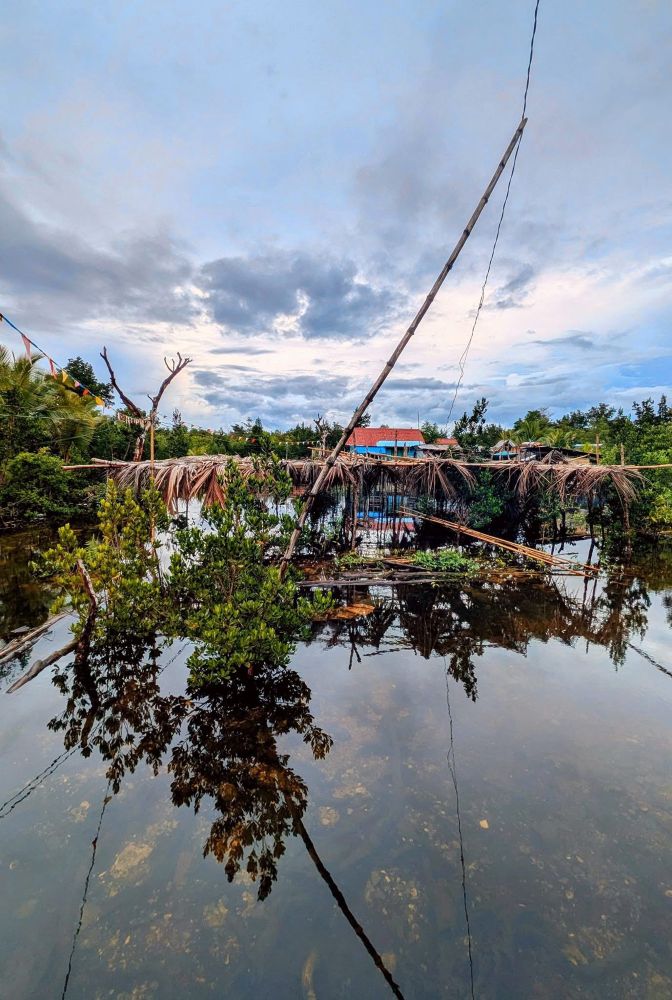
Mangroves and seagrasses can sequester up to five times more carbon per acre than tropical rainforests, and the Philippines has 700 billion metric tons of carbon sequestered in its coastal habitats.
It has also lost more than half of them.
Since 1918, the Philippines has lost over 64% of its mangroves, declining to 284,798 hectares today, largely due to large-scale conversion to aquaculture ponds. The ecological cost is well documented: reduced fish stocks, weakened storm barriers, and billions of tons of blue carbon at risk of being released back into the atmosphere.
What’s changing is the approach to restoration. Earlier planting programs focused on putting propagules in the ground with little regard for hydrology or tidal flow, producing monoculture stands that rarely thrived. Community-based ecological mangrove restoration now focuses on restoring the conditions that allow mangroves to regenerate naturally, with minimal planting and maximum ecological function.
What do you think is the most undervalued ecosystem service that mangrove restoration delivers?
📍Eastern Samar, Philippines
📷 Dondon Agaton, Philippine Rural Reconstruction Movement