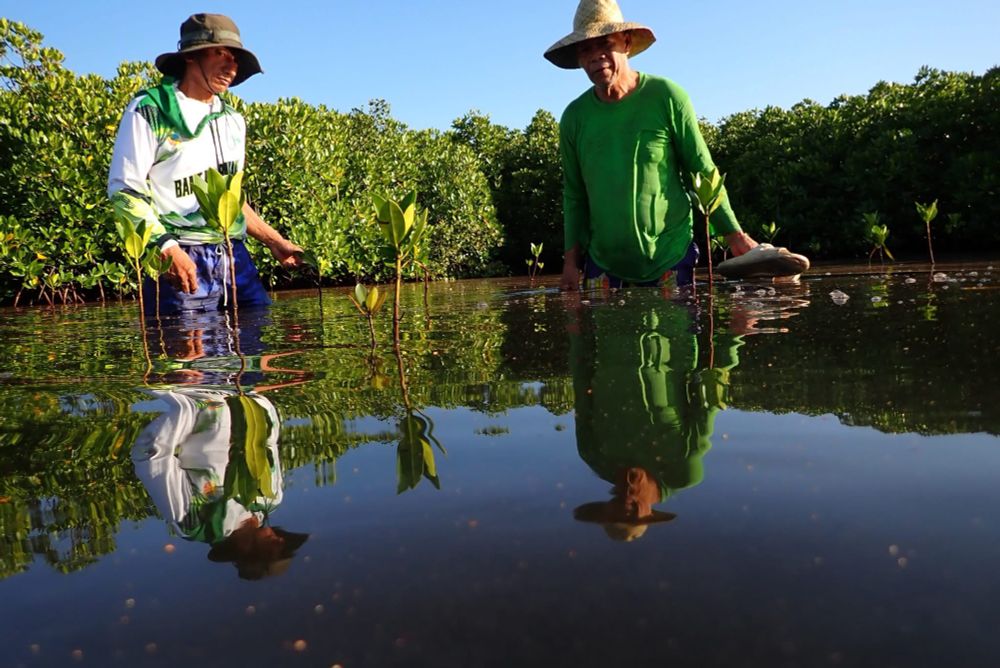
Super Typhoon Haiyan devastated the mangrove forests of Eastern Samar in 2013. A decade later, communities in Quinapondan are rebuilding them, one seedling at a time.
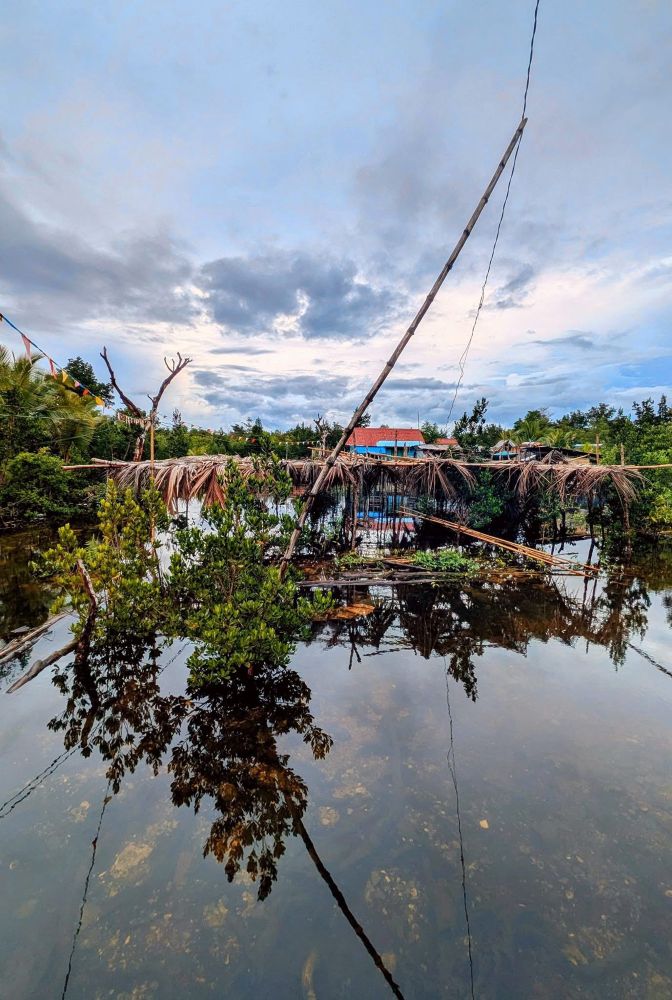
Since 2015, local associations backed by Oxfam and PRRM have planted more than 20,000 mangrove seedlings, with bamboo walkways built to help communities navigate and monitor the recovering forest. The Bantay Kalikasan program keeps it standing.
Mangroves don’t just store carbon. They are the reason communities survive the next storm.
What would it take to scale community-based mangrove protection programs across Eastern Visayas?
📷Dondon Agaton, PRRM
Mangroves and seagrasses can sequester up to five times more carbon per acre than tropical rainforests, and the Philippines has 700 billion metric tons of carbon sequestered in its coastal habitats.
It has also lost more than half of them.
Since 1918, the Philippines has lost over 64% of its mangroves, declining to 284,798 hectares today, largely due to large-scale conversion to aquaculture ponds. The ecological cost is well documented: reduced fish stocks, weakened storm barriers, and billions of tons of blue carbon at risk of being released back into the atmosphere.
What’s changing is the approach to restoration. Earlier planting programs focused on putting propagules in the ground with little regard for hydrology or tidal flow, producing monoculture stands that rarely thrived. Community-based ecological mangrove restoration now focuses on restoring the conditions that allow mangroves to regenerate naturally, with minimal planting and maximum ecological function.
What do you think is the most undervalued ecosystem service that mangrove restoration delivers?
📍Eastern Samar, Philippines
📷 Dondon Agaton, Philippine Rural Reconstruction Movement
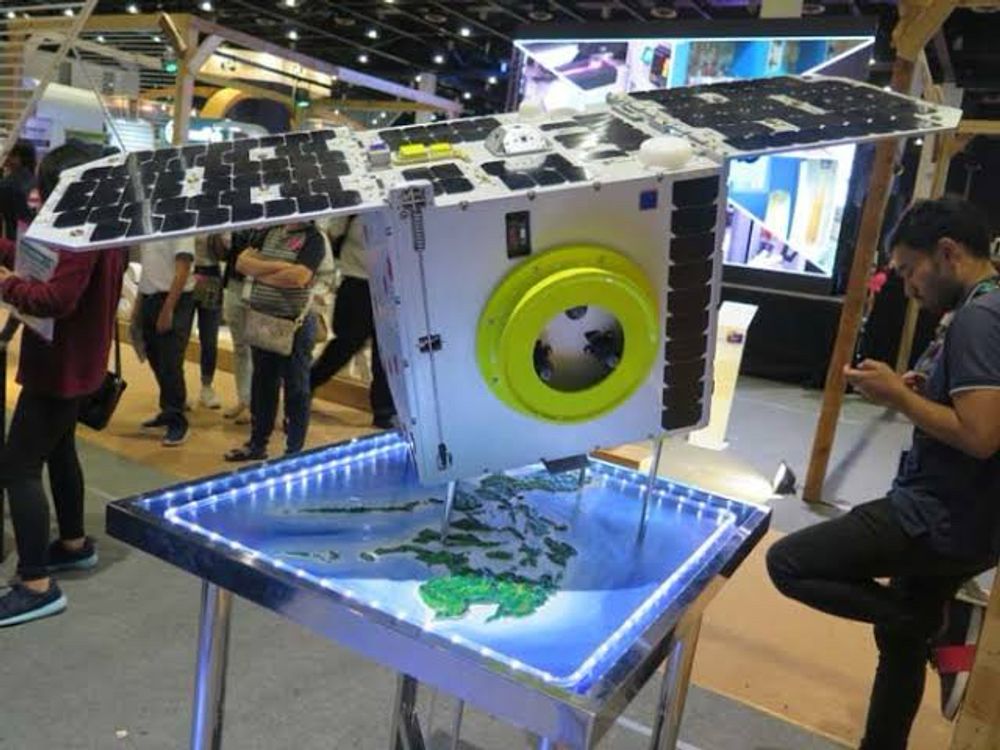
Most climate adaptation conversations focus on what happens on the ground. But some of the most critical data comes from above it.
Since its 2018 launch, Diwata-2 has continuously carried out Earth observation missions for environmental monitoring and post-disaster assessment, capturing over 157,804 satellite images and covering 96.47% of the Philippine land area. It has tracked typhoons, monitored ecosystems, and shared disaster imagery with neighboring countries through the Sentinel Asia Network.
Built by Filipino researchers. Designed to last five years. Still active today, and still delivering.
How do you think Earth observation data could be better integrated into climate adaptation planning in Southeast Asia?
Read more:
www.dost.gov.ph/knowledge-re...
📷 UP Alumni Website
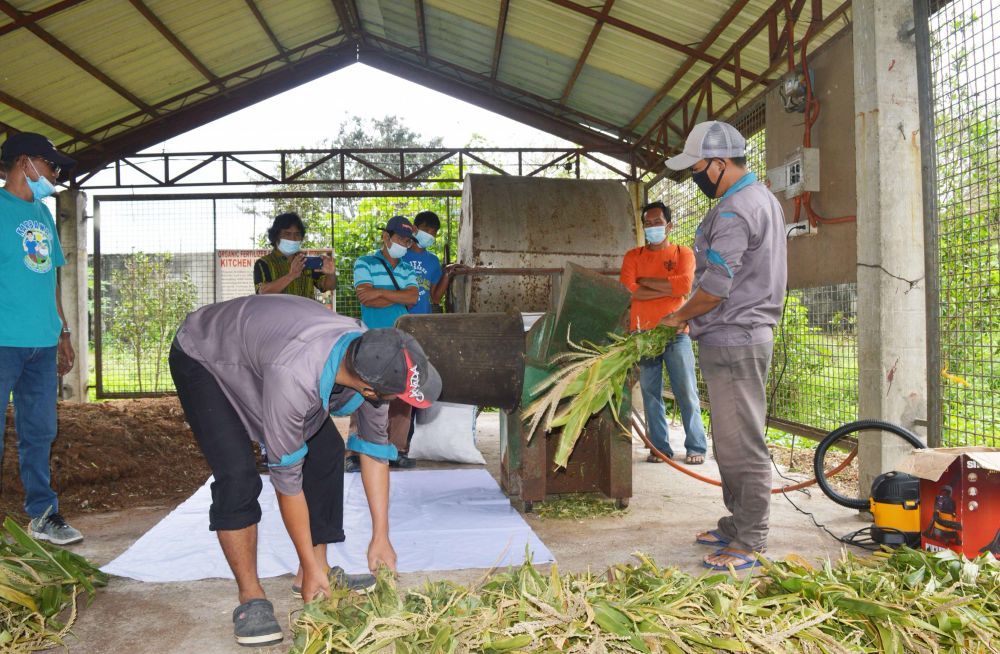
Innovation in livestock feeding starts in the field. Farmers trained on corn silage-making secure feed for their livestock and as a livelihood in rural farms in the Philippines.
This practical feed innovation helps improve animal health, support better grazing management, and increase milk production for carabao, cattle, and goats.
More farmer-ready technologies mean stronger dairy enterprises and better opportunities for rural communities.
How can we sustain support for science-based solutions closer to our farmers?
📷 Philippine Carabao Center at West Visayas State University
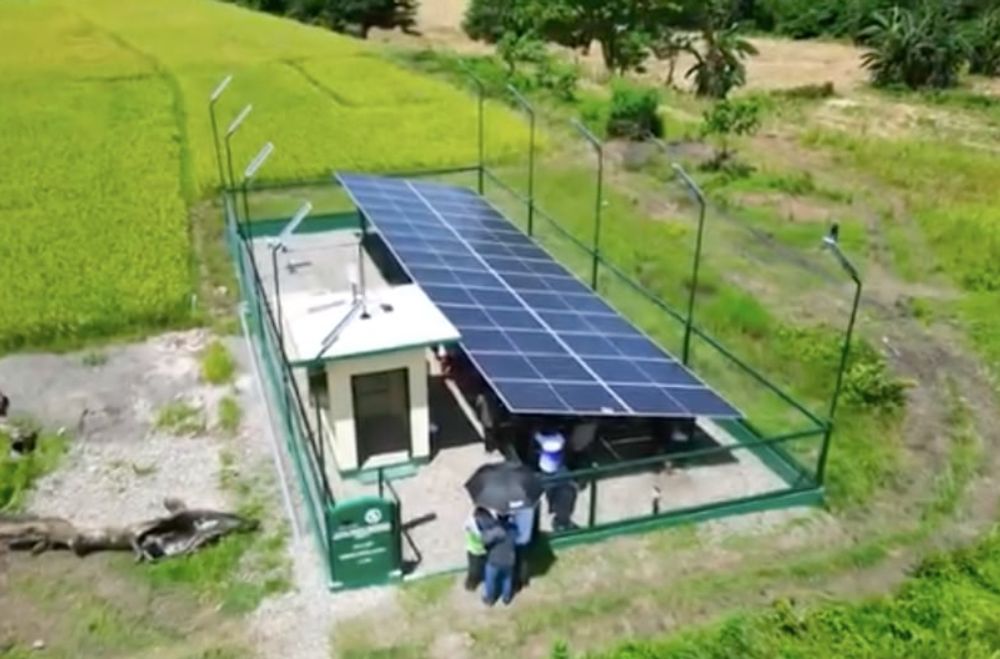
Farmers in North Luzon are switching to solar-powered irrigation, harnessing solar power to lower production costs of planting crops, predominantly, rice.
That’s the most honest proof of concept a clean energy technology can get: adoption driven by economics, not advocacy.
When the cost of doing nothing exceeds the cost of switching, the transition happens on its own.
What other clean energy technologies in agriculture do you think are at that tipping point?
📷 Philippine Information Agency
📍Isabela, Philippines
A thermos bottle, four steps, and under an hour. That’s all it takes to detect one of the most economically damaging diseases in small ruminant farming, if you have the right tool.
Caprine Arthritis Encephalitis (CAE) causes arthritis, mastitis, progressive weight loss, and eventually death in goats and sheep. Its economic impact is significantly underestimated globally, and in the Philippines, conventional detection relies on ELISA or nested-PCR, both requiring laboratory transport with results taking three to five days. That’s three to five days of potential spread, delayed decisions, and mounting losses for smallholder goat farmers.
The QuickCArE Dry LAMP Test Kit changes that calculus. Built on Loop-Mediated Isothermal Amplification (LAMP) technology, it delivers results in four steps using a standard thermos bottle as an incubator. No cold chain. No specialized equipment. No laboratory. A color change (orange for negative, green for positive) is readable with the naked eye.
Developed by the Philippine Carabao Center with funding from the Department of Agriculture, it matches the sensitivity and specificity of laboratory-grade tests at a fraction of the cost and time.
This is what appropriate diagnostic technology looks like, built for the conditions farmers actually work in, not the conditions researchers work in.
Read more:
www.isaaa.org/resources/pu...
What other livestock diseases in Southeast Asia do you think are most in need of a pen-side diagnostic solution?
Southeast Asia produces some of the world’s most abundant agricultural residue streams, rice straw from the Mekong Delta to Luzon, sugarcane bagasse from Thailand to the Philippines, coconut byproducts across the archipelagic economies of Indonesia and the Pacific rim. Collectively, these represent billions of dollars in untapped feedstock value.
And most of it gets burned.🔥
The open-field burning of crop residues is one of Southeast Asia’s most persistent and underreported environmental problems. It contributes significantly to the seasonal haze events that blanket the region, degrades soil quality over successive cropping cycles, and represents an enormous opportunity cost, carbon that could be sequestered, nutrients that could be returned to the soil, and materials that could enter productive value chains are instead released as pollution.
What’s striking is how well-understood the alternatives are. Biochar, biomass energy, composting, animal feed supplementation, and bio-based material production are all proven pathways.
What’s missing is the regional coordination, shared standards, cross-border market linkages, and investment in the aggregation infrastructure that makes circularity economically rational for smallholder farmers who generate the bulk of these residues.
Southeast Asia doesn’t lack circular economy potential. It lacks the systems to capture it.
Which country in the region do you think is closest to getting this right, and what are they doing differently?
Every harvest season, the same thing happens across rice-farming regions in the Philippines: straw gets burned. Fields turn hazy. Air quality drops. And somewhere between PhP 18 billion worth of potential compost goes up in smoke, literally.
This isn’t a knowledge gap. Farmers know burning is illegal under the Clean Air Act and the Solid Waste Management Act. They burn because they have no practical, affordable alternative before the next planting cycle begins.
That’s a systems failure, not a farmer failure.
What makes this particularly frustrating is the sheer volume of what’s being wasted. The Philippines generates up to 15.2 million metric tons of rice straw annually. Add to that the bagasse from sugarcane, coconut husks and shells, and organic waste from piggery and poultry operations, and voila, you have an agricultural economy sitting on an enormous, largely untapped resource base.
The circular economy applications are well-documented: biochar for carbon sequestration and soil improvement, biomass energy generation, mushroom cultivation substrates, animal feed supplements, and increasingly, feedstocks for sustainable packaging materials.
EPR regulations now coming into force across Southeast Asia are creating real market pull for packaging alternatives, which means agricultural residues that once had no buyer suddenly do.
The bottleneck has never been scientific. It’s infrastructural. Smallholder farmers can’t individually build pyrolysis units or negotiate offtake agreements with packaging manufacturers. What’s needed is the connective tissue, aggregation models, processing hubs, and market linkages that make circularity economically rational at the farm level.
The innovations exist. The feedstocks exist. The regulatory pressure is building. What’s still missing is the platform thinking that connects these dots into a functioning value chain.
Are we ready to play this game of connect the dots?