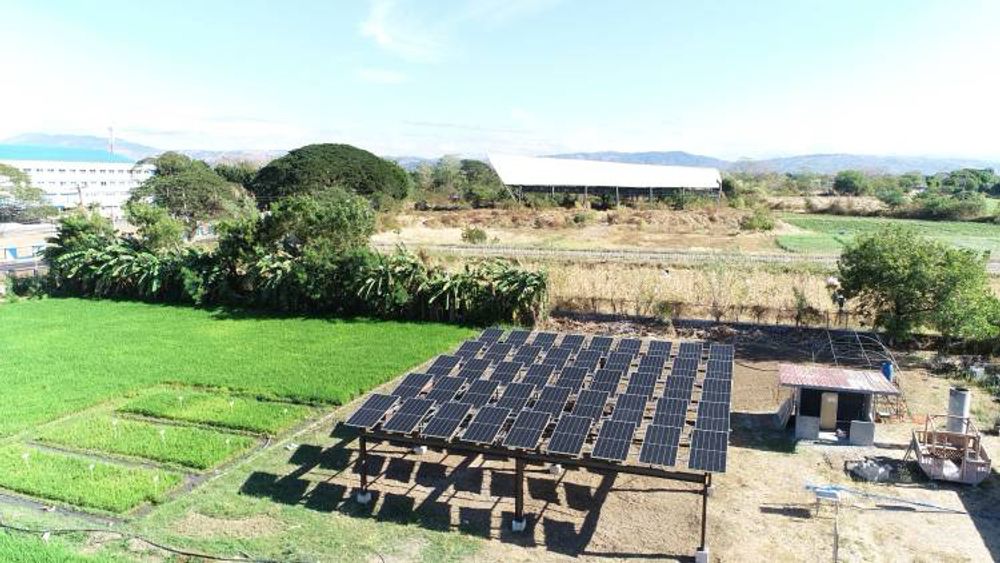
Central Luzon State University didn’t just study solar energy. It became its own case study. CLSU’s commitment to becoming a green university materialized in 2022 with the energization of 997-kilowatt solar panels across the rooftops of eight university buildings, resulting in energy savings of more than 7 million pesos.
That early bet is now scaling into something more ambitious: agrivoltaics, the practice of growing crops underneath solar panels on the same plot of land. The technology is currently being tested across five locations, including the university itself, two barangays in Science City of Muñoz, Sta. Barbara in Llanera, and Sinipit Bubon in San Jose City, each with different water sources ranging from dug wells to shallow tubewells. The research aims to determine optimum panel spacing, identify which crops thrive in partial shade, and develop farm equipment that runs on the energy the panels generate.
This year, CLSU formalized the next phase. In June 2026, CLSU’s Center for Climate Change and Environmental Management partnered with Terra Solar Philippines to assess agrivoltaic suitability and crop productivity enhancement in solar farms in Gapan City, Nueva Ecija.
The same land producing rice and vegetables could soon be generating power. In a province where farmland and fuel imports have always competed for priority, that convergence matters.
What crops do you think are best suited for partial-shade agrivoltaic systems in tropical climates?
📷 Central Luzon State University