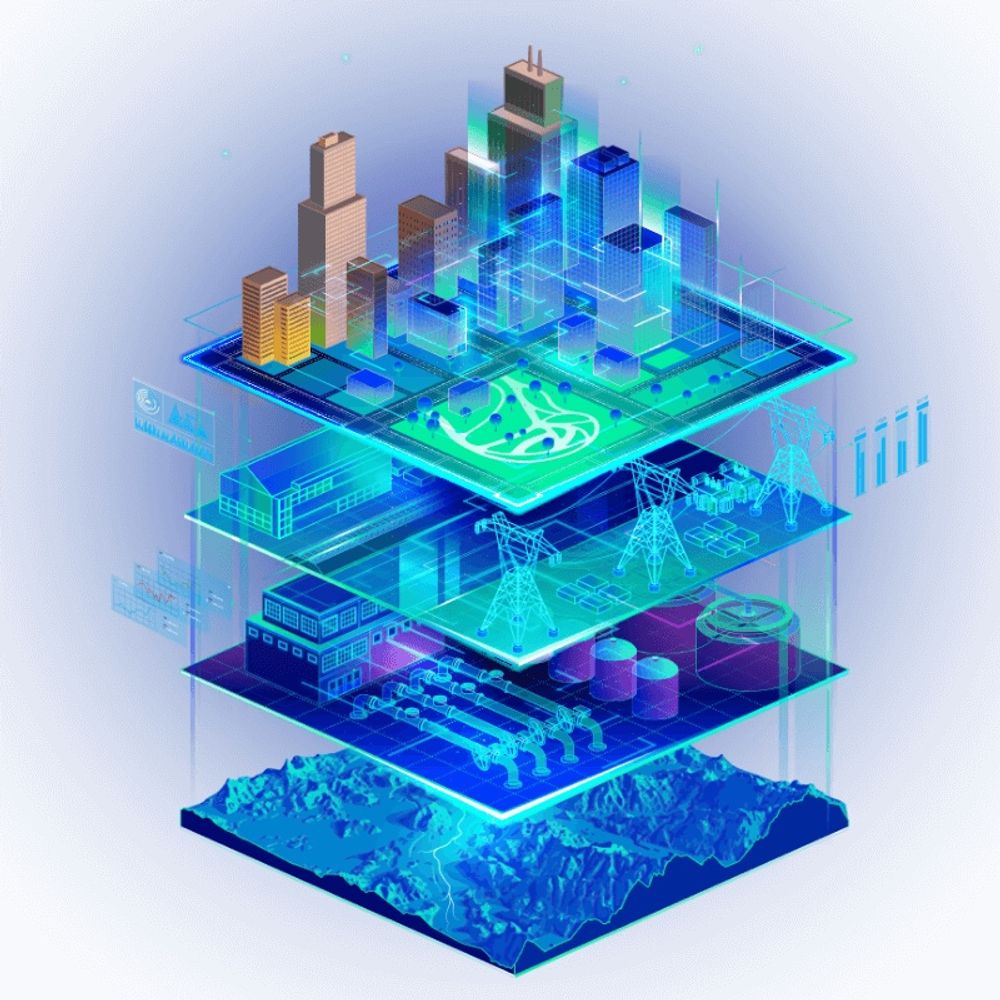
Several major urban digital twin projects (including Seoul's S-Map, Helsinki's Kalasatama model, Zurich's 3D planning twin) are built on the premise that a sufficiently detailed digital replica can mirror urban behavior and inform planning decisions. The technology is proven in engineering contexts like factories, power grids, and supply chains, where systems are complicated but ultimately predictable.
Cities, however, operate on an inherently different type of system, and a recent paper in Computational Urban Science brings awareness to the distinction; complicated systems have many parts but behave predictably when mapped, while complex systems, like cities, generate emergent behavior that can't be derived from the components themselves. The paper introduces a reasonable concept: "dispersed knowledge," practical knowledge essential to how cities actually function that can't be collected and reassembled since it doesn't exist anywhere as a coherent whole.
The argument is essentially that the "exact mirror" premise these projects are often sold on is unlikely to be realistically achieved at city scale. Domainspecific twins for energy, transit, or utilities carry arguably higher relevance, rather than the comprehensive city-as-model vision that currently attracts most investment.