Several major urban digital twin projects (including Seoul's S-Map, Helsinki's Kalasatama model, Zurich's 3D planning twin) are built on the premise that a sufficiently detailed digital replica can mirror urban behavior and inform planning decisions. The technology is proven in engineering contexts like factories, power grids, and supply chains, where systems are complicated but ultimately predictable.
Cities, however, operate on an inherently different type of system, and a recent paper in Computational Urban Science brings awareness to the distinction; complicated systems have many parts but behave predictably when mapped, while complex systems, like cities, generate emergent behavior that can't be derived from the components themselves. The paper introduces a reasonable concept: "dispersed knowledge," practical knowledge essential to how cities actually function that can't be collected and reassembled since it doesn't exist anywhere as a coherent whole.
The argument is essentially that the "exact mirror" premise these projects are often sold on is unlikely to be realistically achieved at city scale. Domainspecific twins for energy, transit, or utilities carry arguably higher relevance, rather than the comprehensive city-as-model vision that currently attracts most investment.
Adaptive AI tutoring platforms, e.g. Khanmigo, Duolingo Max, Squirrel AI, are increasingly pitched as the future of education. And the performance data for students using these tools is accordingly strong on paper when it comes to test scores and retention in controlled settings.
However, I recently came across a growing body of research, including this meta-analysis of 17 studies, suggesting that the gains actually concentrate at lower cognitive levels and tend to shrink or reverse for higher-order reasoning. The mechanism seems to be cognitive offloading: when the tool does the structuring, pattern recognition, and problem decomposition work, students perform better in the moment but engage less deeply with the material itself.
The issue is that the pitch for AI in education is fundamentally built on learning rather than performance on its own. If adaptive systems are producing better test results but also weakening the cognitive and analytical reasoning skills that constitute actual learning, the value proposition is arguably more nuanced than it suggests.
The research does hint at a potential design direction: cognitive gains that matter most seem to develop through effortful and creative engagement with a certain level of productive struggle. Thus, a more beneficial approach overall to AI-personalized learning might be platforms that seek to actively calibrate difficulty rather than remove it.
What's your take?
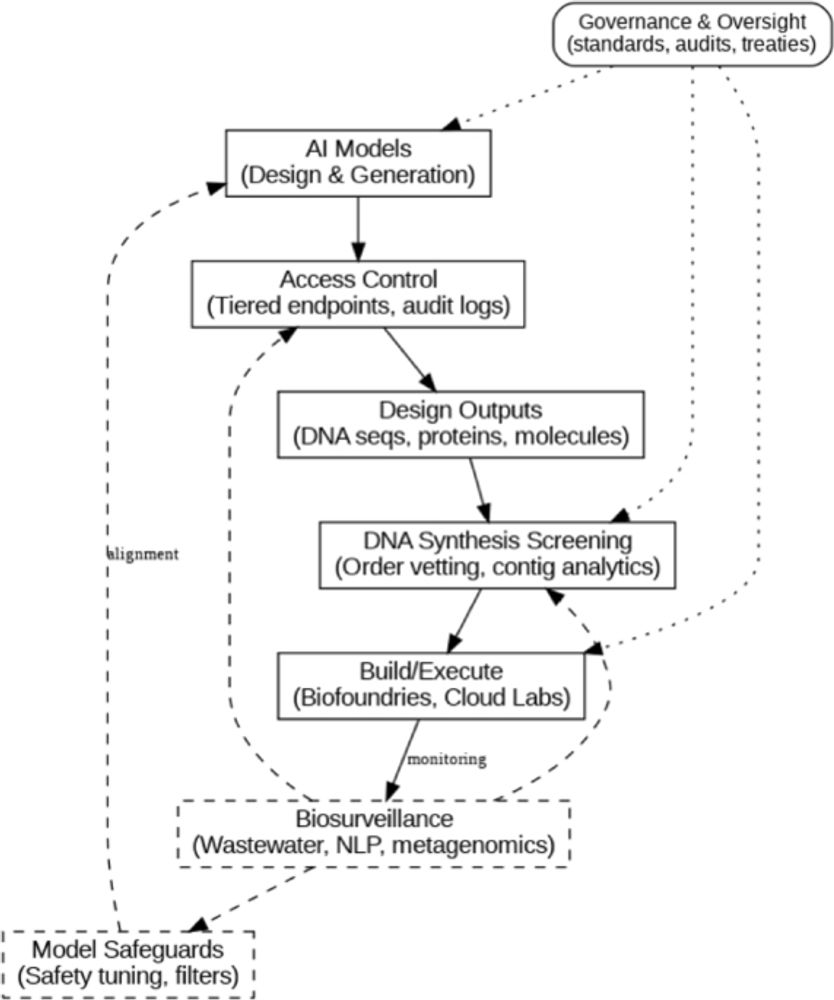
AI is accelerating what synthetic biology can do in fairly concrete ways: design throughput is increasing, expertise barriers dropping, and the timeline from concept to engineered organism getting shorter.
However, despite the genuine potential for therapeutics and biomanufacturing, the same acceleration also lowers the barrier to misuse. A review of 119 studies in AI and Ethics found that the governance landscape is fragmented in a specific way. Biosafety regimes were built around physical agents and laboratory controls, whereas AI governance frameworks focus primarily on the aspects of privacy and algorithmic fairness. The space where AI tools can design novel biological sequences sits in a rather unaddressed gap.
The issue is arguably structural rather than a matter of speed. Layered approaches (risk-tiered model access, DNA-synthesis screening, red-teaming, etc.) are gaining traction in the literature, but standardized implementation across the field still seems largely absent. And as AI-enabled biology scales, the window for building governance around it rather than after it seems likely to narrow accordingly.
link.springer.com/article/10.1...
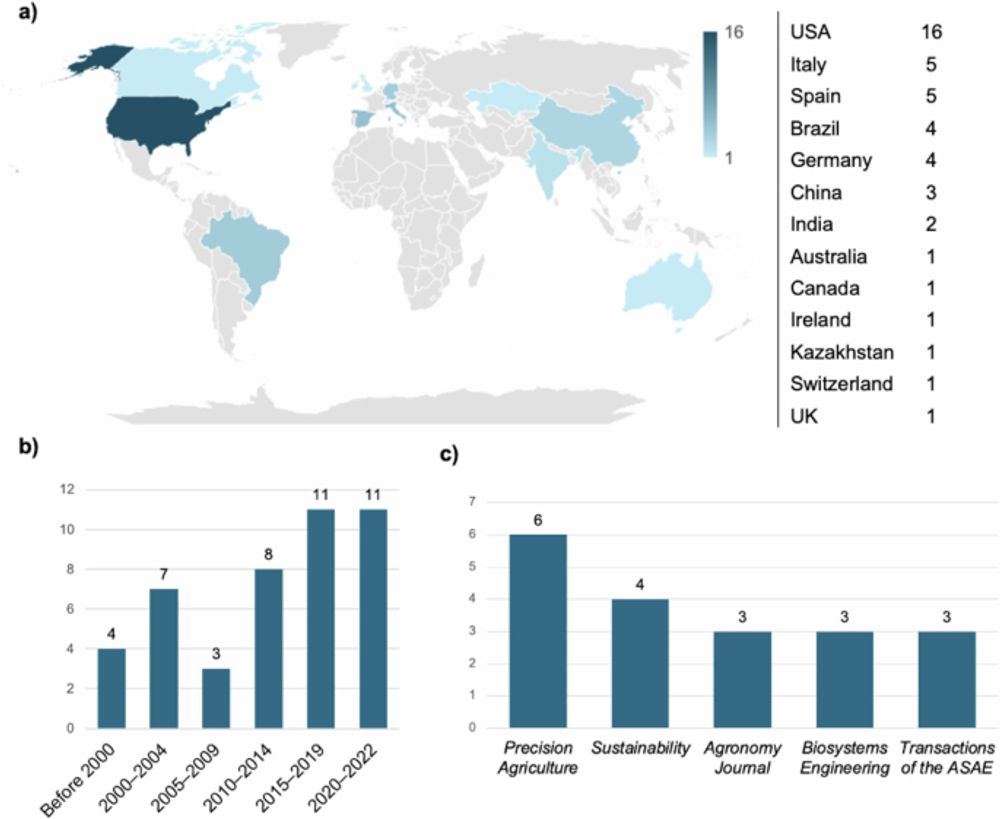
Precision agriculture is widely pitched as sustainable, but the evidence base seems thinner than the investment thesis suggests.
Billions are flowing into AgriTech on the premise that precision tools, including drones, AI monitoring, and sensor-driven input management, reduce environmental impact.
A recent review in npj Sustainable Agriculture found that the core claims, reduced fertilizer, pesticide, and water use, remain largely untested or unsupported by evidence. A separate analysis found that pesticide and fertilizer use have actually increased since precision agriculture began scaling.
This matters because, from my perspective, the sustainability narrative is often central to how these technologies are positioned to investors and policymakers. The latest Farm Bill draft would even allow precision agriculture to qualify as conservation measures, with the government covering up to 90% of costs.
The technology may well deliver on its environmental promise eventually, but the gap between the marketing and the evidence is worth paying more attention to, particularly as public subsidies start flowing on the basis of claims that haven't been rigorously validated yet
www.nature.com/articles/s44...
Health AI models routinely hit strong pilot accuracy when presented in pitch decks, but then drop significantly in production.
A Stanford-Harvard review of over 500 clinical AI studies found that nearly half were validated on exam-style questions rather than real patient data. Only 5% used actual clinical cases. The accuracy figures that show up in pitch decks and product pages are, in most instances, measuring performance under conditions that don't resemble the environments these tools are meant to operate in.
Even when models are tested more rigorously, the results are sobering. Top-performing systems still produce 12 to 15 severe clinical errors per 100 cases. Performance tends to break down specifically where it matters most: in situations involving uncertainty, incomplete information, or multi-step clinical workflows. Shadow-mode validation (4-8 weeks running in parallel before clinical deployment) often helps to prevent this, but companies tend to skip it to demonstrate speed.
For investors evaluating health AI, the implication is fairly straightforward. The relevant question likely isn't what a model's benchmark accuracy is, but how it was validated and on what kind of data. This distinction seems to be where a significant amount of value and risk is currently hiding.
arise-ai.org/report
Most psychiatrists agree genetic testing would improve prescribing, but very few are trained to actually use it.
Pharmacogenomic testing can predict how a patient metabolizes specific antidepressants before they start taking them. It's designed to reduce the trial-and-error cycle that currently defines psychiatric prescribing, where patients often spend months cycling through medications that either don't work or produce significant side effects.
Genotype-guided prescribing has shown improved remission rates compared to usual care, and 80 to 90% of clinicians agree the testing is valuable. But only 10 to 20% report feeling trained or confident enough to use it routinely. Neither the technology nor the evidence seems to be the bottleneck. The implementation infrastructure likely plays a much bigger role: clinical training, workflow integration, standardized guidance on when and who to test.
For a field that has arguably struggled more than most with matching the right treatment to the right patient, the fact that a concrete, available tool is sitting largely unused is definitely worth addressing.
www.frontiersin.org/journals/pha...
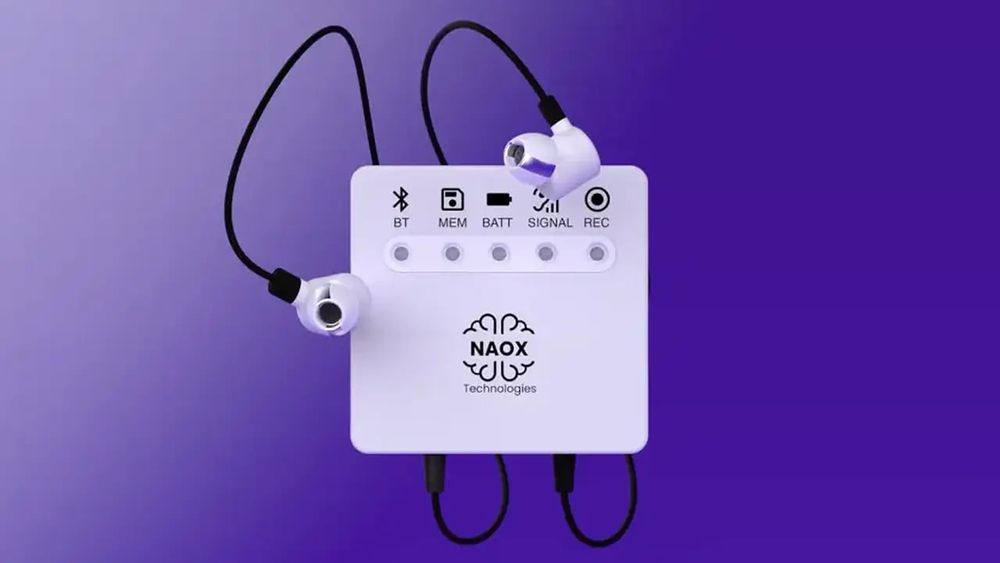
EEG has historically required a clinical setting: electrode caps, conductive gel, a technician, and a patient who has to sit still. Naox Technologies just received the first FDA clearance for an in-ear EEG device that captures brain activity through a small sensor worn like an earbud.
The Naox Link is cleared for epilepsy monitoring, sleep studies, and neurological research in patients as young as six, and the device is specifically designed for home environments rather than hospitals. Continuous, ambient neurological data collection will likely open research possibilities that hospital-bound EEG was never designed for, particularly for longitudinal monitoring of conditions like epilepsy or early neurodegenerative disease.
Personally, I think it’s also worth reflecting on how the governance will organize itself around this kind of data. It’s especially interesting since neurodata collected passively, at scale, in everyday settings is a category that doesn't yet have much of a regulatory framework.
The dominant approach to making AI more capable has been to scale it: more parameters, more compute, more energy.
But a Tufts research group recently took the opposite route. Their neuro-symbolic system, which pairs neural networks with structured reasoning, cut energy consumption by a factor of 100 on robotic manipulation tasks while actually improving accuracy.
What makes this interesting isn't just the efficiency gain. It's just as much that the result challenges a fairly embedded assumption in AI development, that performance scales with compute. The neuro-symbolic approach suggests that for certain structured tasks, the architecture matters more than the size. Which again suggests that brute-force pattern matching isn't always the most intelligent path to intelligence.
AI already consumes over 10% of U.S. electricity, and the share is still growing. If efficiency breakthroughs like this hold up across domains, the investment logic around AI infrastructure might start to look rather different
www.sciencedaily.com/releases/202...