Are we investing in health... or in treating illness?
I'm staying with friends at the moment, and over breakfast we got onto the topic of bread.
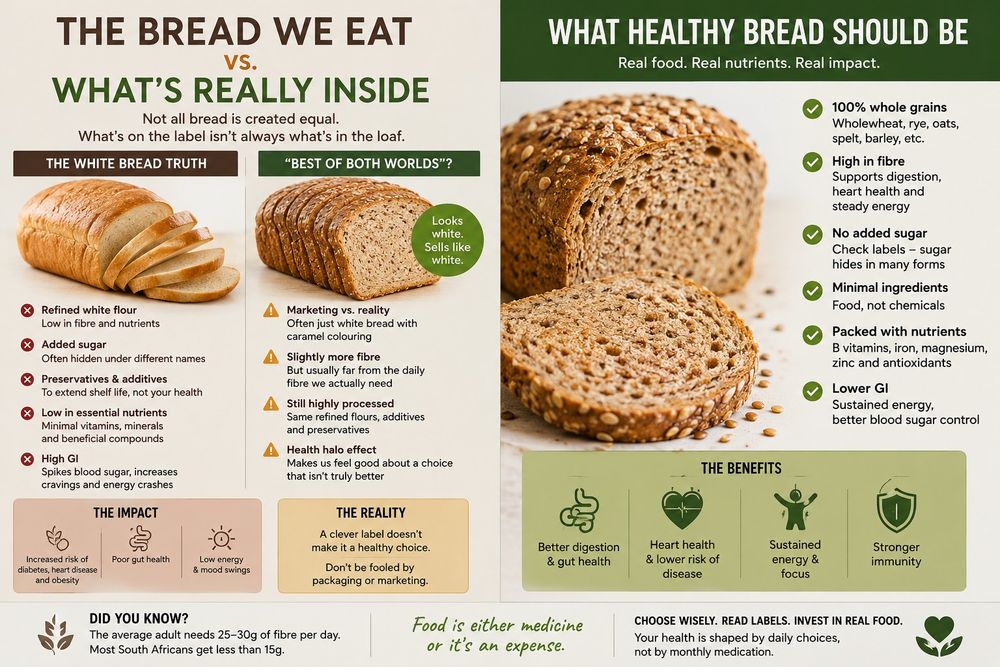
They were genuinely excited to show me what they called the "best of both worlds" – a loaf that looks like white bread but is marketed as brown bread, with a little more fibre. It felt like they'd found a healthier option without sacrificing the taste and texture they love.
It got me thinking.
How often do we accept health claims at face value without asking a bigger question?
Not, "Does this loaf contain more fibre?"
But rather...
How much fibre do we actually need every day, and how much of that is this loaf really providing?
For years, I've made different choices. I spend more on the quality of the food I buy, particularly for my son. We prioritise minimally processed foods, ingredients we recognise, and products that genuinely nourish us.
It's not because it's fashionable.
It's because I've always viewed food as one of our first lines of defence, not our last.
Ironically, while many households try to save money on food, they often spend thousands of rand each month on medical aid, chronic medication and healthcare. Those costs have become normal, while investing in preventative nutrition is often seen as expensive.
What if we've got it the wrong way around?
As someone who works in sustainability, I can't help seeing the wider system. Food isn't just about nutrition. It's connected to agriculture, healthcare, productivity, public spending and even environmental outcomes.
Perhaps one of the greatest healthcare innovations isn't another pill or another medical device.
Perhaps it's helping people better understand what's already on their plate.
This isn't about one loaf of bread.
It's about asking whether we're designing a food system that helps people stay well - or one that quietly accepts they'll eventually become patients.
I'd love to hear your thoughts.