The circular economy is officially moving from high-level targets into the messy operational details - and that's a good news!
PackUK just published RAM 2027 alongside new kerbside collection lists to give producers a clearer assessment framework.
Meanwhile, the EU finalised its exact methodology for calculating recycled content in PET bottles.
On the infrastructure side, Jayplas announced two new recycling facilities in Wales to address critical bottlenecks.
But fresh data on flexible plastics reminds us that collection alone is entirely useless without viable end markets.
We are finally moving past basic waste management and shifting focus toward true prevention, reuse, and resource efficiency.
The next phase needs us to build the commercial conditions to actually hit them.
@mutpris
Mutiara Simanjuntak
3Following
2Followers
Marketing & Communications Consultant for circular businesses, NGOs, nonprofits
Posts
Pages
Recent posts
Recycling Assessment Methodology (RAM) has a new upgrade in 2027.
If you're a packaging developer, here is the one major shift you need to notice.
And what's new in there? Glass.
Glass has long been one of the UK's strongest-performing packaging materials.
And after comparing RAM 1.1 with RAM 2027, the overall level of change is surprisingly low.
Instead of reinventing the rules, the new framework simplifies the methodology by removing several previous criteria like ceramic swing stoppers and amber color rules.
However, there is one major shift packaging developers need to notice.
Non-soda-lime glass is now explicitly classified as Red.
If you want your packaging to thrive under the new rules, the biggest opportunity lies in standard soda-lime glass with easily separated attachments.
For most brands already using standard formats, there probably isn't much you need to change.
Ultimately, I think this update is less about massive upheaval and more about keeping designs simple to protect closed-loop recycling. 🔄
The delay in the UK's flexible plastic recycling actually shows a huge gap in our current system.
Because, honestly, we cannot just push for more collection without building the "drain" to process the material.
Extra time on the clock only works if we actually use it to build a functioning system.
To succeed by 2030, we must also improve packaging design, upgrade recycling tech, and boost investor confidence.
Organisations like the UK Plastics Pact are now bringing experts together to bridge these exact gaps.
And with the right teamwork, 2030 won't just be a delayed deadline.
It will be the launch of a system ready to win. 🏆
Government can set big environmental policies, but it cannot build commercial markets by itself.
Councils can collect more plastic bags and wraps, but that collection only matters if recyclers can process it.
Brands can redesign their packaging, but those designs must match real-world recycling capabilities.
It’s a massive jigsaw puzzle, and every single piece depends on the others to make circularity work.
In my view, true collaboration across the entire supply chain is the only way forward. 🤝
And isn't that why we're here anyway? ;)
If we spend the next four years just waiting around, 2030 will bring the exact same failures.
We need to use this extra time as a runway to build the infrastructure we lack.
That means accelerating investment in high-tech sorting and recycling facilities.
We also desperately need to create stronger domestic markets that actually want to buy recycled plastic.
More time only helps if it becomes four years of intense, coordinated action.
Do you agree?
The UK government just delayed mandatory household flexible plastic recycling from 2027 to 2030.
If you ask me, collecting the plastic waste has never been the hard part.
The real challenge is building a SYSTEM that can actually sort and recycle it at a national scale.
Some people see this delay as a massive setback for the environment.
Others see it as a realistic admission that our current recycling system simply isn't ready.
The truth is, again, collecting the plastic waste has never been the hard part.
The real challenge is building a system that can actually sort and recycle it at a NATIONAL scale.
Personally, I think we should focus on how to move forward with this.
The decision has been made, so let's get working.
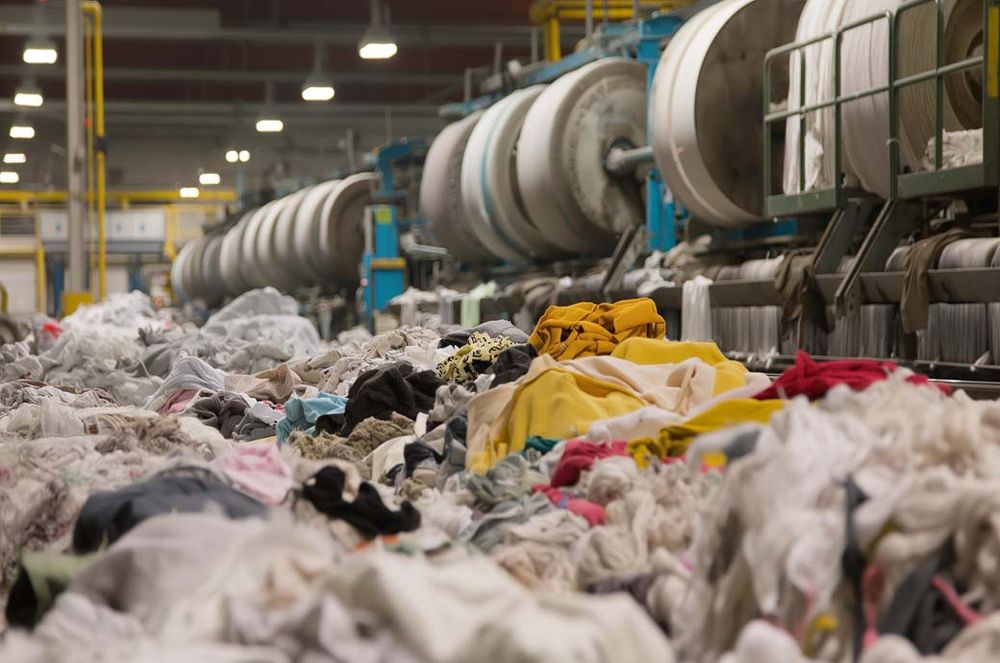
Another Monday to yap about textile recycling!
(Yes, I'm turning my frustration into passion instead. And yes, my yoga teacher approved this 🧘♀️)
So, the textile recycling industry has all the technology and feedstock it needs, yet growth remains slow.
And here’s my take on why the textile recycling industry is stalling.
The real bottleneck isn't the science or the supply. It is the lack of *supportive government policy.*
Current rules tax the solution through heavy compliance costs while letting cheap, polluting virgin fiber off the hook.
We have mandated separate textile collections, but we haven't legally obligated brands to actually buy the recycled material.
To fix this, we need minimum recycled content targets and a virgin fiber tax to finally ignite true market demand. 🌍
What do you think?
Let's talk about textile recycling for a second.
Other green industries got nurtured with real financial backing.
But textile recycling? It mainly only received strategy papers or speeches.
Personally for me, it's frustrating to watch, especially because we already know the exact recipe that works to scale green technology.
However, this means we already know exactly what recipe works to scale green technology successfully.
Imagine if we introduced mandatory recycled content targets.
So governments can then open up the exact same explosive growth for textiles.
We've been known that investors are ready to fund industrial-scale plants the moment clear market demand is guaranteed.
The technology and feedstock are ready.
And with the right policy spark, we can build a thriving circular economy. 🚀
Image credit: Adobe Stock
ALT text embedded