

For over a century, we've looked underground for resources.
The next resource boom might be above ground.
Every year, the world generates over 62 million tonnes of e-waste, a figure projected to reach 82 million tonnes by 2030.
Hidden inside that waste are valuable materials:
- Gold
-Silver
-Copper
-Cobalt
-Rare earth elements
In fact, a tonne of discarded smartphones can contain up to 100 times more gold than a tonne of gold ore.
Yet less than 25% of global e-waste is formally collected and recycled.
The rest is landfilled, exported, stockpiled, or processed informally, taking valuable materials out of circulation.
This is why urban mining is gaining attention.
Companies are increasingly treating old electronics, batteries, and appliances not as waste, but as resource reservoirs.
As demand for critical minerals continues to rise, driven by EVs, batteries, and renewable energy technologies, the economics of recovering materials from existing products are becoming harder to ignore.
The circular economy is often framed as a waste challenge.
Urban mining reframes it as a resource opportunity.
The question is no longer whether these materials have value.
It's whether we can build the collection, recovery, and recycling systems needed to unlock it.
Could cities eventually become more valuable sources of critical materials than traditional mines?
@prateek
Prateek Sharma
82Following
86Followers
🌍 Founder of EcoMedy – stories of climate innovation ✨ Sharing hope through sustainability & creativity 🌱 Organic farmer | Permaculture practitioner
Posts
Pages
Recent posts
What if plastic waste could make cities more livable?
Across Europe, recycled plastics are being used to build noise barriers along highway, turning discarded material into infrastructure that reduces traffic noise and improves urban environments.
It’s a practical example of circular economy thinking.
A material once treated as waste is redesigned into a long-lasting product with a clear purpose.
These barriers can:
🔇 Reduce noise pollution for nearby communities
♻️ Keep plastic in use for decades
🌱 Lower demand for virgin materials
🏗️ Create value from hard-to-manage waste streams
This is where circularity becomes tangible.
Not just collecting wast, but transforming it into solutions that serve people every day.
With more than 400 million tonnes of plastic produced globally each year, finding high-value applications for recycled materials is becoming increasingly important.
Infrastructure like this shows that waste can be more than an environmental burden.
With the right design, it becomes a resource.
What other infrastructure applications could benefit from recycled materials?
We’re past the “circular economy is the future” phase.
This is what large-scale implementation looks like.
This isn’t momentum anymore.
It’s alignment.
Across regions, the same shift is happening:
🌍 In West Africa, six countries are building coordinated waste systems, moving from collection to governance + financing models.
🇨🇦 Canada is forcing companies to track plastic flows—
turning waste into measurable, regulated data.
🌱 The EU is pushing bio-based materials into real markets—
not research, but industrial deployment.
💶 Covestro is committing €1B—
because circular is now core strategy, not sustainability PR.
🏗️ London is investing in circular construction infrastructure—
keeping materials in use at city scale.
🇻🇳 And capital is flowing into PET recycling in Vietnam—
proving this isn’t regional. It’s systemic.
Individually, these look like updates.
Together, they show something else:
Circular economy is becoming
policy + capital + infrastructure — at the same time.
That’s when systems actually shift.
Question:
What breaks first in this transition legacy business models…
or the pace of infrastructure catching up?
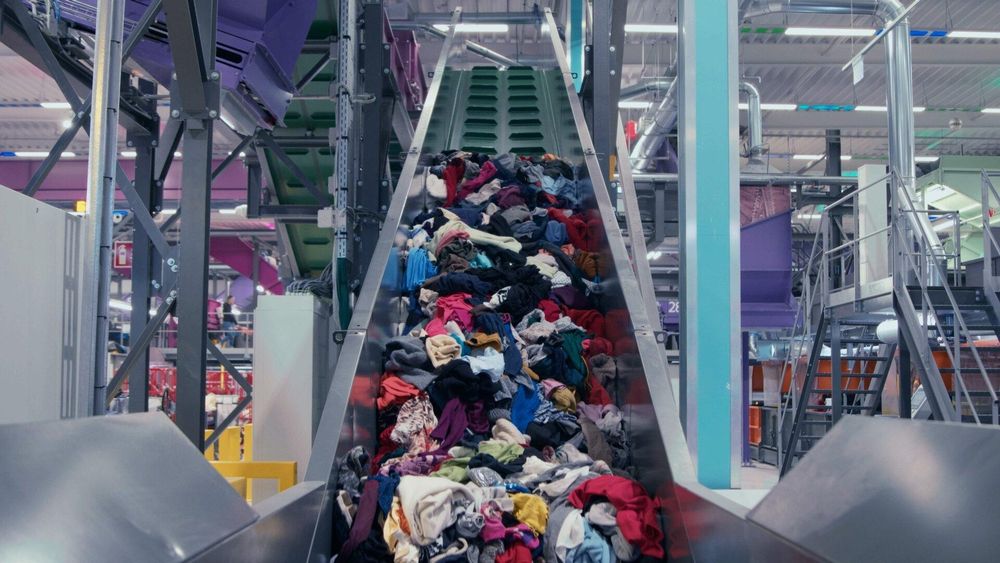
We don’t have a textile recycling problem.
We have a fiber separation problem.
Most clothes today are not single materials.
They’re blends:
→ Cotton + polyester
→ Elastane + nylon
Once fused, these fibers are extremely hard to separate at scale, both technically and economically.
That’s the bottleneck.
→ Less than 1% of textiles are recycled into new textiles
→ The majority is downcycled or landfilled
Not because we can’t recycle textiles,
but because we can’t unmake them.
Now, this is where things shift:
→ AI-based fiber identification systems
→ Chemical and enzymatic processes to separate blended fabrics
Companies like Circ are already working on breaking poly-cotton blends back into usable raw materials.
If separation works at scale,
textile waste stops being waste.
It becomes feedstock.
Question:
If we unlock this-
do we fix fashion’s waste problem…
or just make it easier to produce more
Bioplastics Aren’t Automatically Sustainable-
Bioplastics are often positioned as the future of materials.
But zoom out, and the system doesn’t support the story.
Global plastic waste exceeds 400 million tonnes/year.
Bioplastics? ~2–3 million tonnes — <1% of total plastics.
Even within that:
→ ~50–60% are not biodegradable (just bio-based)
→ Most “compostable” plastics require industrial conditions
→ Globally, only ~10–15% of organic waste is actually processed in industrial composting systems
Now layer reality:
Bioplastics often:
→ Look identical to conventional plastics → contaminate recycling
→ End up in landfill where oxygen is limited → no proper degradation
→ Fail in natural environments despite “compostable” labels
Take PLA:
Plant-based, yes.
But without controlled composting infrastructure, it behaves closer to conventional plastic than people assume.
That’s why companies like NatureWorks are investing in composting ecosystems, not just materials.
And why alternatives like Notpla are moving toward materials that can degrade without specialized systems.
Material innovation without waste infrastructure
is not sustainability.
It’s misalignment at scale.
Question:
Should we keep scaling bioplastics…
or focus first on building the systems required to handle them?
One area in circularity that feels underused is agricultural waste.
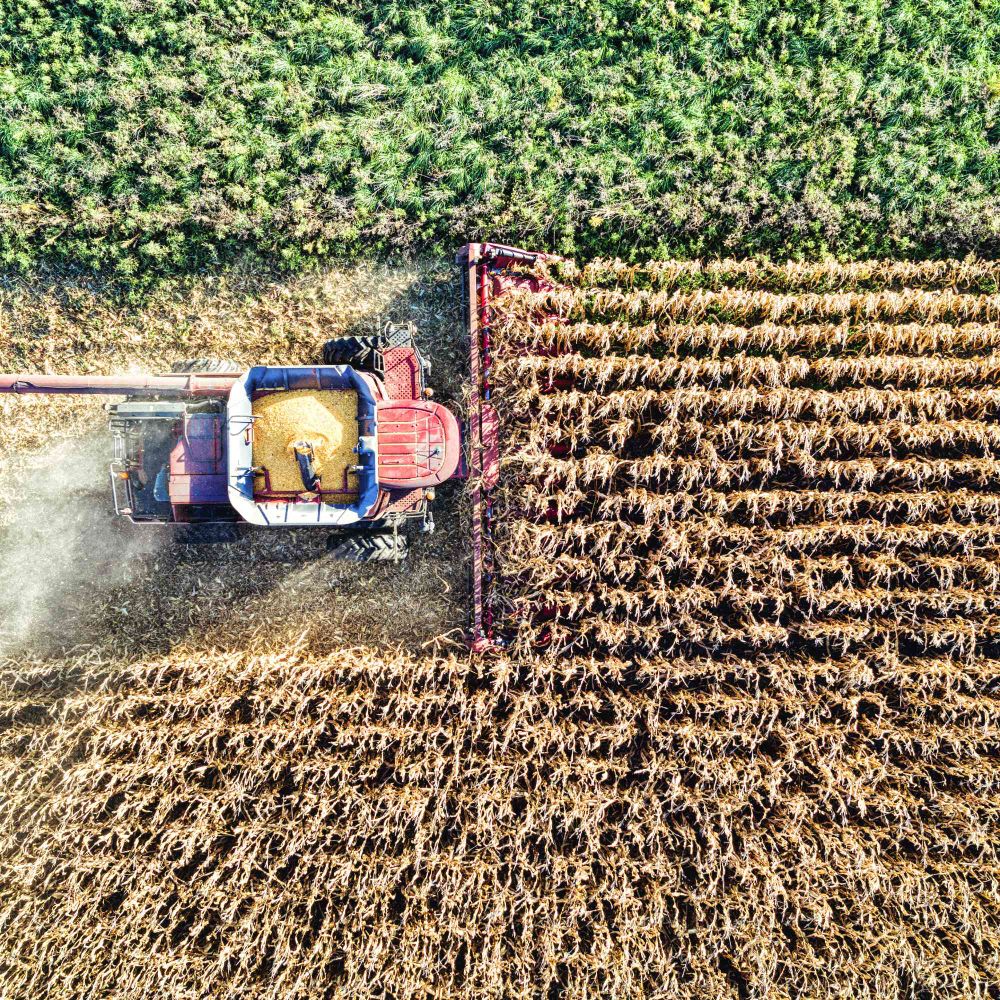
Globally, we generate around 5–6 billion tonnes of residues every year, including rice husks, wheat straw, corn stover, and bagasse.
A lot of it is still burned or left to decompose. In places like India, crop burning alone has a major impact on seasonal air pollution.
From a recycling perspective, this is a huge, underutilized waste stream.
Instead of being recovered, it’s mostly lost, while we continue extracting new materials for panels, fibers, and packaging.
Some companies are starting to close that loop:
• Ricehouse is creating building materials from rice husk
• Biohm is developing insulation from agricultural by-products
• Made of Air is producing carbon-negative materials from biomass
• Paptic is building fiber-based alternatives to plastic packaging
The resource is massive, but the challenge isn’t availability. It’s the system.
Agricultural waste is seasonal, spread out, and inconsistent in quality, which makes collection and standardization difficult at scale.
Curious to hear your take:
Should agricultural residues be treated as part of recycling systems, or as a separate material stream altogether?
Something I’ve been thinking about, especially with yesterday being Global Recycling Day:
Are we expecting too much from recycling?
Today, only about 6.9% of materials used globally come from recycled sources.
And even with improvements, studies suggest recycling rates may struggle to go much beyond ~20–25%, because of material complexity, contamination, and system limits.
At the same time, global material use has crossed 100 billion tonnes per year, and is still growing.
So even if recycling gets better, it’s trying to catch up with a system that keeps expanding.
Which raises a bigger question.
Instead of asking
“How do we recycle more?”
Should we be asking
“How do we reduce the need for new materials in the first place?”
That’s where a lot of newer innovations are heading:
• Turning emissions into usable materials
• Producing polymers through fermentation
• Growing materials from waste streams
These approaches don’t just deal with waste, they change where materials come from.
Recycling is still very important.
But it might not be enough on its own.
Curious to hear how others here see it!
Is recycling the foundation of circularity, or just one part of a much bigger shift?
One circular material approach I keep coming back to is mycelium-based materials.
Companies like Ecovative, MycoWorks, and Mogu are using fungal mycelium to grow materials from agricultural waste like corn husks or sawdust.
What makes this interesting is not just the material itself, but the process behind it.
Instead of extracting and processing raw resources, these systems work by growing materials through biological processes, using low-value waste as the input.
The outputs are already being used in:
• Packaging
• Insulation
• Leather alternatives
• Acoustic panels
• Interior and construction elements
From a circularity perspective, this checks a lot of boxes:
– Uses existing waste streams
– Requires relatively low energy compared to traditional materials
– Produces materials that can often return safely to the environment
But despite the excitement, scaling still seems to be the main challenge.
Growing materials biologically introduces variables, time, environmental control, consistency, that are very different from traditional manufacturing.
Curious to hear from others here:
Do you see mycelium materials becoming mainstream in the next few years, or are there still major barriers to overcome before that happens?