Meet RMIT University - our AI automation and robotics partner building the intelligent processing systems for ReCircle.
RMIT University is a globally recognised research university and brings world-class capabilities in AI automation, robotics, and mechatronics, and are our research partner who will work with us to develop the automated processing technology that makes on-site recycling viable.
RMIT is working with ReCircle to develop AI image processing systems that identify contaminants in LDPE waste streams and robotic systems that remove them. Together, they are integrating AI vision technology with robotic arm and laser-cutting systems for automated contaminant removal and creating mechatronics systems that enable autonomous waste processing.
With AI systems that accurately identify and remove contaminants in real-time, decentralised processing can achieve the quality standards required for commercial pellet production.
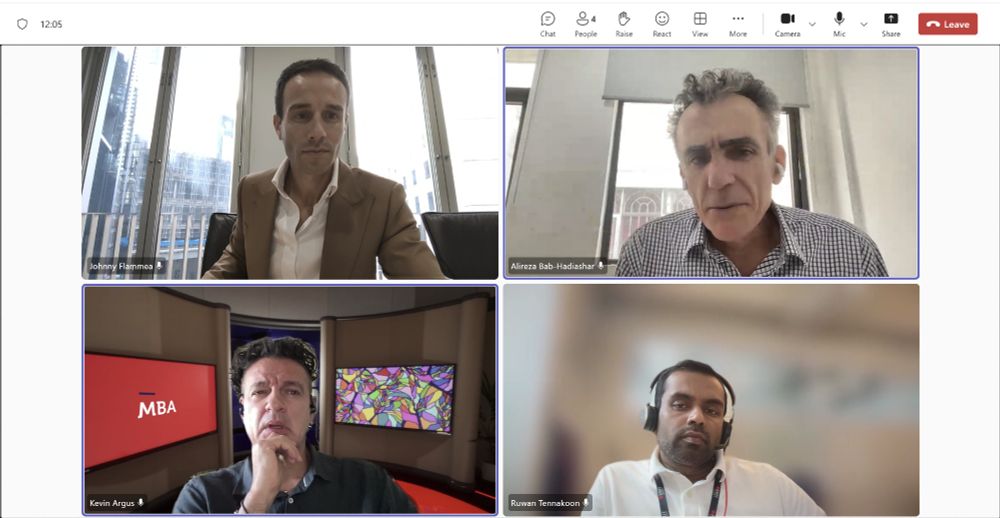
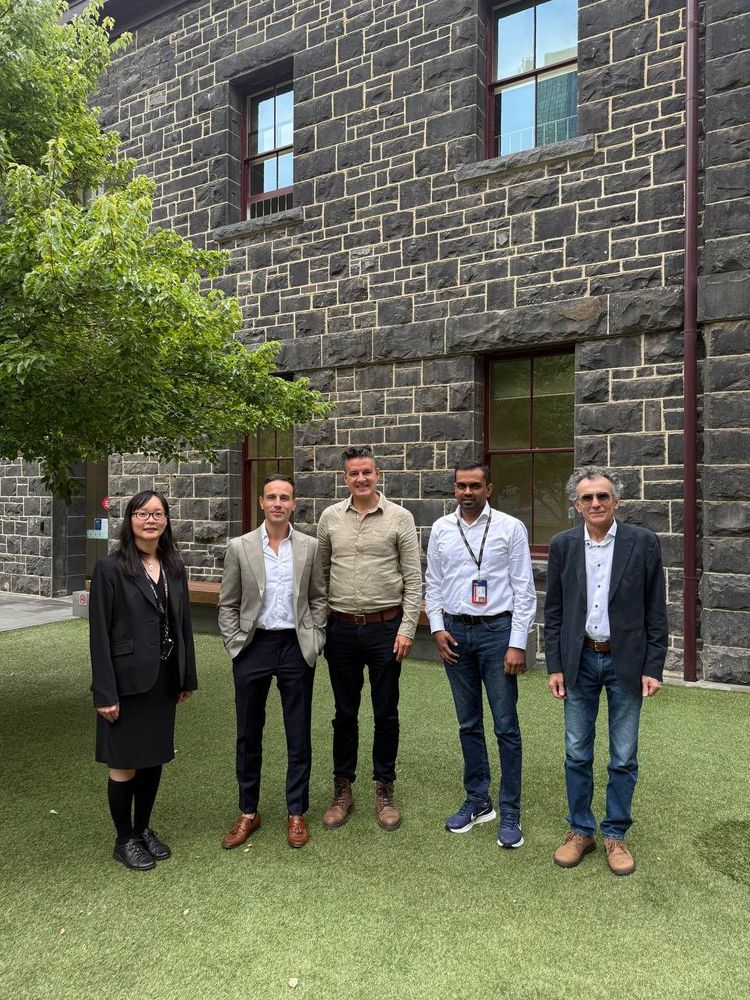
Professor Alireza Bab-Hadiashar, who leads RMIT's Intelligent Automation Research Group with over two decades of experience in computer vision, AI and robotics, is working with ReCircle to develop the intelligent systems that enable autonomous contamination detection and removal.
Dr Ruwan Tennakoon, Senior Lecturer in Artificial Intelligence with expertise in robust computer vision and industrial automation, collaborates with ReCircle's engineering team to develop automated processing systems that make real-time contamination removal possible.
Associate Professor Kevin Argus, Co-Chair of RMIT's Circular Economy Hub and award-winning leader in sustainable innovation, is working with ReCircle to evaluate the environmental and economic performance of decentralised recycling approaches.
The AI automation systems being developed through this partnership will define the operational efficiency and quality standards that determine ReCircle's commercial viability.
#RMIT #AI #Robotics #Automation #RecyclingInnovation #ProjectPartners
Investment
Collaboration
Partnership
Services
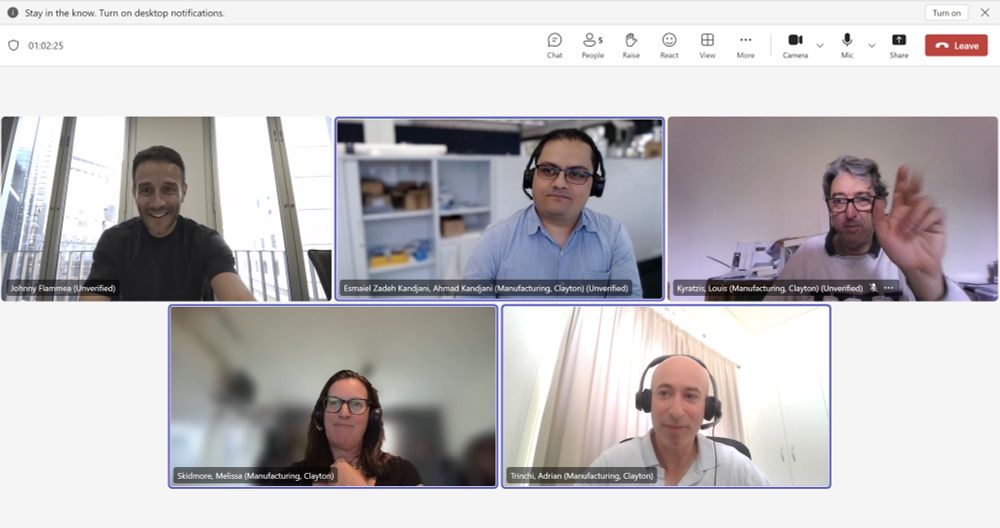
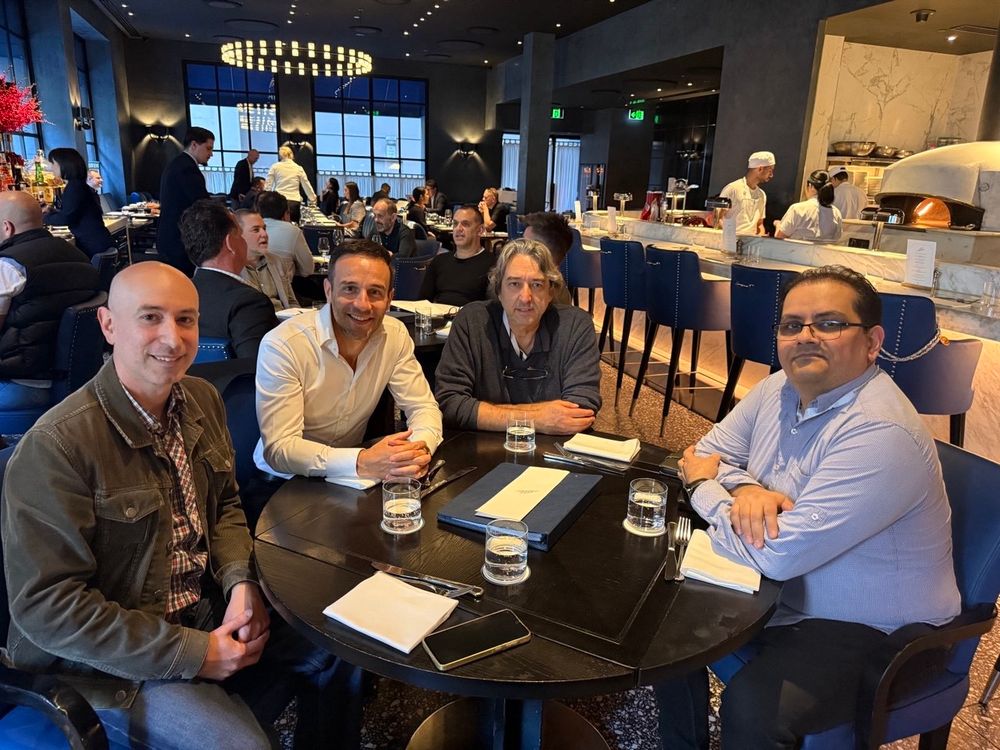
Meet the CSIRO team! Our materials science partner building the research foundation for ReCircle.
The CSIRO (Commonwealth Scientific and Industrial Research Organisation) is Australia's national research laboratory with cutting-edge plastic characterisation capabilities.
ReCircle is supported by CSIRO's Materials Upcycling and Sustainability Exploration (MUSE) Laboratories, which develop sustainable upcycling processes using modern technologies.
The CSIRO will characterise LDPE waste feedstocks from our industry partners, determining contamination levels and creating baselines that inform our system design. They will develop detailed pellet libraries using spectroscopy, evaluate recycled materials for various applications, and benchmark our outputs against commercial-grade LDPE.
This foundational research is critical to ReCircle's success - without understanding contamination profiles of different waste streams, we cannot build effective processing systems. CSIRO's analysis ensures our technology delivers market-quality recycled pellets.
Dr Adrian Trinchi leads CSIRO's MUSE Labs, developing advanced materials for environmentally friendly waste upcycling. With over 100 publications, he is internationally recognised in functional materials.
Dr Ahmad Kandjani specialises in materials characterisation and waste management, with over 110 publications. His research appears in Advanced Functional Materials and Energy & Environmental Science.
Dr Louis Kyratzis leads the interfacial chemistry team and has secured over $24M in funding. He was a Eureka Prize finalist for Defence Science contributions.
Dr Melissa Skidmore leads CSIRO's Waste Innovation Work Package, focusing on recyclable-by-design polymers and transforming plastic waste into valuable resources.
The MUSE team's material characterisation data will inform every aspect of our system design, from AI training algorithms to processing parameters.
#CSIRO #MUSE #MaterialsScience #PolymerResearch #RecyclingInnovation #ProjectPartners
Investment
Collaboration
Partnership
Services
Behind our ambition stands a world-class team of project partners, including leading research institutes, industry partners, and technology specialists.
Below, we gratefully introduction them to you:
• CSIRO (Commonwealth Scientific and Industrial Research Organisation)
• RMIT University
• APCO (Australian Packaging Covenant Organisation)
• KUKA
• Sealed Air
• Dyno Nobel
• Essity
• AMPC (Australian Meat Processor Corporation)
• Sydney City Rubbish
• ThinkPac
• TMX
• Judo Bank
Each project partner will play a valuable role in the development of ReCircle's new soft plastics recycling system.
Over the coming weeks, we will post a detailed introduction to each, including their role and important contributions to the project.
#ProjectPartners #Innovation #Collaboration #RecyclingTech #ReCircle
Investment
Collaboration
Partnership
Services
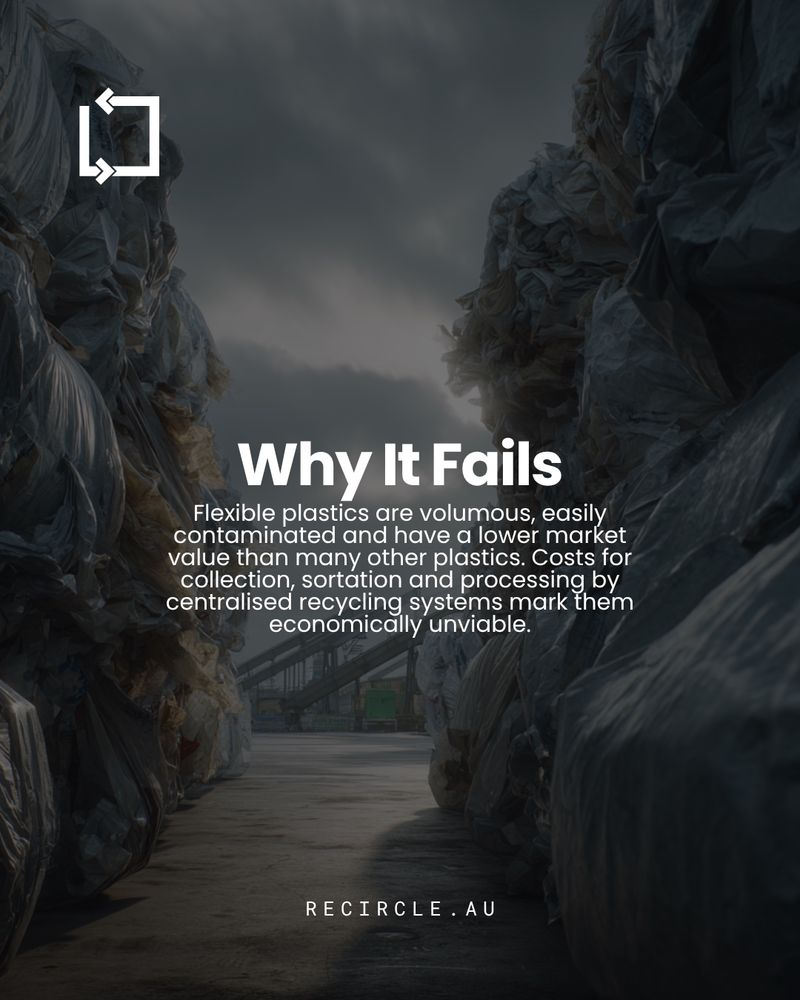
It’s one of the biggest blind spots in modern recycling.
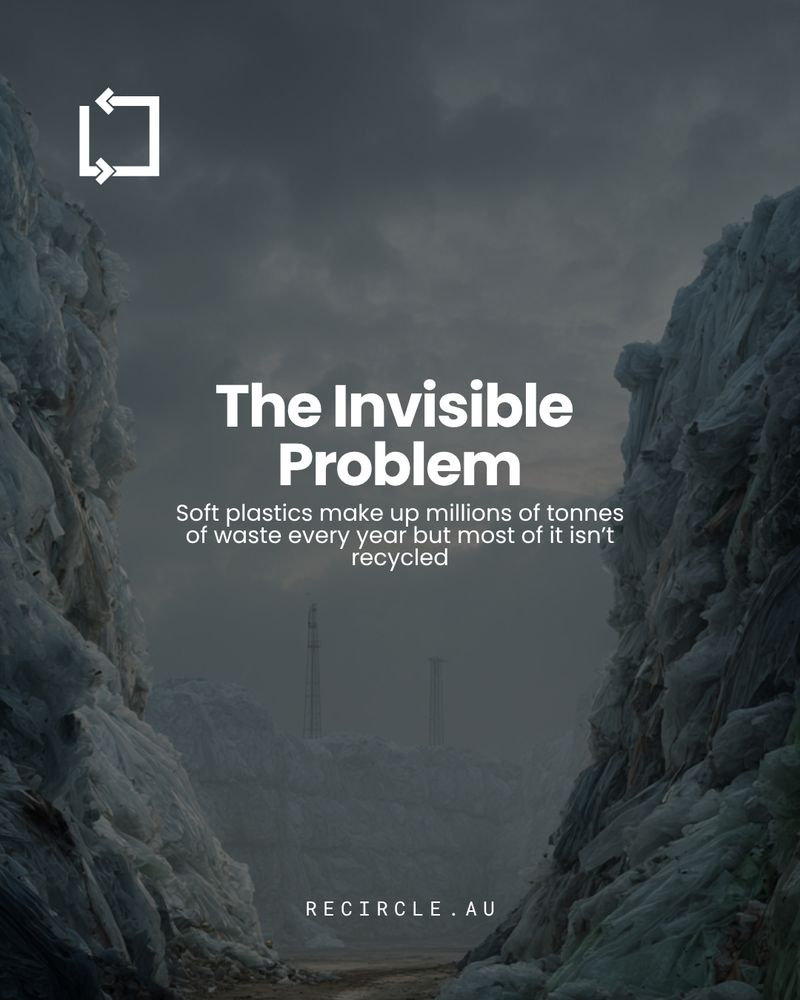
Soft plastics, the wraps, films, and packaging that move the world’s goods rarely make it back into circulation.
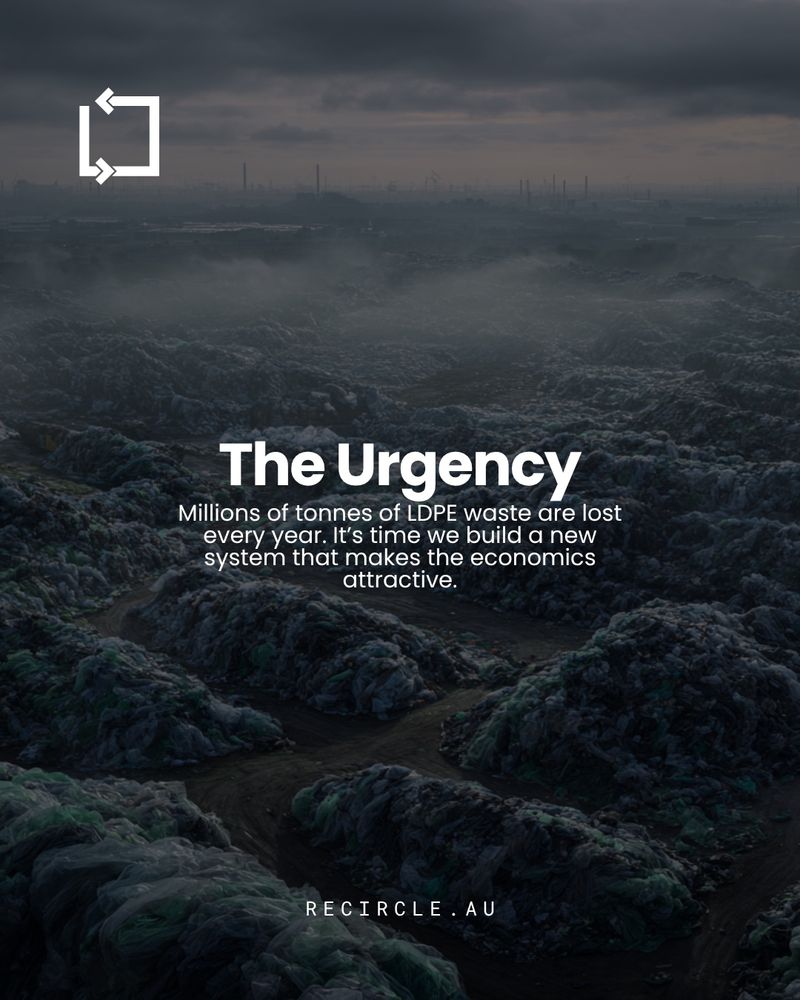
Every year, millions of tonnes of LDPE are buried or burned because the systems built to recycle them… can’t.
From Australia to Europe, we’re losing valuable materials and paying to dispose of them.
This must change.
This isn’t just a recycling issue, it’s an innovation opportunity.
Let’s start talking about soft plastics differently.
#CircularEconomy #Innovation #ReCircle #Sustainability #PlasticsCrisis #LDPE #RecyclingInnovation #ReCircleInspired
Investment
Collaboration
Partnership
Services
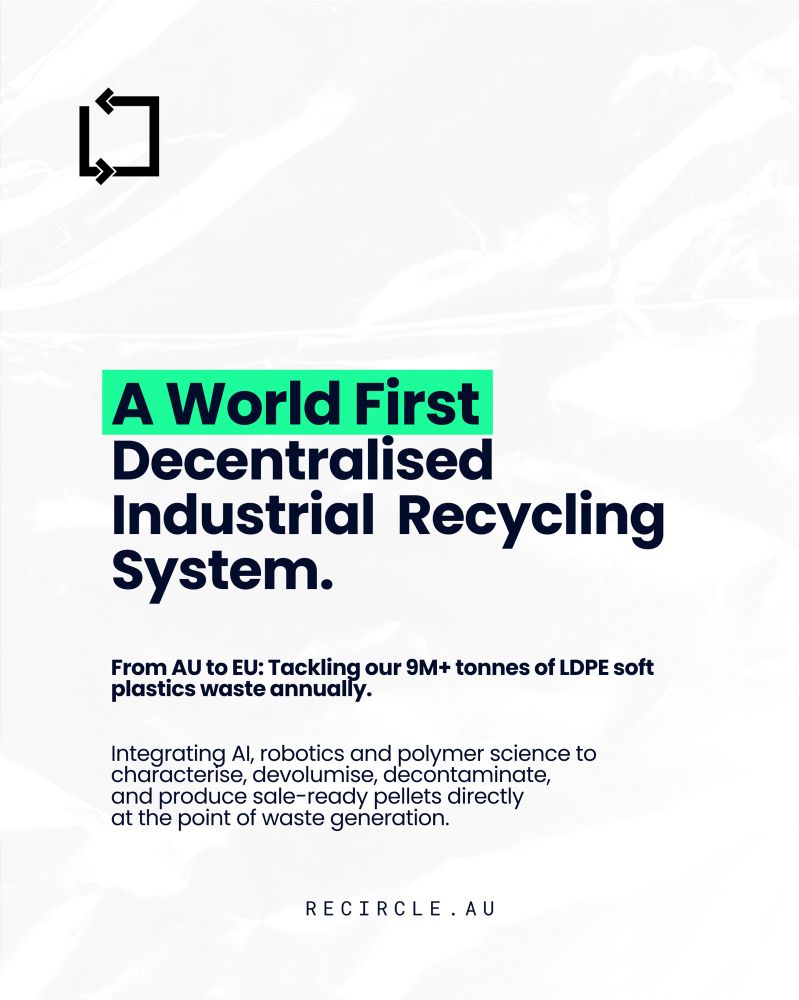
A World First: Decentralised Industrial Recycling System.
Tackling the global LDPE waste challenge: 9M+ tonnes in Europe, 500K+ tonnes in Australia, millions more worldwide, annually!
Integrating AI, robotics and polymer science to characterise, devolumise, decontaminate, and produce sale-ready pellets directly at industrial facilities worldwide.
This is what happens when you build infrastructure that brings recycling to the waste—not the other way around.
#CircularEconomy #IndustrialRecycling #GlobalSustainability #CleanTech #DecentralisedRecycling #SystemicChange
Investment
Collaboration
Partnership
Services
ReCircle vs. Traditional Recycling:
Traditional Recycling:
1. Generate LDPE waste at your facility
2. Pay for collection and transport
3. Hope recycler accepts your contamination level
4. Cross fingers it doesn't end up in landfill anyway
5. Never see that material again
***ONLY 2% - 7% recycled of the millions of tonnes produced annually***
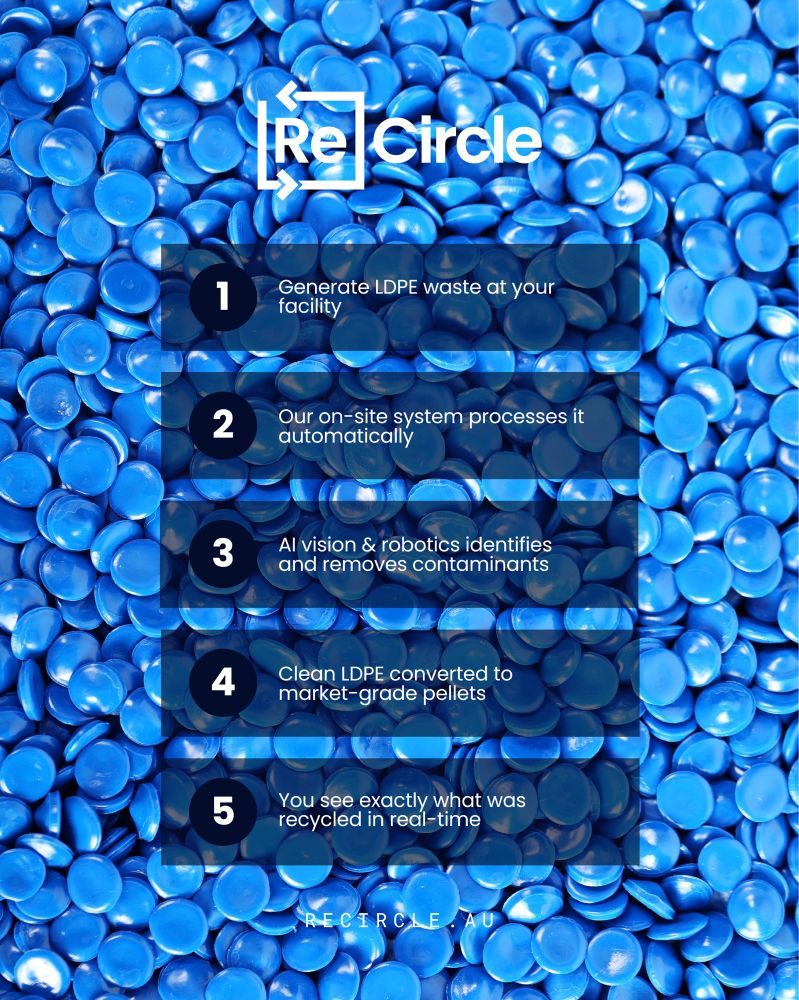
ReCircle:
1. Generate LDPE waste at your facility
2. Our on-site system processes it automatically
3. AI vision & robotics identifies and removes contaminants
4. Clean LDPE converted to market-grade pellets
5. You see exactly what was recycled in real-time
We eliminate the transport costs and contamination rejection risk that make centralised recycling economically unviable. This is infrastructure for true circular economy.
#DecentralisedRecycling #OnSiteRecycling
Investment
Collaboration
Partnership
Services
The Convenient Silence.
There’s a question those in the “waste management” industry would likely avoid answering…
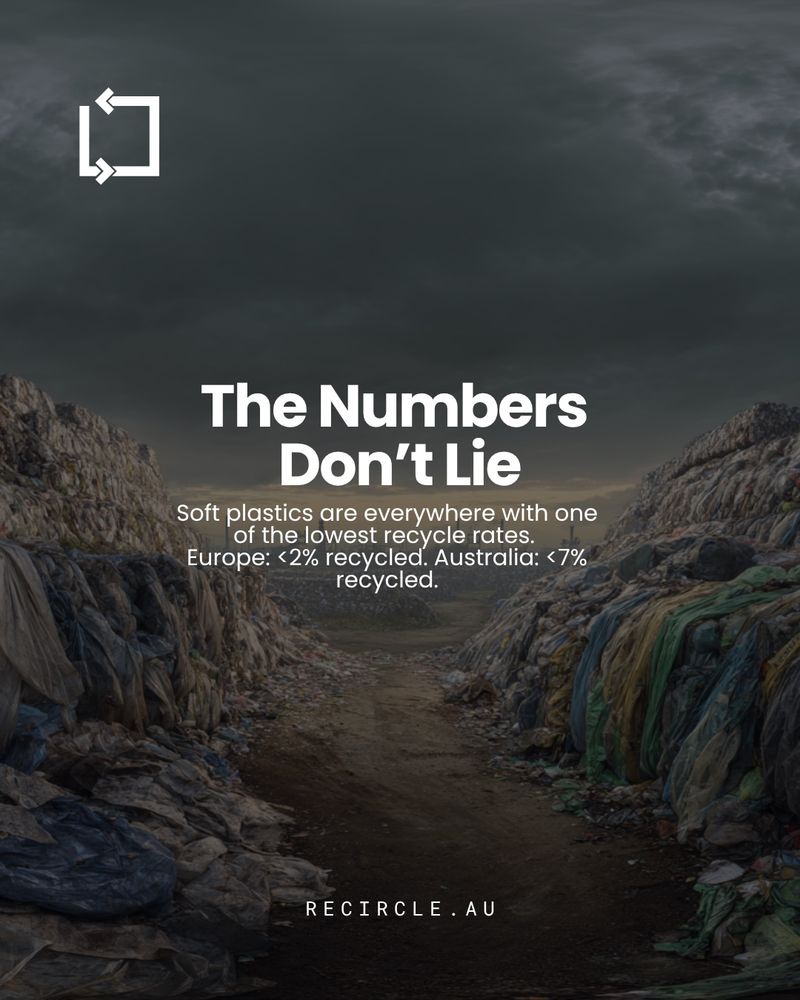
If recycling technology exists, why does Europe—consuming over 9 million tonnes of LDPE films annually—recover less than 2% as soft plastics, while Australia manages just 7% of its 500,000 tonnes?
Our truth? Centralised infrastructure profits from volume and convenience, not from solving hard problems. Soft plastics are contaminated, low-margin, logistically complex. So the system that could handle them simply… doesn’t.
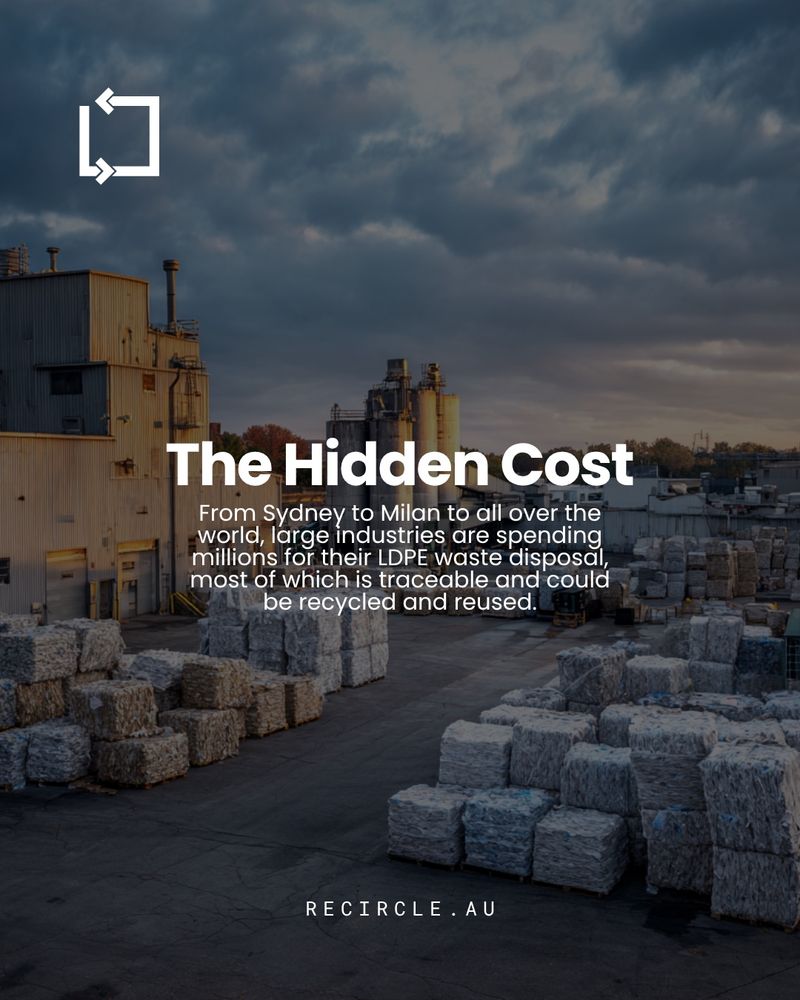
And businesses? From Milan to Melbourne, they get invoiced for “waste management” while their recyclable materials get dumped in the ground.
The EU and government targets look good on paper. The reality is millions of tonnes of valuable resources buried every year.
Some people benefit from this system staying broken.
We are not some people.
#RecyclingReality #SystemicChange
Investment
Collaboration
Partnership
Services
ReCircle’s advanced plastics recycling technology transforms plastic waste into high-value resources on-site.
Here's something most businesses don't know: Europe consumes over 9 million tonnes of LDPE films annually → the flexible packaging that wraps, protects, and packages everything from food to industrial goods. Meanwhile, Australia generates over 500,000 tonnes of LDPE plastic every year.
Technically recyclable, yet less than 2% of soft plastics are actually recovered and recycled in Europe, while Australia manages just 7% of its LDPE waste stream.
Why? Because the current system wasn't built to handle flexible plastics.
Centralised recycling infrastructure struggles with soft plastics, they jam machinery, are difficult to sort, and are often more expensive to process than virgin materials. From Munich to Sydney, businesses pay premium fees to incinerate or bury valuable resources instead of recirculating them.
We are changing that.
Based in Australia, but building for global impact, ReCircle is pioneering decentralised plastics recycling technology designed to transform B2B industrial waste into high-value resources, on-site, where the waste is generated. No transport costs to distant facilities that can't (or won't) handle flexible films. No compromise on quality.
Our approach converts low-density polyethylene into market-grade recycled pellets, proving that recycling works when infrastructure is brought to the source, not the other way around.
This isn't incremental improvement. This is a fundamental reimagining of how industrial recycling can and should work.
The question isn't whether circular economy is possible. It's whether we are willing to build the infrastructure that makes it inevitable.
We are. And we are building it now.
Follow ReCircle as we develop decentralised recycling infrastructure that turns both Europe's and Australia's most problematic plastic waste streams into circular success stories.
Because waste buried is value lost, and it's time we reclaim it.
Investment
Collaboration
Partnership
Services