
A young circularity entrepreneur just inspired her home country.
And she is still in high school!
Sofía Ramírez, from Margarita Island in Venezuela, won the National Geographic´s 2026 Slingshot Challenge Significant Achievement Award with her creation Ciclo Verde (Green Cycle), a circularity-based nutrient-based compost.
Sofía´s Ciclo Verde turns an invasive plant found across the Caribbean known as Beach Naupaka (Scaevola Taccata), into "upcycled" compost. If left alone, this plant can erode beaches and suffocate sea turtles´ nesting grounds.
The community is an integral part of the project. The locals learn how to make the compost early - "we turn an ecological burden into a source of income and healthy soil", Sofía says.
Her vision will now shape a new future.
The Slingshot Challenge invited 13-18-year-olds from across the world to create a one-minute video that features solutions to current environmental issues.
Meet Sofía and other young awardees from the 2026 Slingshot Challenge here: www.slingshotchallenge.org
@sofiesverden
Estefanía Salazar
20Following
16Followers
Venezuelan
Posts
Pages
Recent posts
I recently read The Rise of Inclusive Recycling in Latin America, a story published last June by Global Voices, a citizen journalism outlet I collaborate with: globalvoices.org/2026/06/12/t...
The report (co-written by Gabriela Mesones Rojo and Kelly Chaib De Mares) explores how informal recycling goes beyond environmental benefits. It can be a socioeconomic safety net for millions across Latin America.
What can we learn about Inclusive Recycling? What possibilities it entails for entrepreneurship?
This very inspiring story teaches us:
- Despite Latam's low formal recycling rate of around 4%, an estimated two million informal workers form the backbone of urban waste recovery.
- It can be a lifeline for migrant populations (Venezuelan diaspora members in Colombia)
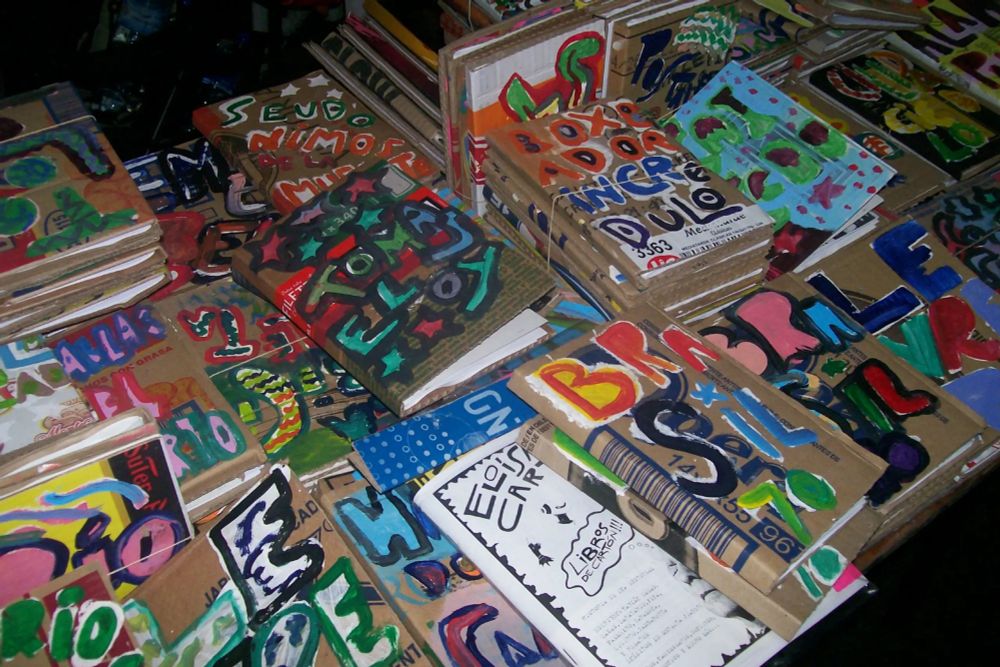
- It can be the base for creative industries. This is the case of Eloísa Cartonera, an independent publishing project in Argentina that buys cardboard at fair prices from cartoneros (often unhoused individuals) to craft uniquely hand-painted books.
- It can operate as a circular economy platform. Amazoniko, in Colombia, connects households, businesses, and recyclers, actively rebranding informal workers as "environmental advisors." It organizes routes and offers incentives like digital tips and microloans, providing upward mobility.
- It should work with a gender-centered focus. In Ecuador, 70% of street waste pickers are women. Through groups like the National Recyclers of Ecuador (Renarec), which organizes 1,500 of the country's 20,000 recyclers, these women are pushing back against severe discrimination and unsafe conditions, demanding institutional recognition.
Check the full references here in the story link, above.
Is Journalism your working partner? If not, how could its work support yours better?
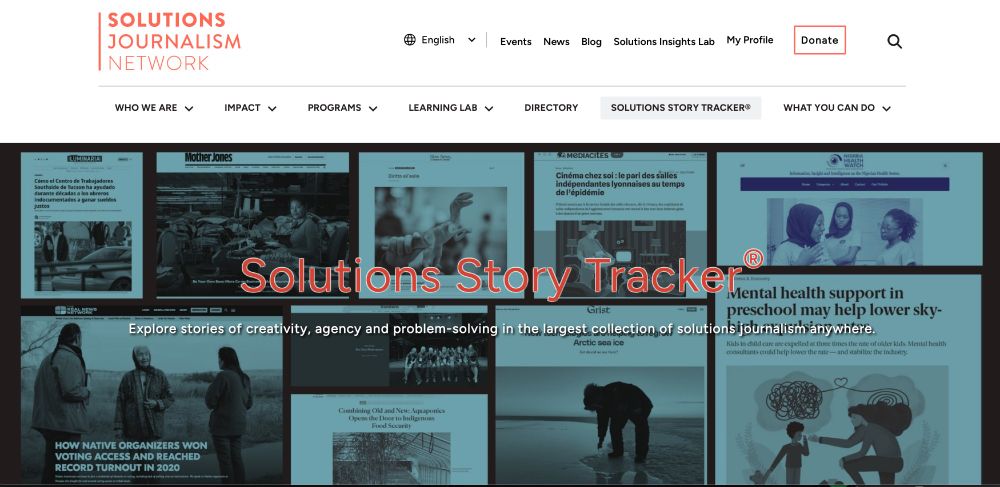
Solutions journalism is a news reporting trend (supported by the Solutions Journalism Network, an international non-profit) that investigates and explains how people try to solve social problems. It looks at the evidence of how a response works, why it may fail, and what lessons can be learned, rather than focusing only on the bad news or the problem itself.
Do solutions journalism stories help your current projects in climate solutions, AI, healthcare and other topics hosted by INSPIRED? If so, what formats work best in 2026? (written stories, audio, video, others)?
See how solutions journalism tackles your issue of interest here: storytracker.solutionsjournalism.org
What did the CEPAL (the United Nations Economic Commission for Latin America and the Caribbean), the UN´s premier economic cooperation agency in Latin America, choose in its latest round of financing for Circular Economy initiatives, in July 2026?
Eleven bioeconomy initiatives across Argentina, Brasil, Chile and Colombia, centered around Food and Agritech ✅
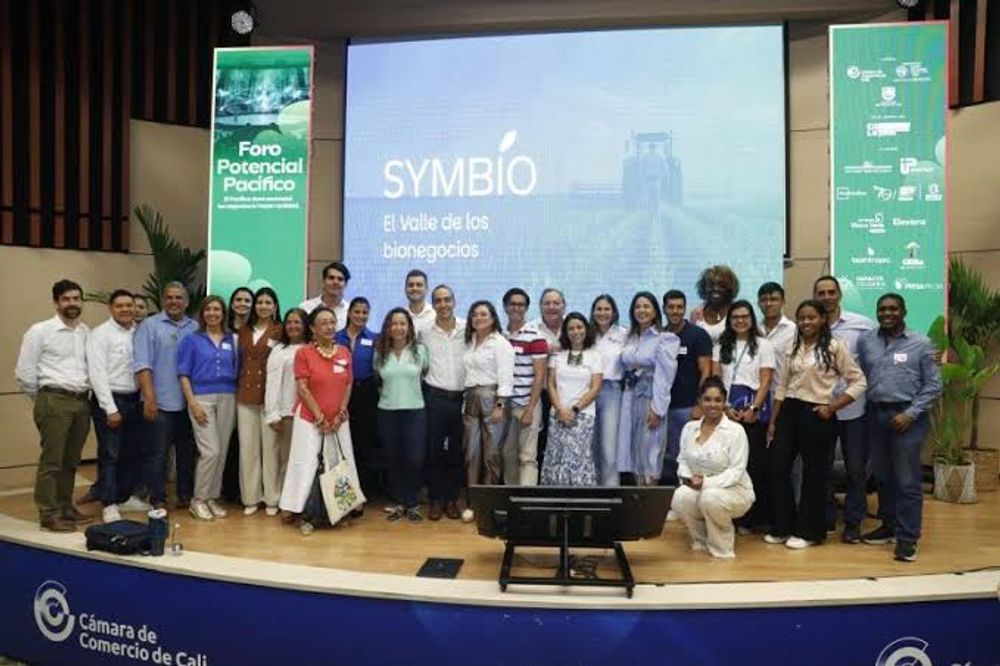
CEPAL´s Bioeconomy and the Circular Economy in Productive Articulation Initiatives Program, also supported by Germany´s GIZ and BMZ, chose a bio-business hub plus rice, coffee, cocoa and natural ingredients clusters in Colombia (called Symbio, see them on the featured image); fruit growing in Chile, and a biomass cluster in Argentina, plus four Articulation Initiatives Program in Brasil (centered around cocoa, pequi, açaí and metalmechanic solutions).
The Program will incluide specialized technical assistance, field visits, joint work with participating companies and institutions and the development of project profiles in bioeconomy, circular economy or governance. In addition, all selected initiatives will participate in training workshops on the gender perspective, aimed at identifying gaps and strengthening the incorporation of this perspective in the management, governance and formulation of specific projects.
Can you see how Latin America really means new ways of thinking about business and agriculture? 🍃 🔍
See more here: www.cepal.org/pt-br/node/9...
For innovators around the Health & MedTech community. Did a natural disaster inspire your creation or line of work?
If not, do you know about any invention in the field that came out of extreme circumstances like a disaster?
My country, Venezuela, is reeling from rare twin earthquakes on January 24th, 2026.
Luckily I am fine, as well as my family. Thousands are not in the same position. We are in the midst of search and rescue efforts, plus a huge wave of local and international solidarity. The country is in dire need of it (earthquakes are not frequent here, nor risk management).
Thinking about ways for recovery is one way to honor those who left. Through Circular Economy, it seems, there are recovery ways.
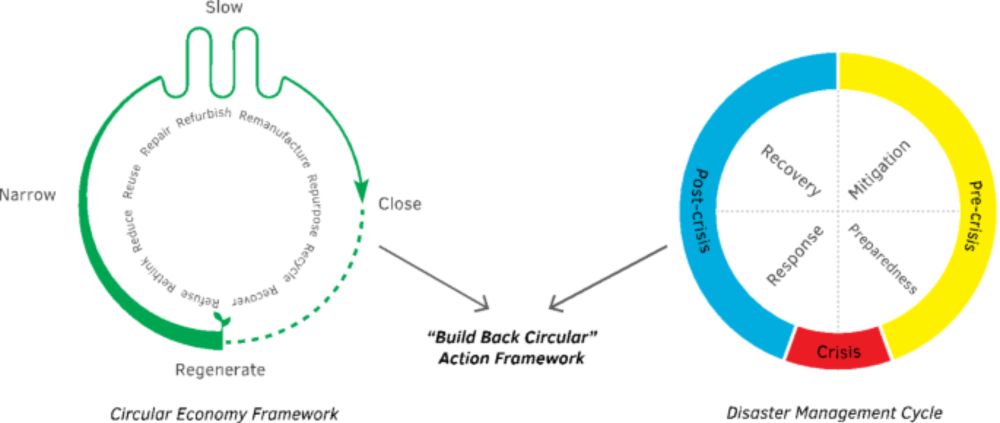
A 2025 open paper by Sultan Çetin and Julian Kirchherr, titled The Build Back Circular Framework: Circular Economy Strategies for Post-Disaster Reconstruction and Recovery" (link.springer.com/article/10.1...), tells us so.
This study addresses this gap by investigating how CE principles—narrowing, slowing, closing, and regenerating resource loops— can be integrated into post-disaster reconstruction and recovery, with a focus on the 2023 Kahramanmaraş Earthquakes in Türkiye, says the abstract
Can Circular Economy help a post-earthquake(s) Venezuela rise in the next years?
In the meantime, if you can, please consider helping affected Venezuelans through a donation to Caritas (Catholic Relief Services), Doctors Without Borders or UNICEF, all supporting communities in the ground. Links on comments.
There is a void where AI could fill in the circular economy field, according to a recent post by Hassan Murad (Intuitive AI) for the World Economic Forum (WEF).
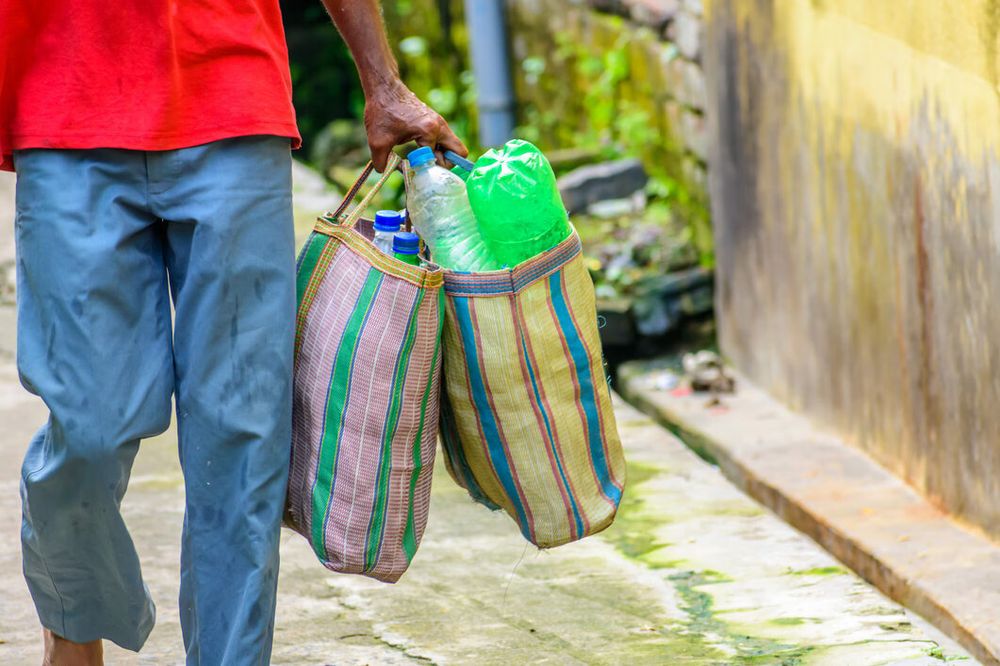
This is 'attention layer' (data infrastructure that captures human behaviour at the moment of decision-making), in the very act of disposal. Billions of decisions happen every day at bins, cafeteria trays, and recycling stations, but a way to track and record said behaviour is still missing.
However, according to the WEF, emerging AI systems are beginning to fill this void. At disposal points, computer vision at waste stations can now identify items in real time, recognize materials and brands, provide behavioural feedback, and meter every interaction, noted Murad.
Is anyone in the Inspired.ch community working on attention layers? Could this mean a bridge with active innovators or investors in the Circular Economy community?
www.weforum.org/stories/2026...
Checking Google for Startups AI Agents Challenge 2026 🏆
The initiative aims to help participants level up AI agents from prototype to production, using Google´s latest development kit and platforms. Three competition tracks are available: creation, optimization, and enterprise readiness.
Every eligible startup receives $500 in credits plus the chance to win a share of a $90,000 prize pool. 💰
Registration will close on June 5th, here: goo.gle/4cpi2pB
If you are working in this area, what makes you choose a funding challenge above others?